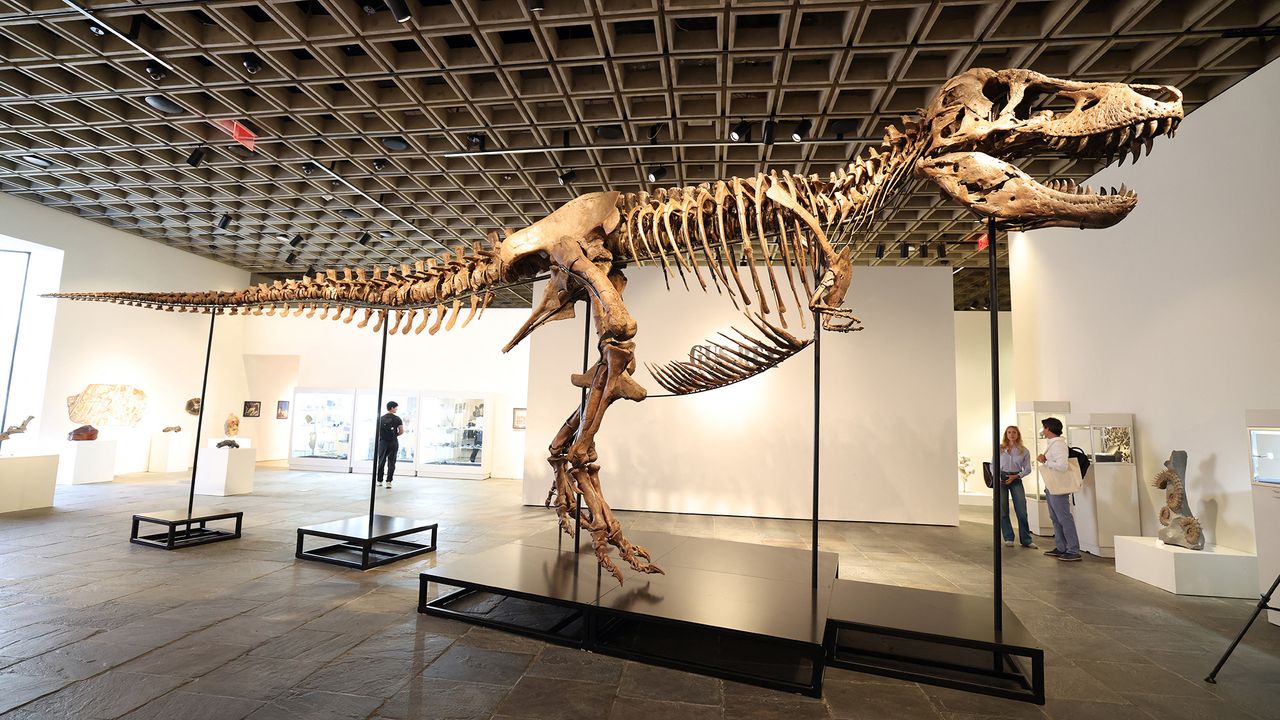
A nearly complete Tyrannosaurus rex skeleton named Gus sold for $50 million at auction this week, marking a milestone in the commercialization of dinosaur fossils. The specimen, excavated in South Dakota, represents one of the most valuable vertebrate fossils ever purchased by a private collector.
The sale raises concerns among paleontologists about access to scientific material. Unlike museum acquisitions, private purchases offer no guarantee that researchers will study the specimen or that data will be published in peer-reviewed journals. The identity of the buyer remains undisclosed, leaving the scientific community uncertain whether Gus will contribute to our understanding of T. rex biology and evolution.
Gus appears to be a relatively complete skeleton, a rarity in the fossil record. T. rex specimens typically consist of fragmentary remains scattered across multiple institutions. A well-preserved skeleton could answer questions about growth patterns, biomechanics, sexual dimorphism, and ontogenetic development in these apex predators. Such specimens become invaluable reference materials for comparative anatomy and modeling studies.
This transaction reflects a broader trend in the commercial fossil market. High-profile sales of dinosaur skeletons to wealthy collectors have accelerated over the past decade, driven by investor interest in tangible assets and the aesthetic appeal of complete specimens. While some collectors donate fossils to museums, others restrict access or keep specimens in private vaults.
Paleontologists worry that commercialization fragments the fossil record. Each specimen lost to private ownership potentially represents irreplaceable data about extinct species. The scientific value of a fossil extends beyond its initial description. Advances in imaging technology, biomechanical modeling, and genetic sequencing mean that specimens may yield insights decades after initial study.
The sale also highlights disparities in funding. Museums and universities struggle to secure resources for fieldwork and collection maintenance, while wealthy individuals can acquire significant specimens for personal investment. This dynamic