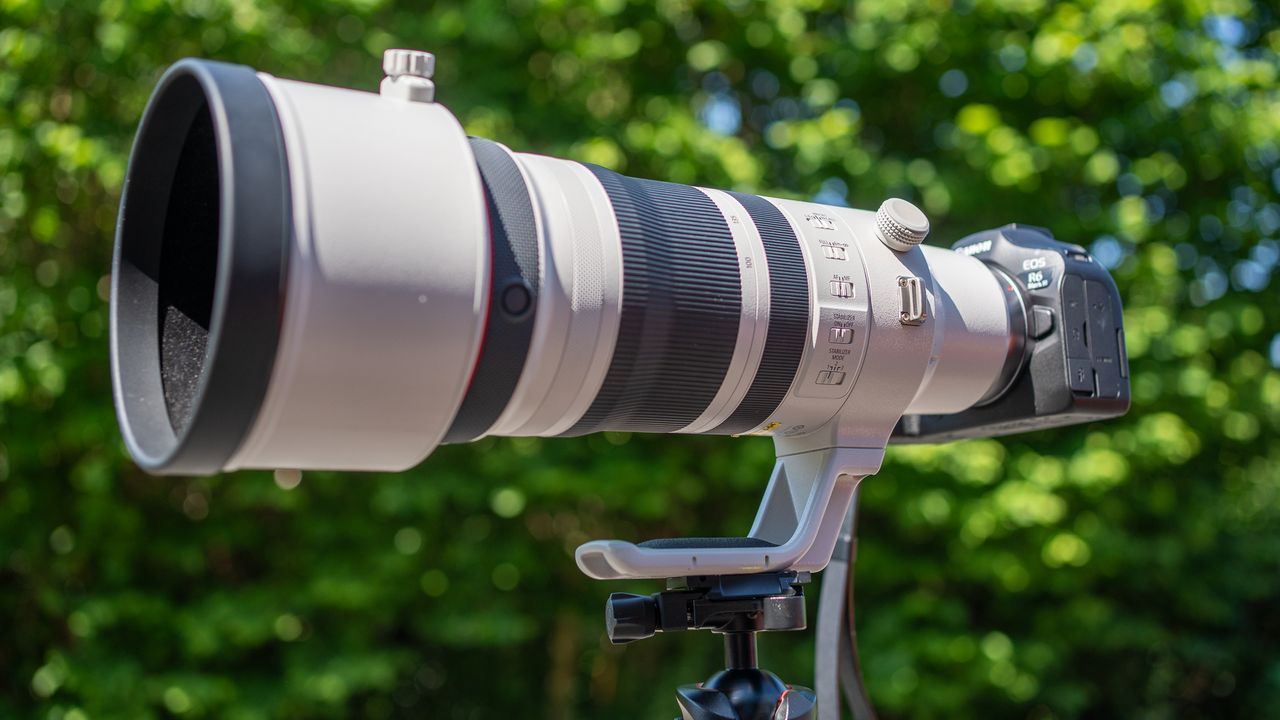
Canon's new RF 100-300mm f/2.8L IS USM lens costs $10,000, positioning it as a premium tool for wildlife photographers. Live Science tested the optical performance against traditional prime lenses to assess whether the zoom justifies its substantial price.
The lens maintains a constant f/2.8 aperture across its entire 100-300mm range, a technical achievement that typically requires expensive optical engineering. This brightness matters for wildlife work, where photographers often need fast shutter speeds to freeze animal motion in variable lighting conditions. The lens includes Canon's image stabilization system, rated for up to eight stops of compensation, which helps offset camera shake at longer focal lengths.
Wildlife photographers traditionally relied on prime lenses—fixed focal length optics like a 300mm or 400mm—because primes historically offered superior optical quality and wider apertures than zooms. The RF 100-300mm f/2.8L represents a shift in this dynamic. The constant f/2.8 aperture throughout the zoom range preserves light-gathering ability, potentially reducing the need to carry multiple heavy primes into the field.
Testing revealed the lens delivers sharp images across its range, with minimal distortion and chromatic aberration. The autofocus system performs competently on fast-moving subjects, and build quality reflects the premium price point through weather sealing and solid construction.
However, limitations exist. The lens's 300mm maximum reach falls short for distant subjects that a 400mm or 600mm prime could capture. Photographers need to position themselves closer to subjects, which proves impossible with timid wildlife. The weight and size, while reasonable for a zoom, exceed what many wildlife photographers want to carry for full-day field work.
The RF 100-300mm f/2.8L succeeds as a versatile tool for photographers who value flexibility in composition and prefer fewer lens