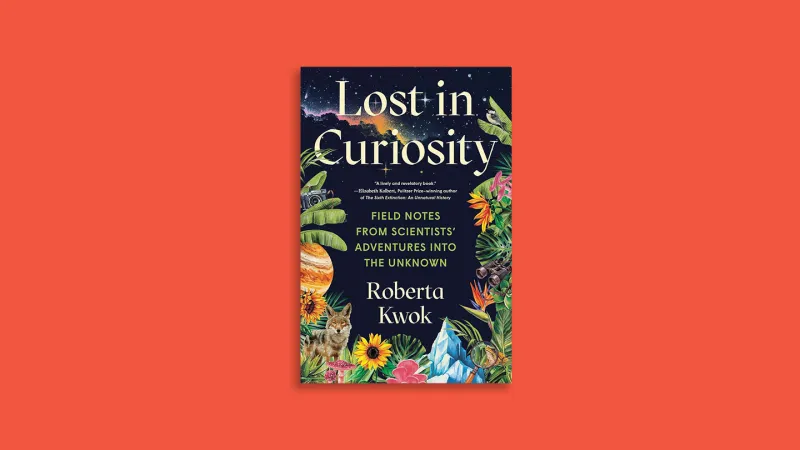
# Lost in Curiosity Reveals the Messy Reality of Doing Science
Science journalist Roberta Kwok offers an unflinching look at how research actually happens in her new book "Lost in Curiosity." Rather than presenting science as a neat progression of discoveries, Kwok chronicles the chaos, false starts, and human elements that shape scientific work.
Kwok spent time embedded with active researchers across multiple disciplines, documenting their daily struggles and breakthroughs. She captures the tension between funding pressures, institutional politics, and genuine inquiry. Her reporting shows how scientists navigate failed experiments, abandoned hypotheses, and the grinding work of peer review.
The book challenges the public's sanitized view of science. Most people encounter only published results, the polished conclusions presented in journals. Kwok reveals what comes before publication: the uncertainty, the arguments between collaborators, the equipment failures, and the months spent chasing dead ends.
One key insight concerns reproducibility. Kwok examines why even well-intentioned researchers struggle to replicate previous work. Variations in technique, undocumented decisions, and subtle environmental factors all matter more than textbooks suggest. She documents researchers discovering their own published findings cannot be easily reproduced.
The book also explores how personality shapes science. Some labs thrive under particular leadership styles. Creativity and rigor don't always coexist smoothly. Kwok shows how the culture within a research group influences what questions get asked and which methods receive priority.
Her approach balances honesty with appreciation for scientific work. Kwok doesn't argue that the messiness undermines scientific value. Rather, she contends that understanding these realities makes science stronger. Transparency about process, limitations, and human judgment builds public trust more effectively than pretending research follows a linear path.
"Lost in Curiosity" serves researchers, science communicators, and anyone