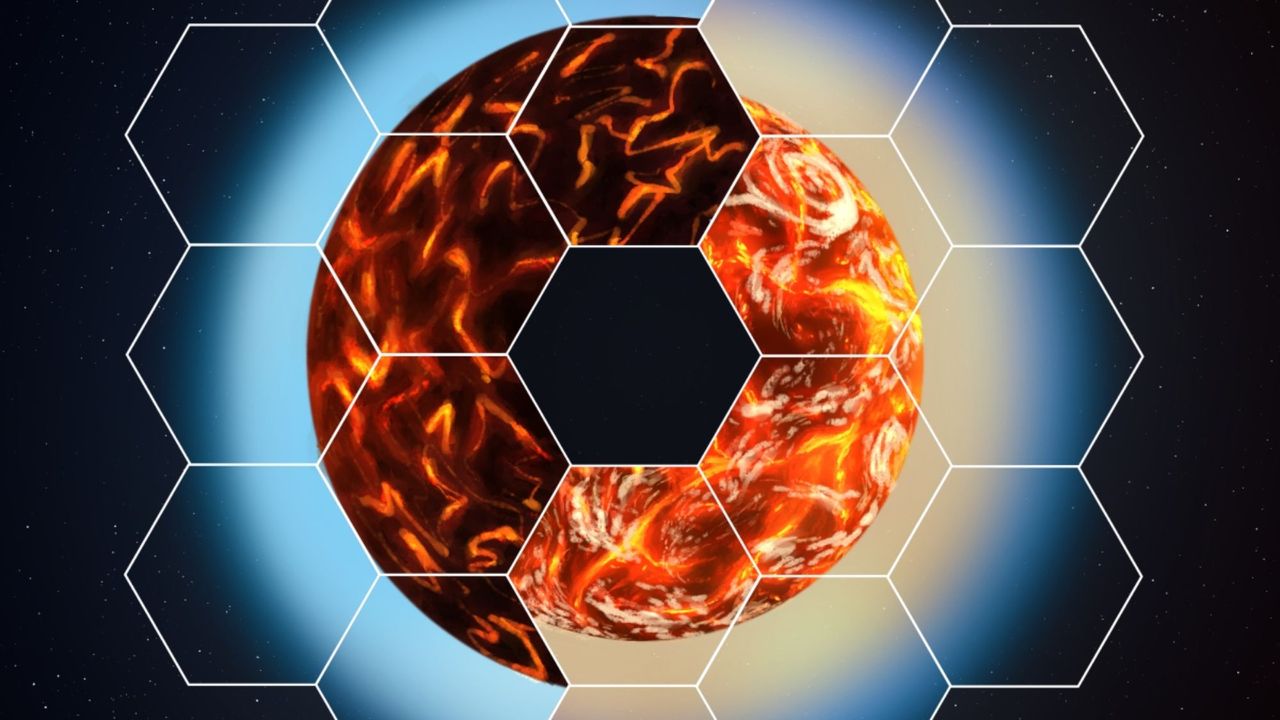
Researchers have identified a striking atmospheric phenomenon on sub-Neptune exoplanets, a class of worlds between Earth and Neptune in size. These planets may possess atmospheres so dense and pressurized that silicate rock vaporizes into clouds, fundamentally altering how heat circulates at their surfaces.
The discovery stems from computational modeling of sub-Neptunes orbiting close to their host stars. At such proximity, these planets experience extreme temperatures. Under the crushing atmospheric pressure at their surfaces, silicate compounds that form rock on Earth transform into gaseous phases. This vaporized rock condenses into clouds in the upper atmosphere, creating a reflective layer that traps stellar radiation and intensifies surface heating.
The implications reshape how scientists understand these exoplanet interiors. Sub-Neptunes represent the most common type of planet discovered beyond our solar system, yet their composition remains poorly understood. Previous models assumed these worlds contained thick hydrogen-helium atmospheres similar to Jupiter. The new research suggests an alternative scenario. If a sub-Neptune lost its primordial hydrogen envelope early in its history, magma oceans could form on its surface beneath these silicate clouds.
The mechanism works as follows. Stellar radiation penetrates through the rock vapor clouds less efficiently than through clear hydrogen atmospheres. The trapped heat keeps the surface in a molten state, maintaining a global magma ocean. The rock clouds also reflect some incoming starlight back to space, reducing the greenhouse effect somewhat. This balance between atmospheric composition and surface conditions creates an entirely different planetary environment from what models previously predicted.
The research carries observational implications. Astronomers studying sub-Neptune atmospheres using instruments like the James Webb Space Telescope may encounter unexpected spectroscopic signatures from vaporized silicates. Detection of rock vapor features would confirm this atmospheric chemistry and help constrain the evolutionary history of these distant worlds.
The findings remain theoretical pending observational confirmation.