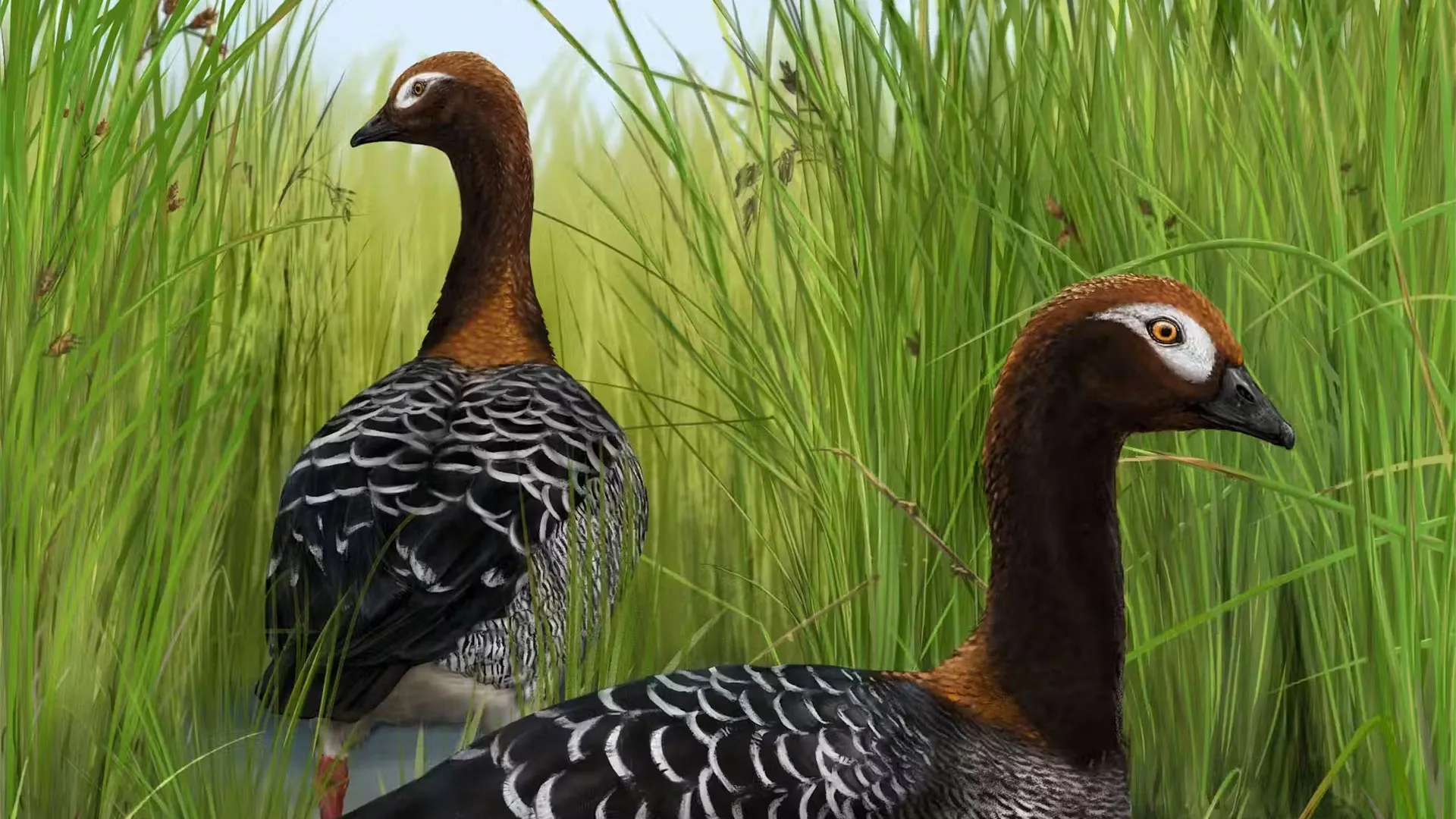
Scientists have identified a previously unknown fossil goose that overturns a long-held theory about how New Zealand's giant flightless birds evolved. The discovery indicates these massive geese descended from much more recent colonizers than researchers previously thought, painting a picture of rapid and dramatic evolutionary change.
New Zealand's extinct moa and other giant flightless birds have fascinated paleontologists for centuries. The new fossil goose specimen provides evidence that the country's enormous geese species emerged from ancestors that arrived relatively recently in geological time, not from ancient lineages that had been isolated for millions of years as earlier models suggested.
The finding challenges assumptions embedded in bird evolution research dating back decades. Researchers examining this specimen determined it represents a distinct species previously unknown to science, filling a gap in the fossil record that helps explain how waterfowl adapted to New Zealand's unique environment so rapidly.
The evolutionary pathway now appears more compressed in time than experts believed. Rather than gradual changes occurring over extended periods, the evidence points to swift adaptation as geese colonized the islands and diversified into the giant flightless forms that dominated New Zealand's landscape before human arrival around 700 years ago.
This discovery has implications beyond New Zealand's extinct fauna. It demonstrates how island ecosystems can drive extreme morphological change in relatively short timeframes when ecological pressures align favorably. The absence of mammalian predators and competitors likely accelerated the evolution of flightlessness and gigantism in these geese, much as similar conditions drove the evolution of moa and other remarkable extinct birds.
The research adds another layer to our understanding of how species radiate and transform when introduced to isolated environments. It also underscores how incomplete the fossil record remains, with new discoveries continuing to reshape our comprehension of evolutionary history. Additional fossil specimens may reveal further details about this dramatic chapter in New Zealand's biological past.