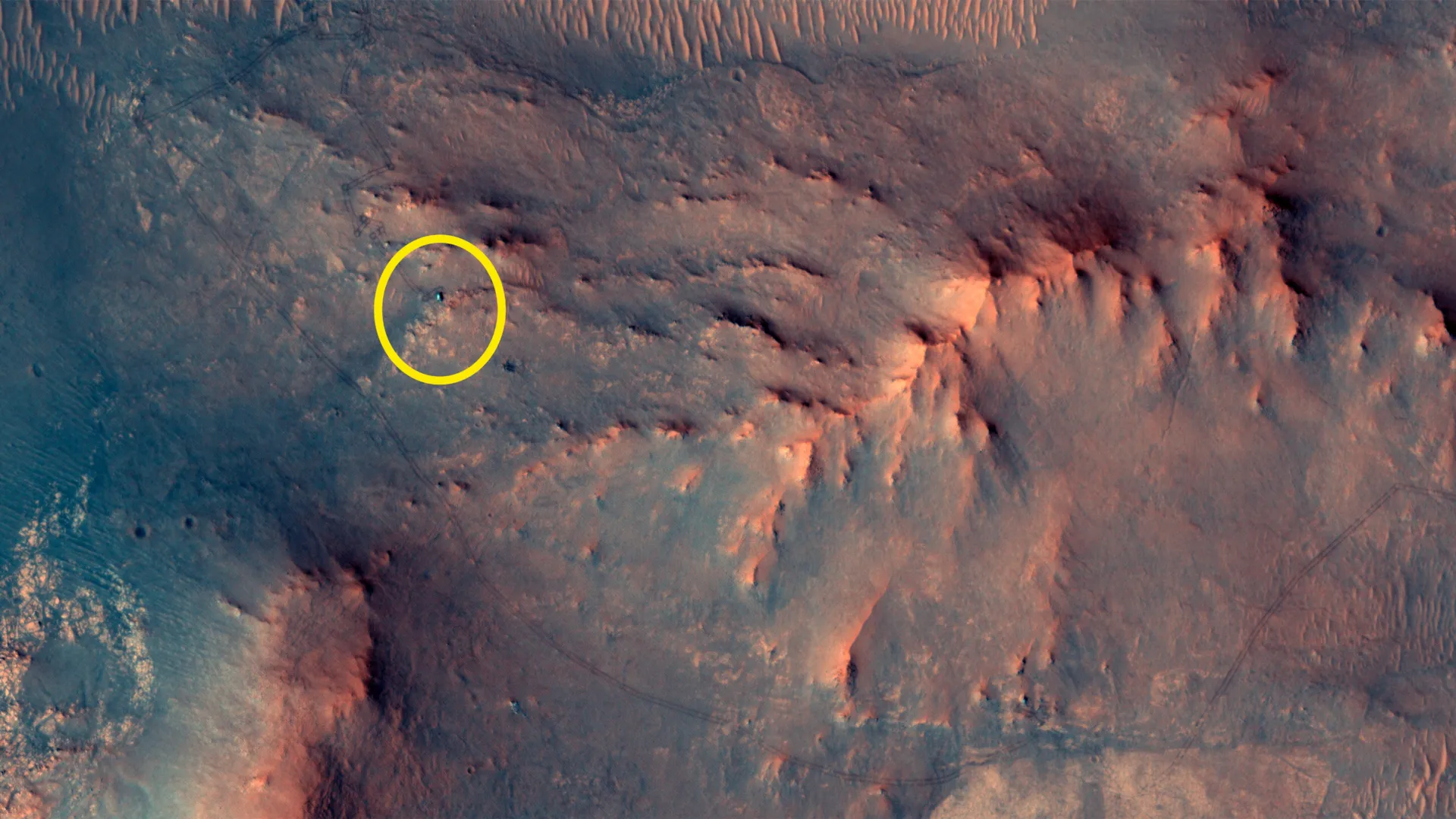
NASA's Perseverance rover has driven 26.2 miles across Mars, completing a marathon distance in just five years and four months. The rover reached this milestone on its 1,890th Martian day of operation.
Perseverance achieved the feat roughly twice as fast as Opportunity, the previous distance record holder among Mars rovers. Opportunity took over a decade to cover the same ground before losing contact with Earth in 2018 after a massive dust storm.
The milestone reflects improvements in rover design and operational efficiency since Opportunity's launch in 2003. Perseverance, which landed in Jezero Crater in February 2021, carries advanced wheels and autonomous navigation systems that allow it to traverse terrain more efficiently than its predecessor.
The rover's primary mission focuses on searching for signs of ancient microbial life and collecting rock samples for eventual return to Earth through NASA's Mars Sample Return campaign. While covering distance matters for accessing new geological targets, Perseverance prioritizes scientific investigation over raw speed.
The rover has explored Jezero Crater's floor and climbing the inner rim of an ancient riverbed delta. Its wheels have sustained damage from sharp rocks, similar to wear patterns Opportunity experienced, but engineers continue operating Perseverance despite the degradation.
This marathon achievement demonstrates the durability and capability of modern Mars exploration technology. The rover's sustained performance enables scientists to study diverse geological settings and continue searching for evidence of past habitability. Perseverance's accomplishments set a baseline for future long-distance Mars missions as NASA and international partners plan additional rovers for coming decades.