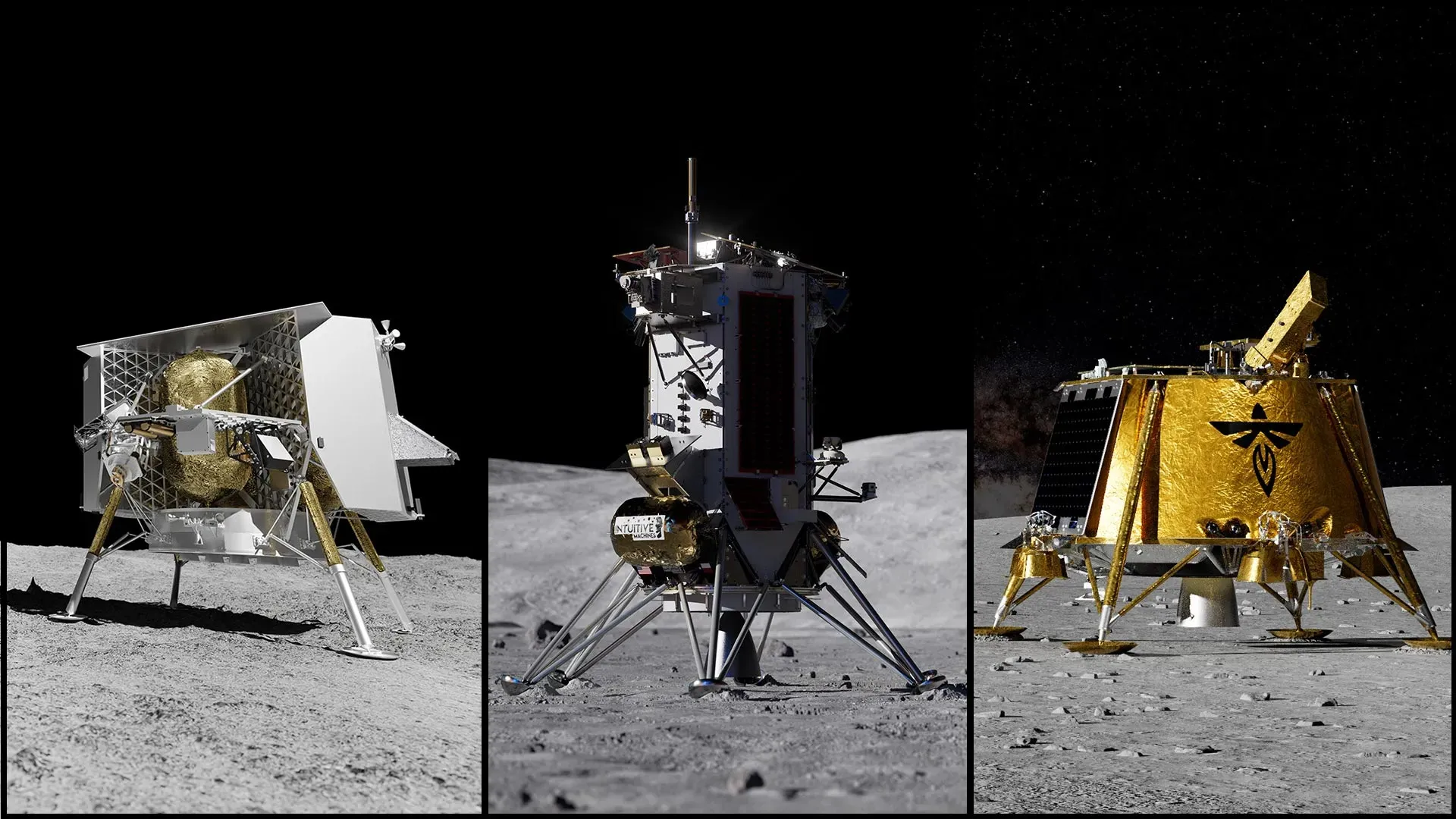
NASA awarded nearly $600 million to four commercial lunar landers targeting late 2028 landings as part of its strategy to establish a permanent Moon base. Each mission will carry identical science instruments designed to enhance lunar navigation systems, investigate the hazards of lunar dust ejected during landings, and map the Moon's radiation environment.
The announcement represents a significant expansion of NASA's commercial lunar program. Rather than developing its own landers, the agency partners with private companies to reduce costs and accelerate deployment timelines. This approach allows multiple landing sites to be surveyed simultaneously, gathering data essential for sustained human presence on the Moon.
The three core instruments address practical challenges for long-term lunar operations. Improved navigation systems are necessary because the Moon lacks the global positioning infrastructure available on Earth. Studying dust behavior matters because lunar regolith kicked up during landing and takeoff poses risks to equipment and astronauts. Understanding the radiation environment helps engineers design habitats and protective systems for crews working on the lunar surface.
Beyond these four missions, NASA plans to develop new rovers for exploration and surface operations, deploy communication satellites to ensure reliable contact with lunar sites, and conduct additional cargo missions to stockpile supplies. These components form an integrated infrastructure network supporting the eventual transition from temporary visits to permanent occupation.
The late 2028 timeline aligns with NASA's broader lunar strategy, which includes crewed landings through the Artemis program. Commercial landers will precede astronauts, establishing waypoints and gathering environmental data that informs habitat placement and operational procedures. This phased approach reduces risk by testing systems and validating locations before committing crews.
The partnership with commercial providers reflects a shift in space exploration strategy. Companies like Intuitive Machines, Axiom Space, and others have demonstrated reliable cargo delivery capabilities on smaller scales. Expanding their roles leverages existing expertise while distributing development costs across multiple contractors. The $600