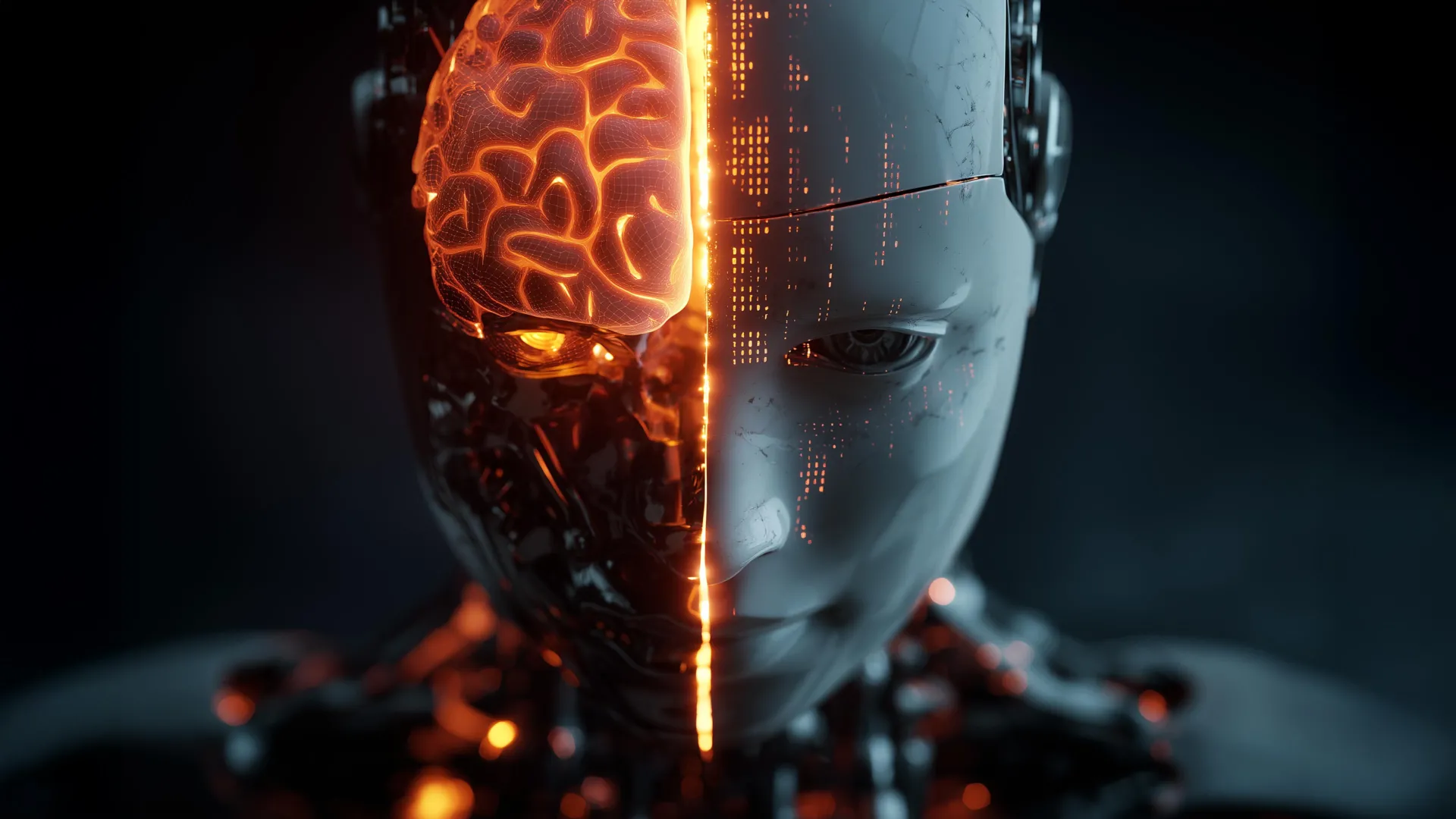
Peter J. Denning, a computer scientist, challenges a foundational assumption in artificial intelligence that traces back to Alan Turing's 1950 paper "Computing Machinery and Intelligence." Denning argues that the field has built itself on a flawed premise: that human intelligence can be fully encoded into computational systems.
In his new book, Denning contends that critical components of human cognition remain uncodifiable. Common sense, intuition, cultural knowledge, and practical know-how cannot be translated into algorithms or stored in computer systems, he claims. This distinction matters because it cuts to the heart of what AI can actually achieve.
Turing's paper established the intellectual foundation for modern AI by proposing the famous "Turing Test" as a measure of machine intelligence. The test asks whether a machine's responses can be indistinguishable from a human's. Denning's critique suggests that passing this test would not require genuine understanding or human-level intelligence, only convincing mimicry.
Denning's argument carries weight in current AI debates. Large language models like GPT-4 demonstrate impressive pattern-matching and text generation, yet they operate without the embodied experience, social context, and practical judgment humans develop through living in the world. A model can generate text about riding a bicycle without understanding balance, momentum, or the physical sensation of movement.
The limitation Denning identifies has implications for AI development timelines. If he is correct, no amount of scaling up neural networks or increasing training data will bridge the gap between statistical pattern recognition and genuine human intelligence. The problem becomes fundamental rather than engineering-based.
However, Denning's position faces counterarguments. Some researchers contend that embodied experience and intuition emerge from computational processes, just ones we do not yet understand. Others note that human common sense itself relies on pattern recognition from billions of sensory experiences, which machines