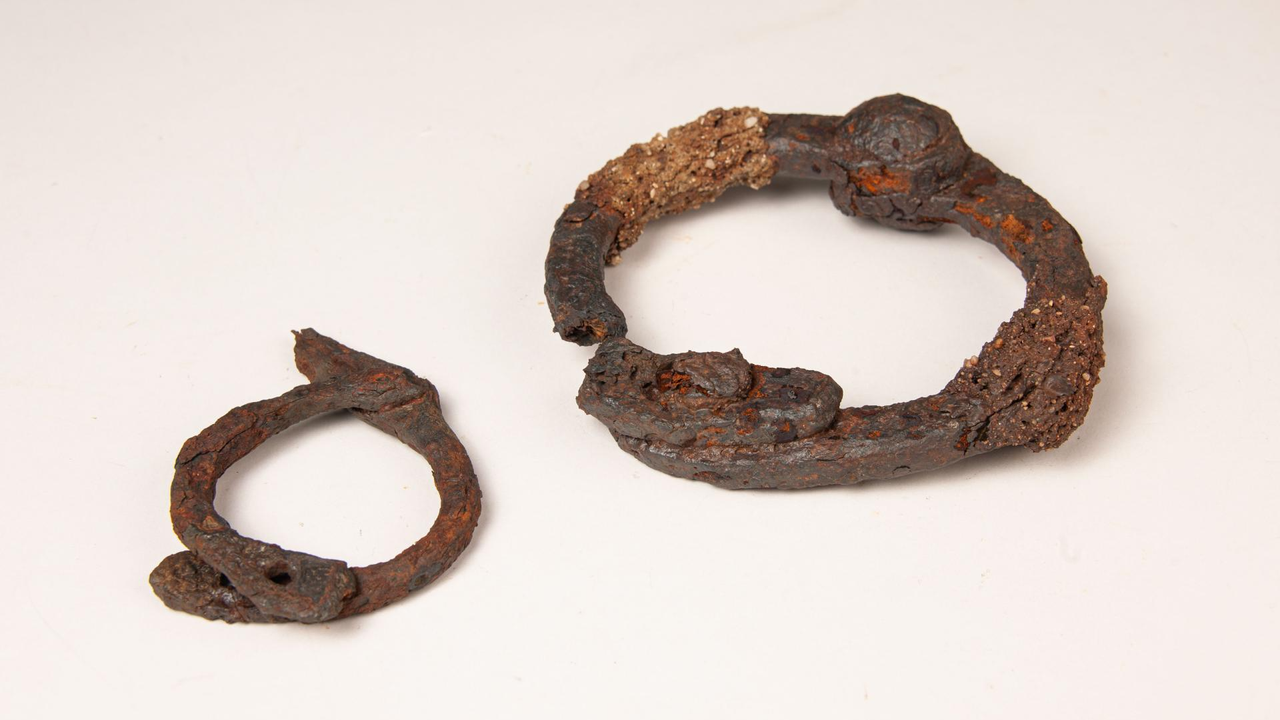
Archaeologists uncovered five iron shackles in a pre-Roman Celtic settlement in France, providing rare physical evidence of slavery practices among Celtic peoples roughly 2,300 years ago. The discovery marks an unusual find, as shackles from this period rarely survive in the archaeological record.
The artifacts were recovered from an excavation site in France and represent direct material evidence of the slave trade that existed within Celtic societies during the Iron Age. Most historical knowledge of Celtic slavery derives from written accounts by Greek and Roman historians rather than archaeological finds. These shackles offer tangible confirmation of those written records.
The iron restraints themselves underwent detailed analysis to understand their construction and use. Researchers examined how the shackles were forged and fitted, providing insight into the mechanics of restraint technology in pre-Roman Europe. The quality of the metalwork suggests Celtic blacksmiths possessed sophisticated knowledge of iron working.
The settlement's context reveals connections to broader Celtic trade networks. Archaeological evidence indicates the site had contact with Mediterranean regions through commerce and cultural exchange. The presence of shackles alongside other artifacts hints at the economic structure of Celtic communities, where slavery functioned as part of the social and economic system.
Finding shackles in such good condition is exceptional. Iron corrodes easily over millennia, and most surviving evidence from this period consists of pottery, stone tools, and structural remains. The preservation of these five examples suggests they were buried under conditions that protected them from oxidation, possibly in waterlogged deposits or sealed contexts.
This discovery challenges some assumptions about Celtic societies. Popular historical narratives often emphasize Celtic warrior culture and artistic achievements while downplaying aspects like slavery. The physical evidence forces a more complete historical picture that acknowledges the complex social hierarchies and labor systems that supported Celtic civilization.
The find contributes to ongoing scholarly debates about slavery's prevalence across ancient European societies. It demonstrates that unfree labor existed not only in