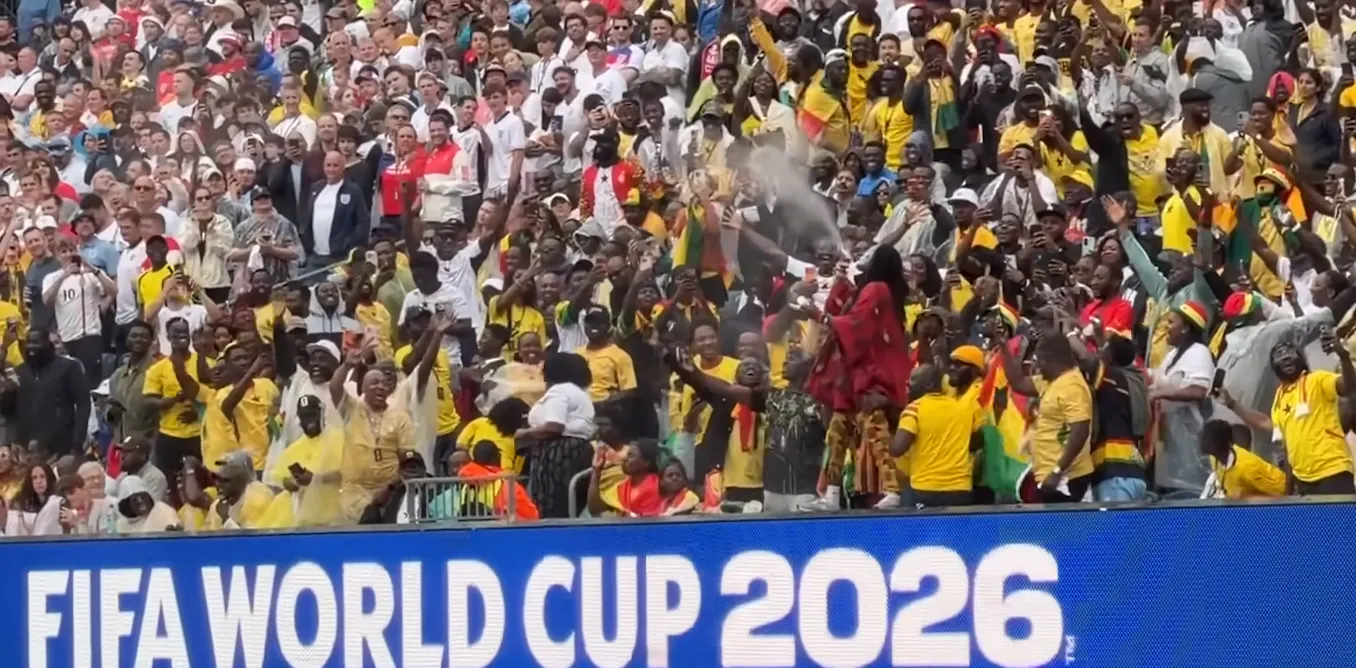
# Ghana's Soccer Spirituality Reveals Deep African Traditions
Ghana's national soccer team employs a "juju man," a spiritual practitioner who performs rituals intended to enhance player performance and protect against harm. The presence of such figures in professional African sports reflects not superstition but deeply rooted cultural frameworks that coexist with modern athletics.
Juju practitioners work within West African spiritual traditions spanning centuries. These specialists perform ceremonies, create protective amulets, and conduct rituals believed to channel ancestral power and spiritual energy toward competitive advantage. For Ghanaian players and coaching staff, these practices represent legitimate forms of preparation alongside conventional training methods.
The intersection of sport and spirituality in Africa operates differently than Western frameworks assume. While Western athletic culture emphasizes individual psychology, biomechanics, and scientific training protocols, African sports cultures integrate communal spiritual practices into competitive preparation. Both approaches serve psychological and social functions, though they operate through different cosmological systems.
Research into athlete psychology shows that confidence, mental focus, and group cohesion directly impact performance outcomes. Juju rituals deliver these psychological benefits through culturally congruent mechanisms. A player who believes a protective charm reduces injury risk may approach competition with greater confidence, potentially improving performance through placebo-adjacent pathways backed by neuroscience.
This practice also strengthens team bonds. Collective participation in rituals creates group identity and shared purpose. Players experience their team as a unified spiritual entity, not merely an aggregation of individuals. This cohesion produces measurable competitive advantages in synchronized play and tactical coordination.
Western observers often dismiss African spiritual practices in sports as primitive or irrational. This perspective reflects colonial-era assumptions rather than scientific accuracy. Both Western sports psychology and West African juju operate as interpretative frameworks for understanding performance and managing uncertainty inherent to athletic competition.
The Ghanaian example demonstrates how communities adapt ancient traditions to contemporary