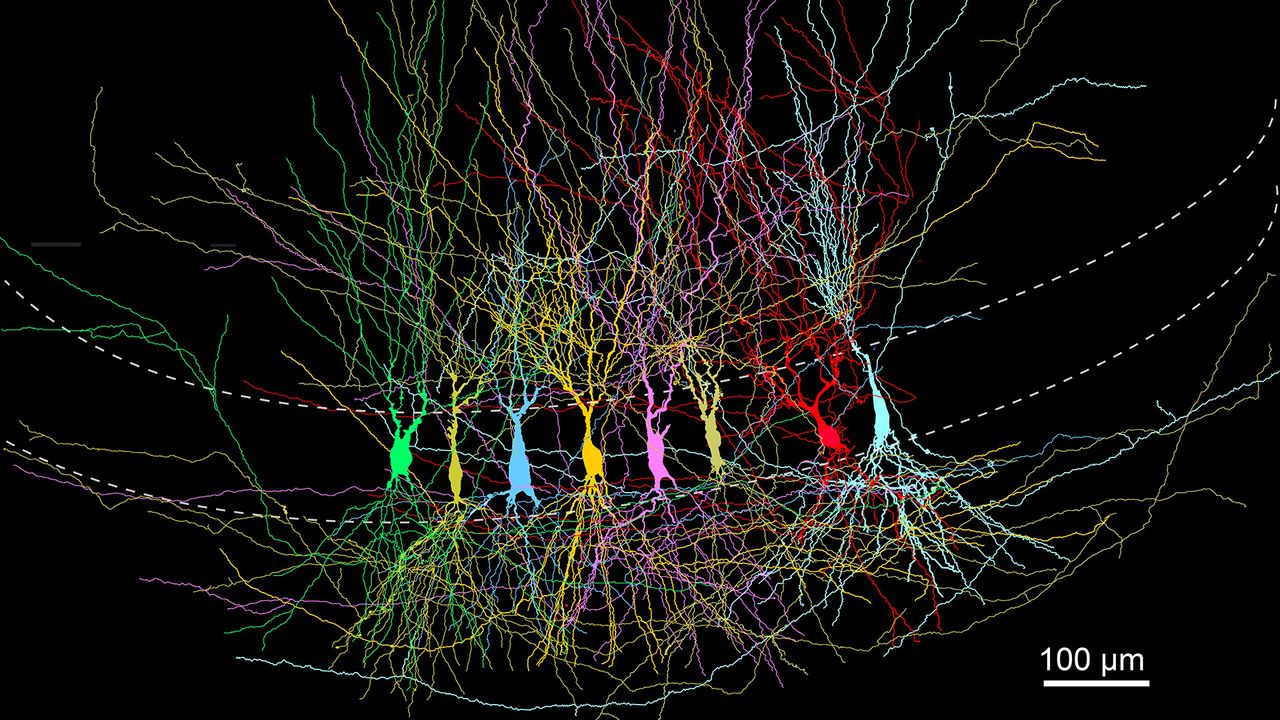
Researchers using mice have identified a neural mechanism that may explain childhood amnesia, the well-documented phenomenon where humans retain almost no memories from their earliest years. The study reveals that the hippocampus, the brain's primary memory center, operates differently in young animals compared to adults.
In young mice, the neural networks within the hippocampus exist in a highly interconnected state. These dense connections lack specificity, forming broad rather than precise memory traces. As animals mature, these networks undergo refinement, developing into the selective, efficient systems that characterize adult memory formation. This developmental shift appears to occur gradually over weeks in mice and likely over years in humans.
The research suggests that early childhood memories fail to persist not because young brains cannot form memories, but because the neural infrastructure for storing stable, retrievable memories remains under construction. The extensive connectivity in juvenile neural networks prevents the kind of precise encoding necessary for long-term recall. When these circuits reorganize into more targeted configurations, memories from earlier periods become inaccessible.
This finding aligns with behavioral observations that humans typically cannot recall events before age three or four, despite evidence that infants and toddlers do form and demonstrate memories in the moment. The neural reorganization process explains why these memories vanish rather than simply being forgotten through normal decay.
The mouse model provides direct neurobiological evidence for theories about childhood amnesia that researchers have proposed for decades. By examining hippocampal structure and function at different developmental stages, scientists can now map the precise timeline and mechanism of this neural reorganization.
Understanding this process has implications beyond explaining memory gaps. It may inform research into developmental disorders affecting learning and memory, and could provide insights into how neural circuits specialize during critical periods of brain development. The work underscores how memory capabilities depend not just on neural capacity but on the precise architecture of brain circuits.