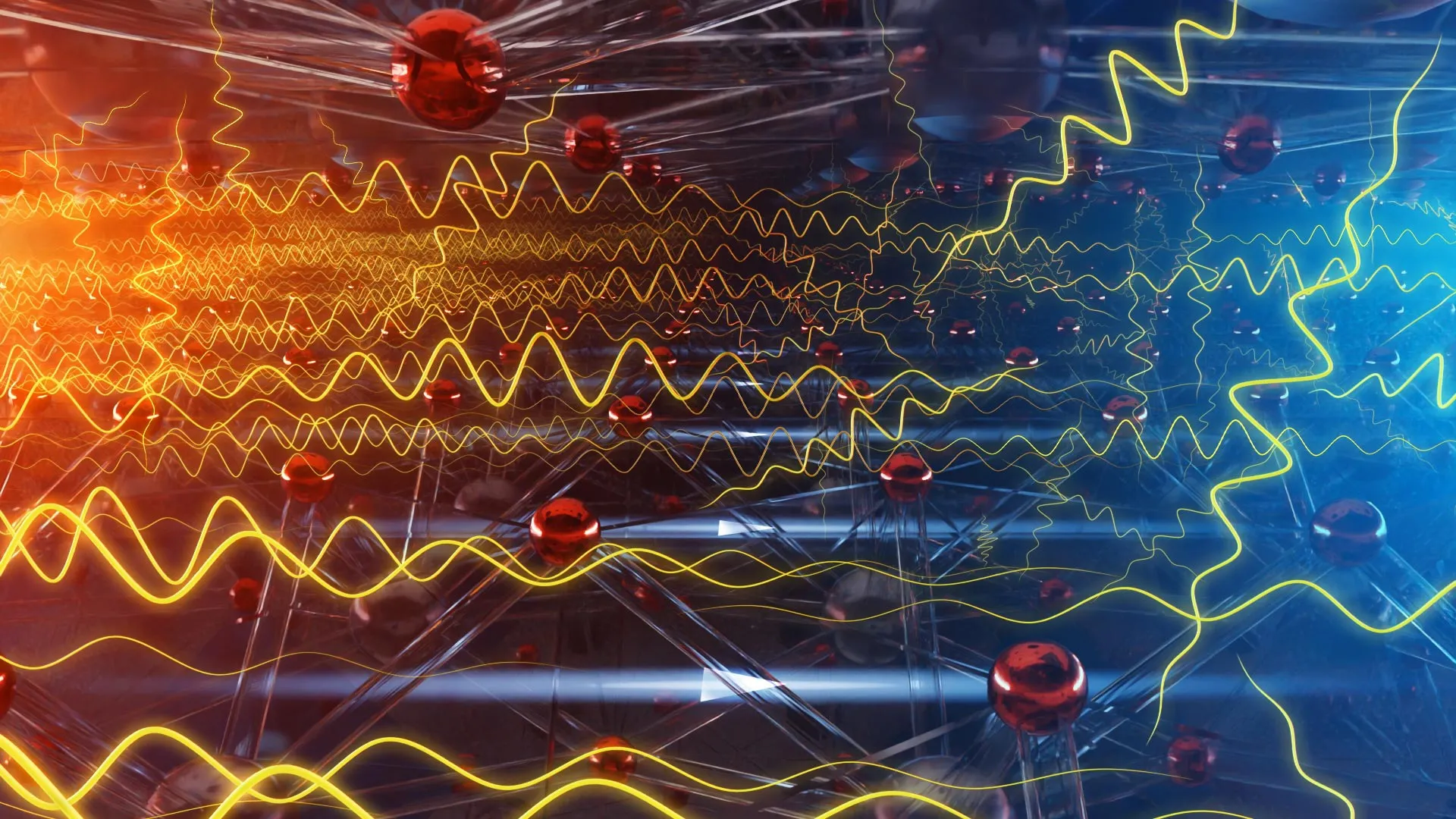
Researchers have demonstrated that applying an electric field to certain ceramic materials can boost heat flow by nearly 300 percent in a chosen direction. The discovery opens pathways for more efficient cooling systems and energy-conserving technologies.
The research team applied electric fields to ceramics and observed dramatic increases in thermal conductivity along specific orientations. Heat typically spreads randomly through materials, but the electric field effectively channels thermal energy in predetermined directions, concentrating the flow where it matters most.
The mechanism exploits the crystal structure of ceramics. Electric fields reorient atomic arrangements and modify how phonons, the quantum particles responsible for heat transport, move through the material. By controlling this arrangement, researchers selectively enhanced heat conduction along preferred paths while leaving other directions largely unchanged.
The nearly threefold increase represents a substantial improvement over passive cooling methods. Current electronics and industrial systems rely on conventional heat dissipation, which wastes energy through uncontrolled thermal spread. More efficient heat routing could shrink cooling requirements in computers, power electronics, and thermal management systems across industries.
Ceramic materials offer particular advantages for this application. They remain stable at high temperatures, resist corrosion, and cost less than alternatives like specialized metals. Their electrical properties also respond predictably to external field manipulation, making them ideal test subjects for this technique.
The researchers tested their findings across multiple ceramic compositions, confirming the effect works broadly rather than in isolated cases. Results remained consistent, suggesting the approach scales to practical applications.
Limitations remain. The electric fields required consume energy themselves, so engineers must optimize field strength to ensure net efficiency gains. Real-world devices must also handle the mechanical stress that large electric fields impose on materials over extended periods. The technique currently works best in controlled laboratory conditions with consistent field application.
Despite these challenges, the discovery fundamentally changes how engineers think about thermal management. Rather than passively accepting random heat distribution, they can now actively direct heat