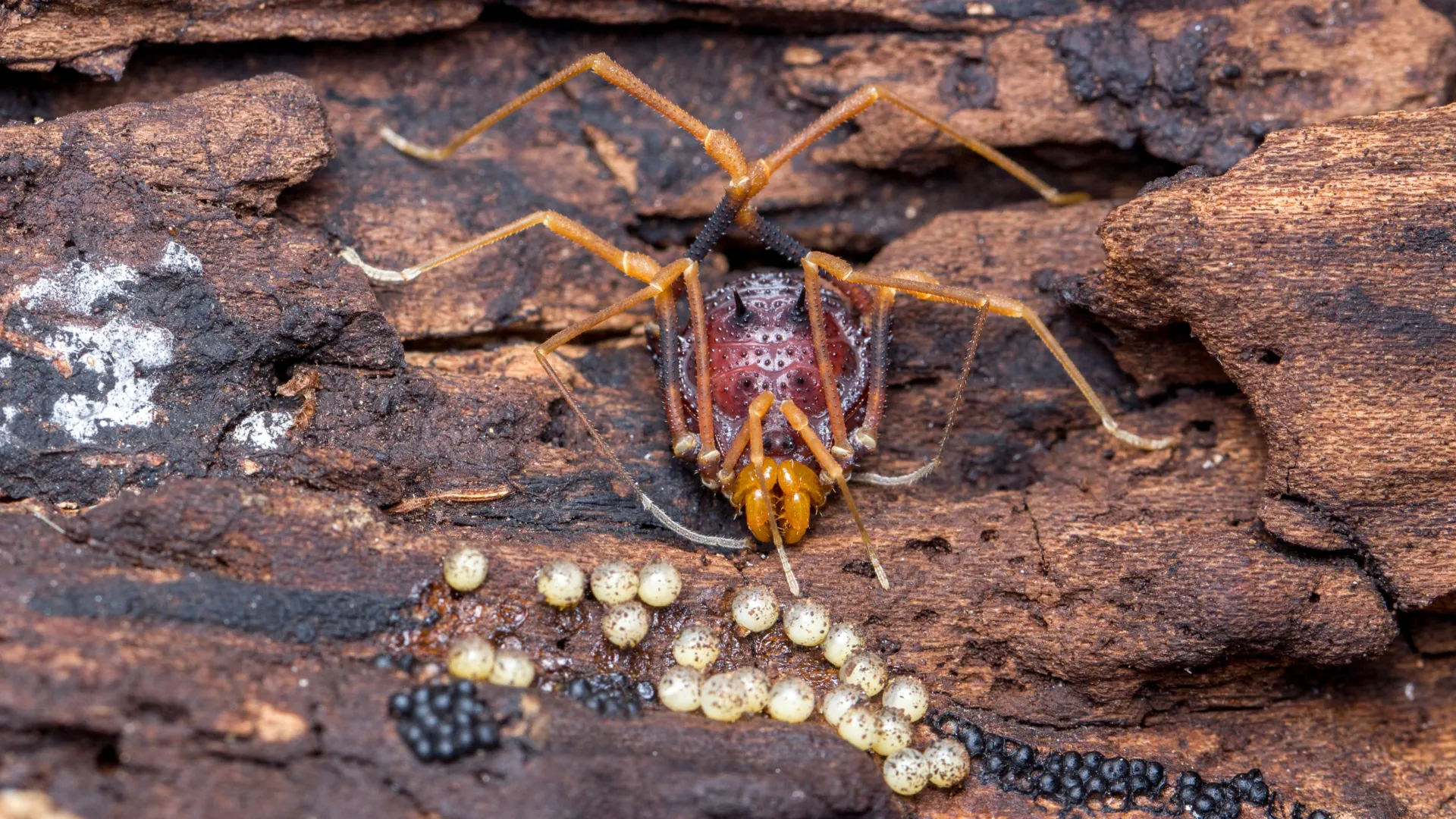
Citizen scientists using the iNaturalist platform have helped researchers solve a decades-old puzzle about how parental care evolved in harvestmen, spider-like arachnids that typically receive little scientific attention.
The research team, leveraging photos and observations crowdsourced from iNaturalist users worldwide, more than doubled the known cases of egg-guarding behavior in these creatures. The analysis revealed that maternal and paternal care in harvestmen evolved along separate biological pathways, challenging previous assumptions about parental behavior across species.
Harvestmen, also called daddy longlegs, represent an understudied group despite their ubiquity in ecosystems. Most research has focused on better-known arthropods like insects and other spiders. The citizen science approach allowed researchers to rapidly accumulate data that would have taken years to collect through traditional field methods alone. The entire project wrapped up in days rather than months or years.
The findings demonstrate how public participation in science accelerates discovery, particularly for organisms that exist in abundance but lack dedicated research funding. Citizen scientists contributed observations that proved essential to understanding whether maternal and paternal investment evolved independently or as linked traits. The data showed they followed distinct evolutionary trajectories, suggesting different selective pressures shaped each form of parental behavior.
iNaturalist, a platform where naturalists and researchers document biodiversity observations, proved invaluable for this work. The platform's global network of contributors provided geographic and temporal breadth that single research teams cannot match. Researchers could quickly filter observations by species, behavior, and location to construct a comprehensive dataset.
This work highlights a growing trend in biology where open data platforms democratize research. Rather than requiring expensive expeditions or laboratory facilities, scientists can now harness observations from thousands of people worldwide. The harvestmen study shows this approach works particularly well for behavioral ecology, where observational data from natural populations proves essential.
The findings expand