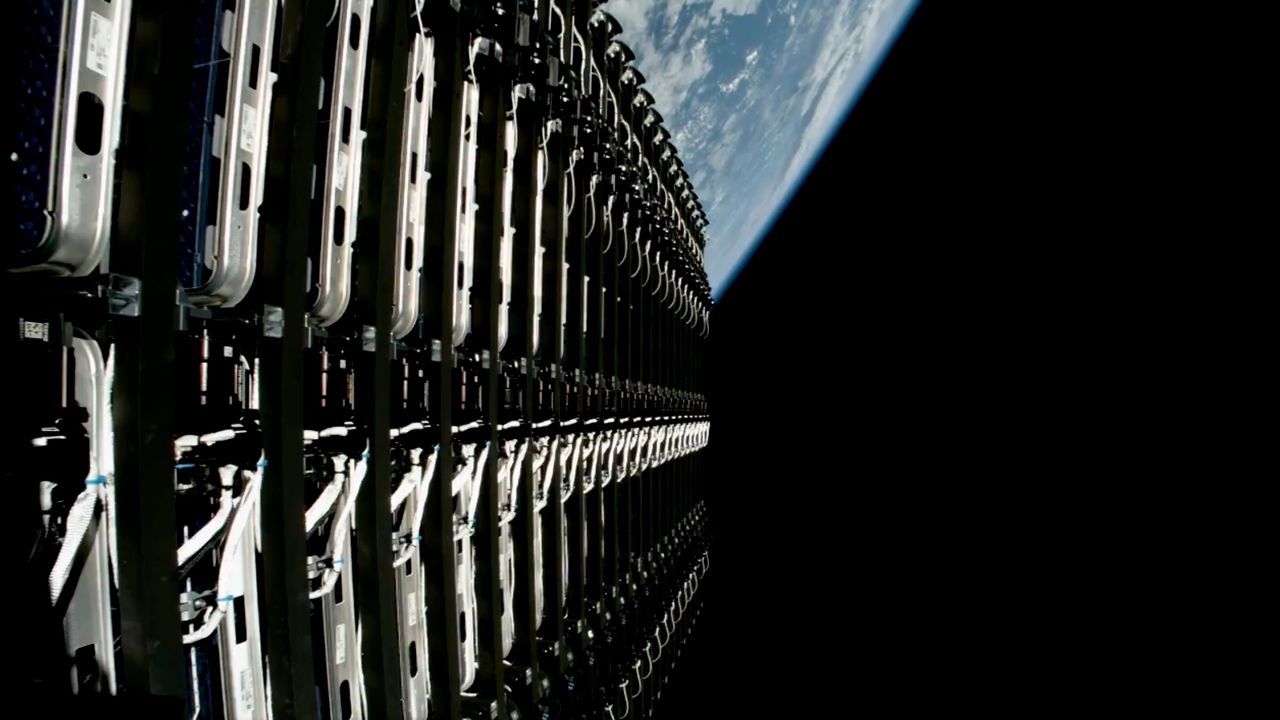
SpaceX filed an application with U.S. regulators to deploy 100,000 next-generation Starlink satellites in Earth orbit, according to the company's submission reviewed by Space.com. Each satellite will weigh approximately 4,400 pounds.
The proposed megaconstellation dwarfs SpaceX's existing Starlink fleet, which has grown to roughly 5,600 operational satellites since the company began launches in 2019. The new constellation would represent an eighteen-fold expansion of the current network.
SpaceX designed these heavier next-gen satellites to deliver higher throughput and faster internet speeds than earlier models. The increased mass reflects expanded onboard capabilities, including more powerful antennas and upgraded processing equipment. The company has tested some of these advanced satellites already, launching demonstration units to validate performance before full deployment.
The application marks SpaceX's latest bid to dominate global satellite internet connectivity. The company competes with Amazon's Project Kuiper, which plans to launch 3,236 satellites, and OneWeb, a constellation of roughly 650 satellites already operational. SpaceX's proposed scale exceeds both competitors combined.
Regulatory approval remains uncertain. The Federal Communications Commission must evaluate whether adding 100,000 satellites creates unacceptable risks of orbital collisions, impacts on astronomical observations, or interference with other space operations. Each additional satellite increases the density of objects in low Earth orbit, where most Starlink satellites operate at altitudes between 340 and 1,150 kilometers.
The space debris problem has intensified as megaconstellations proliferate. When satellites malfunction or collide, they fragment into thousands of pieces traveling at speeds exceeding 25,000 kilometers per hour. These fragments pose collision hazards for active spacecraft and the International Space Station.
Starlink has demonstrated some debris mitigation efforts, including de