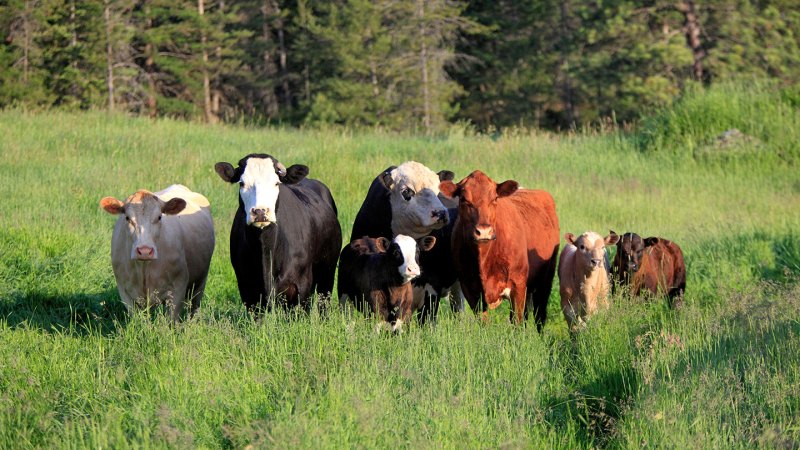
Researchers analyzing the complete genomes of Beefalo cattle have discovered that most animals carrying this hybrid name contain little to no bison DNA, contradicting the fundamental premise behind their breeding. The whole-genome study reveals a genetic disconnect between what breeders market as bison-cattle hybrids and what the animals actually are.
Beefalo emerged in the 1960s as a deliberate cross between American bison and domestic cattle, designed to combine bison hardiness with cattle meat production. Breeders promoted the hybrids as a way to improve beef quality while reducing feed costs. The breed became commercially established, with registries tracking pedigrees and breeders investing in herds advertised as bison-cattle crosses.
The genome analysis upends this narrative. The researchers sequenced DNA from multiple Beefalo animals and found that the vast majority lack substantial bison genetic material. Instead, most individuals appear to be predominantly or entirely cattle, with only trace amounts of bison ancestry, if any.
This finding suggests several possibilities. Some Beefalo may have undergone genetic drift over generations as breeders selected for cattle-like traits. Others might never have contained significant bison genetics despite being marketed as such. Mislabeling or record-keeping errors in breeding programs could also explain the discrepancy between advertised ancestry and genetic reality.
Breeders have contested the study's implications, defending their animals and questioning the research methods or conclusions. They argue that Beefalo serve important agricultural purposes regardless of precise genetic composition and that selective breeding practices maintain desired characteristics.
The research raises questions about transparency in livestock breeding and the relationship between genetic ancestry and commercial breed designation. It also illustrates how genetic testing can reveal gaps between marketing claims and biological reality in animal agriculture. The study appears to reflect broader tensions in the livestock industry between traditional breeding practices and modern genomic verification, where