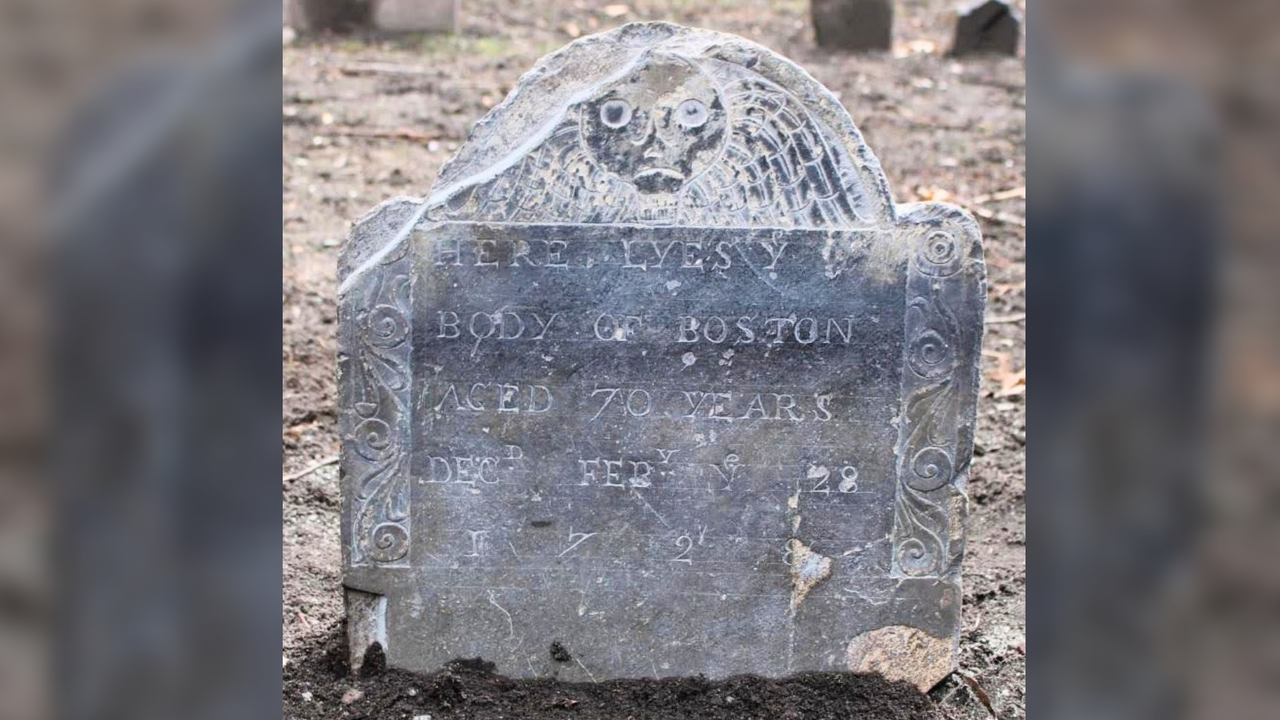
Archaeologists and historians working in Boston have identified what experts believe is one of the oldest gravestones marking a free Black person in America. The gravestone belongs to a man named Boston, who died in 1729.
The discovery offers rare documentary evidence of free Black life in colonial New England, a region often overlooked in discussions of early American racial history. Most historical records from this period focus on enslaved people or white colonists, making authenticated graves of free Black individuals exceptionally rare.
The gravestone's identification required careful analysis by researchers examining both the physical artifact and historical records. The inscription and burial location provided clues to Boston's identity and status as a free person during a time when most Black people in New England remained enslaved or faced severe legal restrictions.
The find adds to a growing body of archaeological work documenting the lives of free and formerly enslaved Black people in the North during the colonial era. Previous scholarship often portrayed slavery as primarily a Southern institution, but evidence increasingly shows that enslaved and free Black communities existed throughout New England colonies, including Massachusetts.
Boston's gravestone demonstrates that free Black people did establish themselves in colonial cities, though their numbers remained small and their rights severely limited. The inscription provides a tangible connection to an individual who navigated the complex legal and social structures of 1720s Boston.
The discovery comes as historians and archaeologists intensify efforts to uncover and preserve evidence of Black life in early America. Such work challenges traditional narratives that minimize Black presence in the North and provides context for understanding how racial categories and slavery evolved across different regions of colonial America.
This gravestone serves as both a historical artifact and a corrective to incomplete historical records, offering future researchers a concrete example of how free Black people lived and were memorialized in early colonial New England.