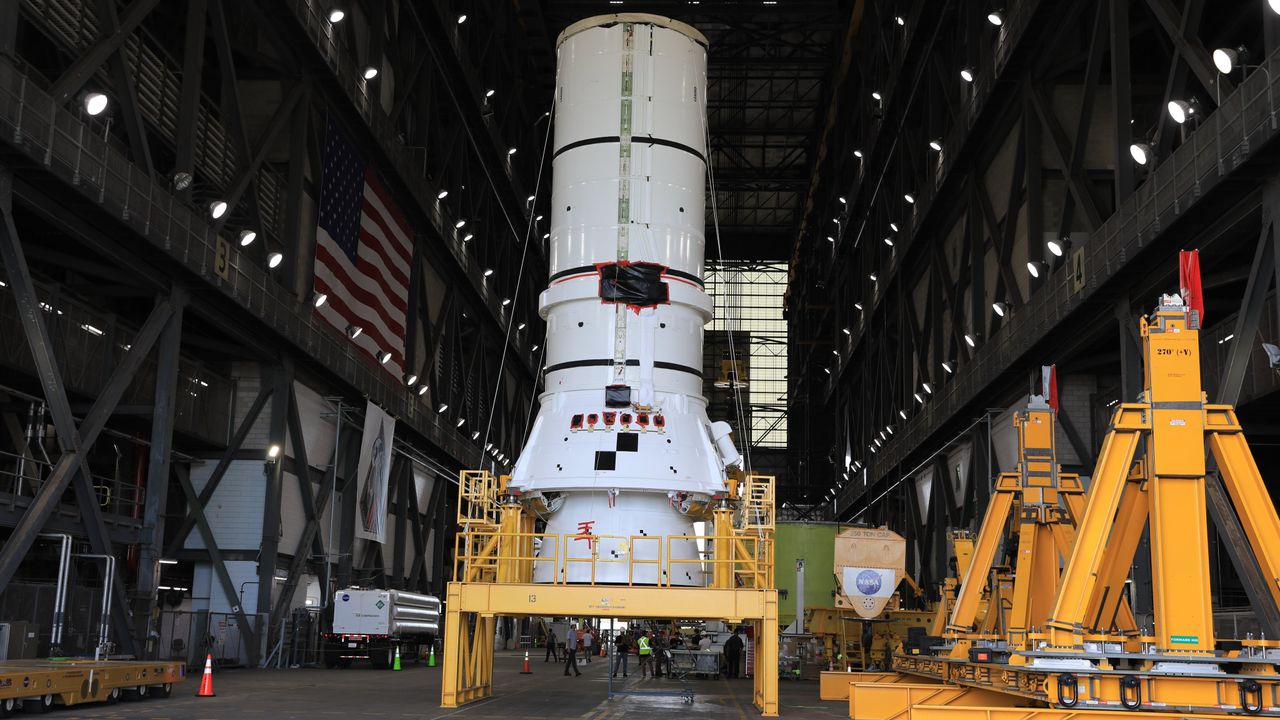
NASA has started stacking segments of the Space Launch System (SLS) solid rocket boosters in preparation for the Artemis III lunar mission, which aims to land astronauts on the Moon as early as 2027. The assembly process involves connecting individual booster segments at NASA's facility, a critical phase that precedes final integration with the SLS core stage and other vehicle components.
The SLS solid rocket boosters, derived from Space Shuttle heritage, provide the majority of thrust during the initial phase of launch. Each booster consists of multiple segments that must be precisely aligned and secured together. This segmented design allows for manufacturing, transportation, and assembly flexibility, though it requires rigorous quality control at each connection point.
Artemis III builds on the success of Artemis I, an uncrewed test flight that launched in November 2022, and Artemis II, a crewed lunar flyby planned for launch this year. The third mission represents a major step forward for NASA's lunar exploration agenda, as it aims to return humans to the lunar surface for the first time since Apollo 17 in 1972. The crew will conduct extended surface operations and gather scientific data to support eventual human settlement.
The booster stacking announcement comes as NASA works to meet aggressive timelines while addressing technical and budget challenges. Assembly of major flight hardware components must remain on schedule to support the 2027 target, though NASA historically experiences delays in complex spaceflight programs. The Artemis program has already experienced significant schedule slippage since its inception.
The stacking process itself typically requires several months from initial segment assembly through final segment attachment. Engineers conduct extensive inspections and testing at each assembly stage to ensure structural integrity and proper function of the boosters' pyrotechnic systems and avionics.
With booster assembly underway, NASA's integration teams are simultaneously preparing the SLS core stage, Exploration Upper