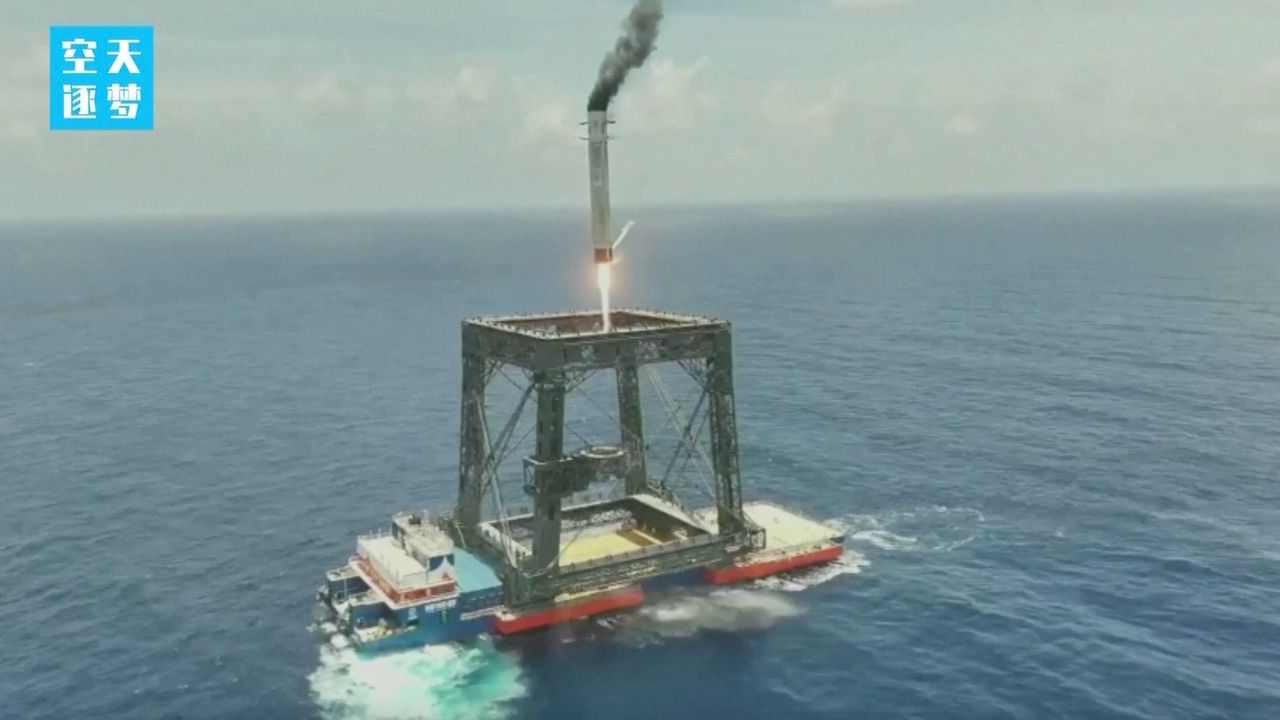
China achieved an unprecedented milestone on Friday when a Long March 10B rocket completed its inaugural flight and successfully landed at sea after deploying a satellite to orbit. The booster touched down in the Yellow Sea following the launch, marking the first time China has recovered a rocket during an orbital mission.
The Long March 10B lifted off carrying a payload to orbit while executing a controlled descent back to Earth's surface. This accomplishment demonstrates China's advancing capabilities in reusable rocket technology, a field previously dominated by SpaceX's Falcon 9 series.
Recovery of orbital-class boosters reduces launch costs by enabling reuse rather than discarding hardware after each flight. SpaceX pioneered this approach years ago with Falcon 9 landings on drone ships and coastal pads. China's success with the Long March 10B represents the nation's determined push to develop competitive alternatives.
The Long March family has served as China's primary launch vehicle for decades. The 10B variant represents the latest iteration designed for enhanced performance and recovery capabilities. Chinese space authorities have signaled intentions to make rocket reusability routine, similar to SpaceX's operational model.
This landing success comes as China accelerates expansion of its space program across multiple domains. The country has prioritized lunar exploration, crewed missions, and space station operations. Demonstrating reliable booster recovery adds another capability to this expanding arsenal.
Technical details on the recovery sequence and booster condition remain limited in initial reports. Chinese officials will likely release additional information about the flight's performance and landing procedures in coming days.
The achievement underscores China's determination to compete as a spacefaring power capable of operating advanced rocket systems. Establishing routine booster recovery could reshape commercial launch markets by offering cost-competitive alternatives to existing providers.