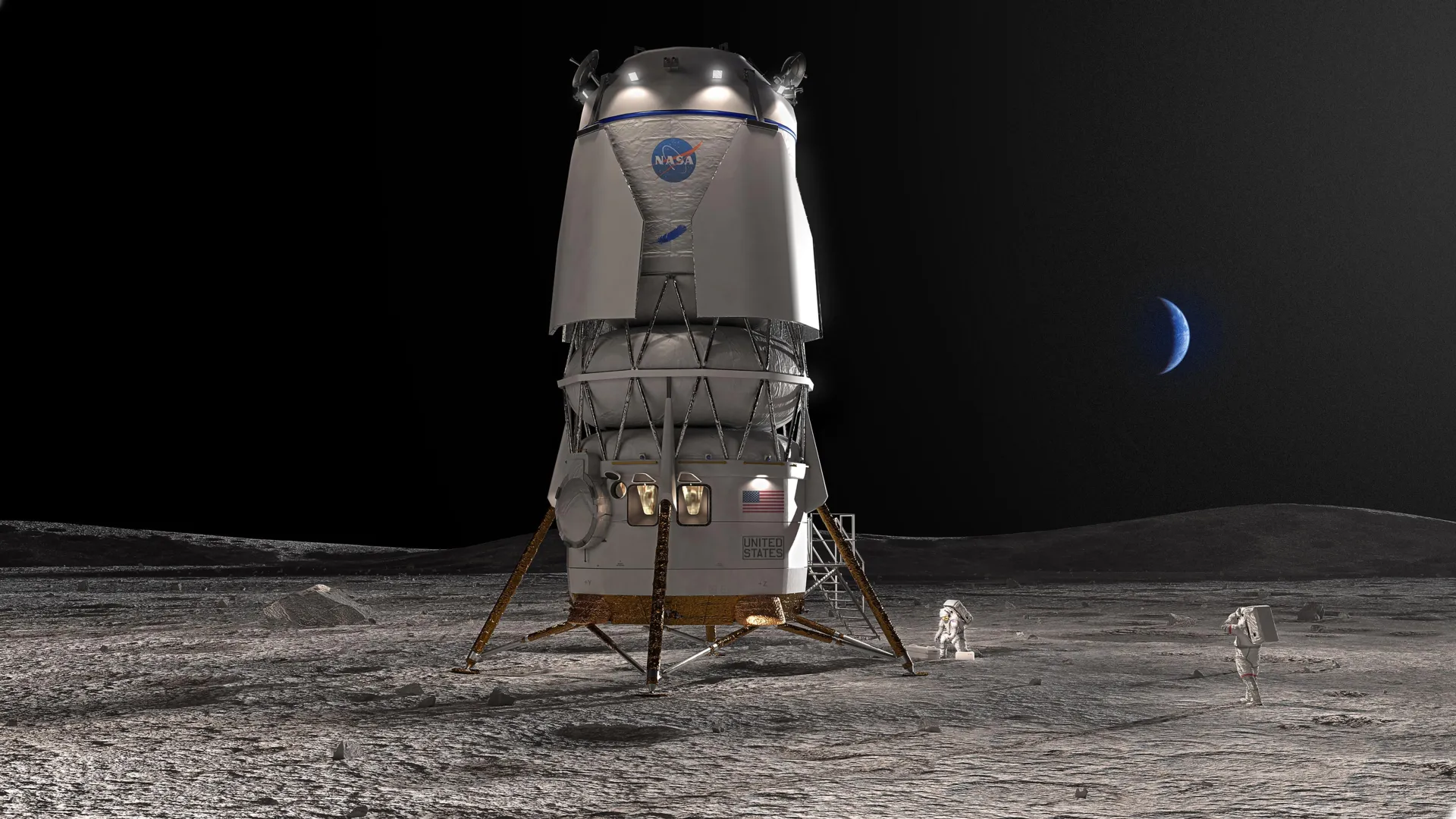
Future moon landings risk destroying evidence about life's origins on Earth through spacecraft exhaust contamination, according to new research. Scientists warn that rocket emissions could rapidly pollute the moon's most scientifically precious regions, obscuring organic molecules and other biosignatures that may reveal how life emerged.
The moon preserves ancient organic compounds in its regolith and rock formations, shielded from Earth's atmosphere and cosmic radiation by lunar dust and geology. These materials offer a pristine record of prebiotic chemistry from the early solar system. Contamination from spacecraft exhaust, particularly hydrocarbons and other chemical byproducts, could chemically alter or mask these delicate samples before scientists extract them.
Researchers emphasize that the problem intensifies with each new landing. As lunar exploration accelerates, with NASA's Artemis program and private companies planning multiple missions, exhaust plumes spread across wider areas. The moon's airless environment means pollutants settle directly on surfaces without atmospheric dispersion, concentrating contamination near landing zones and scientific sites.
The study calls for regulatory frameworks and technological solutions before contamination becomes irreversible. Options include using cleaner propellants, landing spacecraft farther from sampling areas, and establishing buffer zones around regions of highest scientific interest. Real-time monitoring systems could track exhaust dispersal patterns and help scientists distinguish natural lunar materials from terrestrial contamination when analyzing samples.
The research highlights a tension between advancing space exploration and preserving scientific opportunities. Early lunar exploration left relatively minimal marks, but sustained human presence and cargo missions will create larger environmental footprints. The moon cannot be "cleaned," making prevention the only realistic strategy.
This work underscores why international lunar protocols matter. As multiple nations and private entities plan missions, coordinating landing sites and procedures could protect the most valuable locations. Without intervention, future researchers may struggle to access uncontaminated samples that could answer fundamental