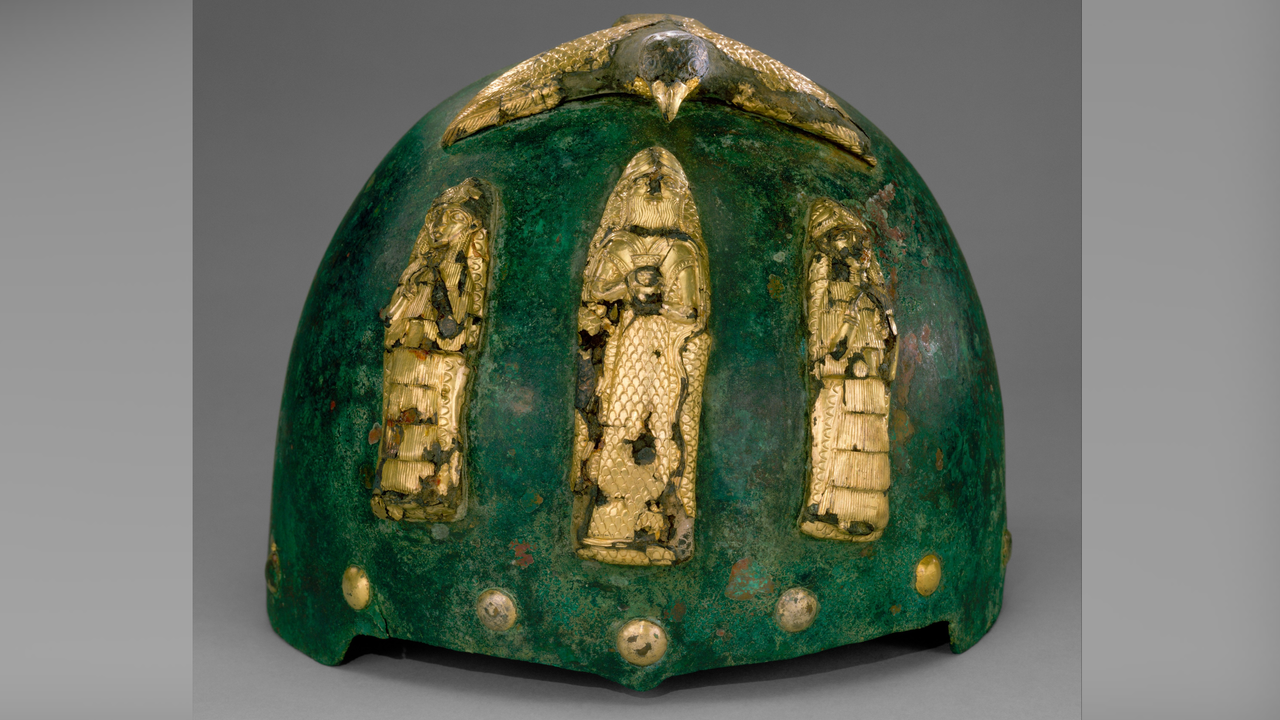
A Bronze Age helmet discovered in Iran reveals the artistic sophistication and religious beliefs of the Elamite civilization, which flourished roughly 3,500 years ago in what is now southwestern Iran. The bronze artifact features intricate decorations depicting divine figures and a raptor, with some elements covered in gold plating, suggesting it belonged to a high-ranking warrior or king.
The helmet demonstrates the Elamites' advanced metalworking techniques and their complex pantheon of gods. The raptor imagery likely held religious or symbolic significance in Elamite culture, possibly representing divine protection or martial power. The gold-plated deities adorning the piece indicate both the craftsman's skill and the wearer's elevated social status.
Elamite civilization flourished from around 3200 to 540 BCE, predating the Achaemenid Persian Empire that eventually conquered the region. The Elamites developed their own writing system, maintained diplomatic relations with Mesopotamian powers, and produced distinctive art and religious artifacts. This helmet exemplifies their unique cultural identity.
Bronze Age warrior equipment like this helmet provides archaeologists with insights into ancient military practices, religious beliefs, and metallurgical capabilities. The combination of practical armor with religious iconography suggests that warfare held spiritual dimensions in Elamite society. The gold-plating technique indicates access to precious metals and the resources required for such elaborate craftsmanship.
The artifact's preservation allows researchers to study ancient manufacturing methods and artistic conventions. Such pieces inform our understanding of how pre-Persian Iranian societies organized themselves, worshipped, and prepared for conflict. The helmet stands as a testament to Elamite civilization's achievements before the region fell under Achaemenid control.