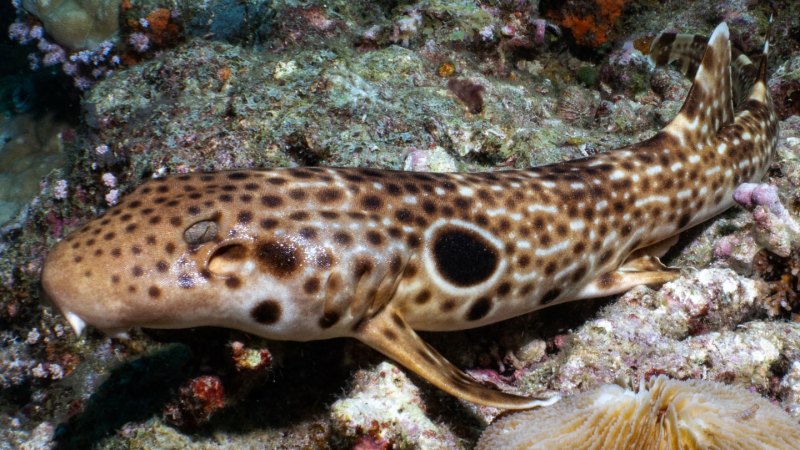
Researchers have identified a new species of walking shark in Papua New Guinea, expanding the roster of these unusual fish to 10 known species. The Dudgeon walking shark, named after its discovery location, joins a small but growing group of sharks that use their fins to crawl across shallow reef environments rather than swim through open water.
Walking sharks belong to the genus Hemiscyllium and have adapted to life in shallow coastal waters around Australia and nearby regions. They use their pectoral and pelvic fins, which resemble limbs, to propel themselves across the seafloor and even venture onto exposed reef flats during low tide. This terrestrial-like locomotion allows them to hunt in areas inaccessible to most other sharks and represents a remarkable adaptation to life in confined shallow waters.
The discovery of the Dudgeon walking shark adds to recent growth in the walking shark family. Since 2008, researchers have identified five new species, indicating that these specialized sharks may be more diverse than previously understood. The Papua New Guinea region, with its complex reef systems and isolated coastal waters, appears to be a hotspot for undiscovered species.
Walking sharks are small, typically reaching lengths of just over three feet. Their ability to emerge onto exposed reefs makes them somewhat unique among sharks, though their behavior remains relatively poorly studied compared to larger shark species. Scientists believe the shallow reef systems of the Indo-Pacific provide ideal habitats for these specialized predators.
The identification process likely involved genetic analysis and morphological examination to distinguish the new species from its closest relatives. Researchers working in tropical marine biology continue to survey these regions, recognizing that coral reef ecosystems harbor biodiversity that remains incompletely catalogued.
The discovery underscores how much marine science still has to learn about shark diversity, particularly among smaller species that inhabit specialized habitats. Papua New Guinea's contribution to this research highlights the conservation importance of maintaining