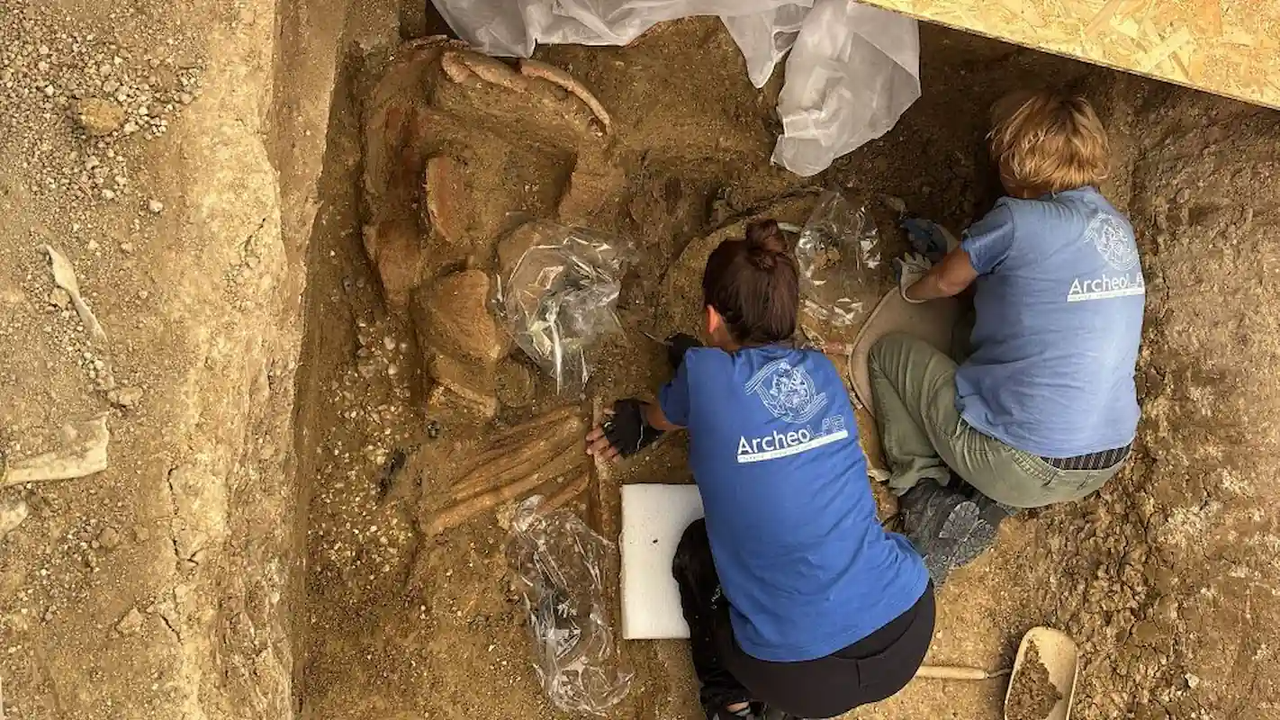
Archaeologists working on Italy's Adriatic coast have unearthed a 2,500-year-old tomb belonging to a "warrior prince" of the Piceni, an ancient pre-Roman civilization that remains poorly documented in historical records. The burial site contains a chariot and helmet, artifacts that point to the deceased's elite status and military role.
The Piceni inhabited the Adriatic region of what is now Italy during the Iron Age and early Classical period. Despite their prominence in their time, the Piceni left few written records, making archaeological evidence crucial for understanding their society, warfare practices, and social hierarchy. This discovery provides rare direct insight into elite burial customs among this culture.
The inclusion of a chariot in the tomb indicates substantial wealth and power. Chariots served both practical and symbolic functions in ancient Mediterranean societies, used in warfare and reserved for high-ranking individuals. The presence of a decorated helmet reinforces the warrior identity of the individual interred here.
The excavation expands the growing body of archaeological evidence about pre-Roman Italian civilizations beyond the more famous Etruscans and early Romans. The Piceni maintained their distinct cultural identity while trading and interacting with Greek colonies and other Mediterranean powers. Their eventual incorporation into the Roman Republic remains a significant but understudied chapter in Italian prehistory.
Tomb contents often reveal social structures, metallurgical techniques, and trade networks of ancient peoples. This warrior prince's burial likely contains pottery, weapons, and possibly personal ornaments that archaeologists will analyze to date the site precisely and understand the Piceni's material culture.
The discovery underscores how much remains unknown about Italy's pre-Roman past. Each excavation of Piceni sites contributes pieces to reconstructing the daily lives, beliefs, and political organization of this civilization before Rome's expansion reshaped the peninsula's political landscape.