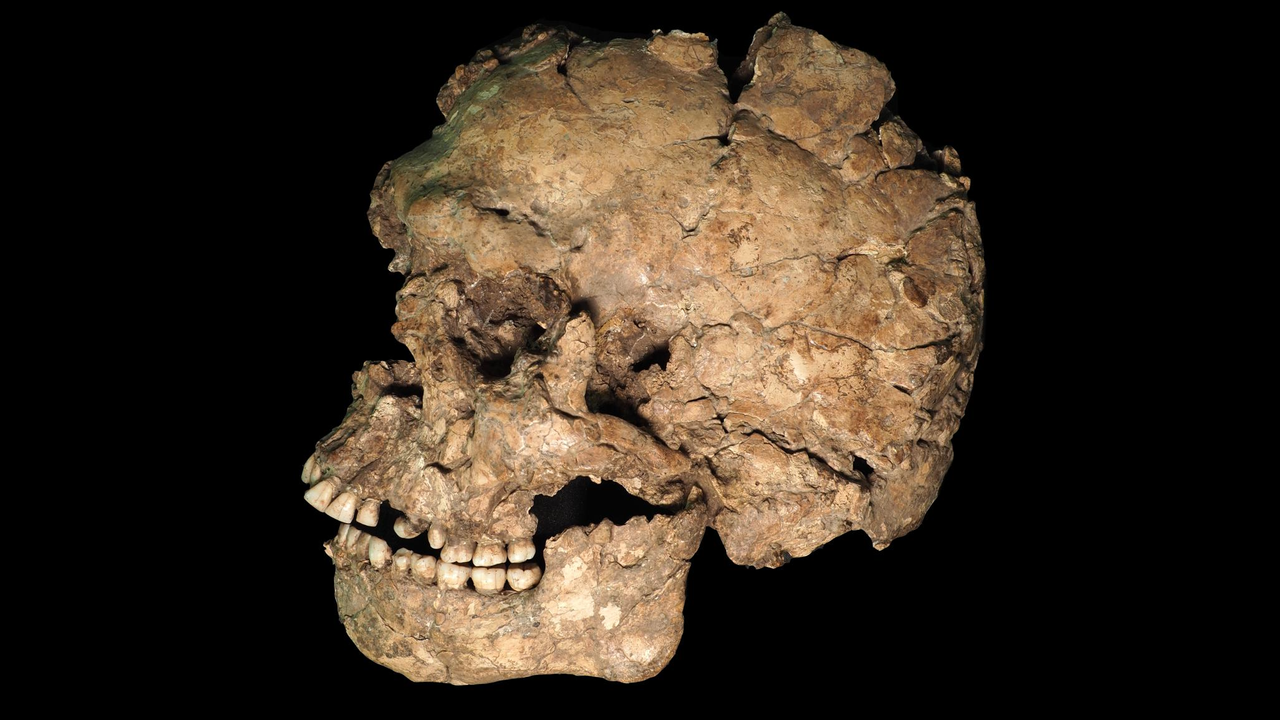
Researchers have identified evidence of interpersonal violence among early modern humans in the Middle East. A microscopic examination of the Qafzeh 25 skull, discovered in Israel, reveals a cut mark consistent with a stone tool wound inflicted approximately 100,000 years ago.
The cut appears on the facial bones of the individual, suggesting a deliberate strike to the face. This finding pushes back documentation of lethal violence among Homo sapiens and provides rare direct evidence of conflict during the Early Upper Paleolithic period, when anatomically modern humans were dispersing out of Africa.
The analysis employed high-magnification microscopy to distinguish the mark from post-mortem damage and natural erosion. Researchers compared the cut's morphology to experimental wounds created by stone implements, confirming the tool mark's origin. The location on the face rules out accidental contact during hunting or butchering.
Qafzeh 25 belongs to a population of early modern humans who inhabited the Levantine region roughly 100,000 to 120,000 years ago. This individual lived during a period when Homo sapiens coexisted with Neanderthals across Eurasia, before fully replacing them around 40,000 years ago.
The discovery reveals that organized violence and interpersonal conflict emerged among our species earlier than previously documented through skeletal remains. While archaeological evidence suggests sporadic violence in earlier hominin populations, direct cranial trauma in early Homo sapiens remains extraordinarily rare, making this case particularly instructive.
The finding does not indicate the wound was fatal. Bone remodeling patterns suggest the individual survived the initial injury, at least temporarily. However, it demonstrates that conflict over resources, territory, or social status occurred among these early dispersing populations.
This evidence contributes to ongoing debates about human nature and aggression. It challenges narratives that frame deep