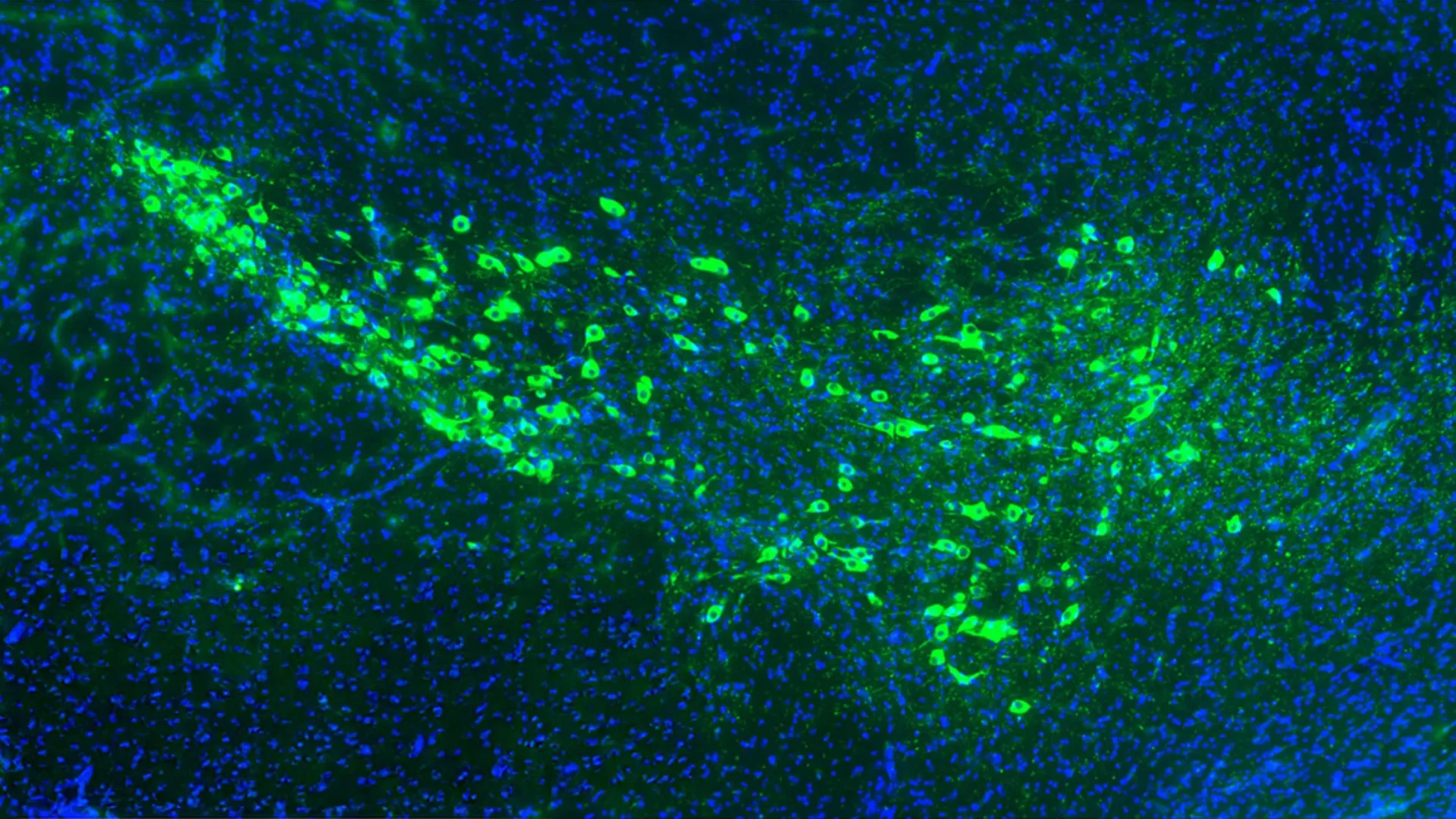
Yale University researchers identified two neuron surface proteins that facilitate the spread of alpha-synuclein, the toxic protein central to Parkinson's disease pathology. The team demonstrated that blocking these proteins in mouse models substantially slowed disease progression, pointing toward a novel therapeutic avenue.
Alpha-synuclein accumulates in the brains of Parkinson's patients and propagates between neurons in a prion-like manner, triggering neurodegeneration. Understanding this transmission mechanism has remained a key challenge in developing disease-modifying treatments. The Yale scientists pinpointed specific surface receptors that enable this protein-to-protein transfer across neuronal boundaries.
In experimental models, the researchers prevented alpha-synuclein spread by blocking these receptor proteins. Mice treated this way showed markedly reduced motor symptoms and slower cognitive decline compared to untreated controls. The effect was substantial enough to suggest the approach warrants further investigation as a potential clinical strategy.
The finding builds on growing evidence that Parkinson's develops through cell-to-cell propagation rather than as isolated neuronal death. Previous research has identified other mechanisms in this transmission pathway, but the Yale team's identification of these specific surface mediators offers a more tractable drug target. Proteins on the neuronal surface are generally more accessible to therapeutic antibodies or small molecules than intracellular disease mechanisms.
The work remains preliminary. Results in mouse models do not automatically translate to human patients, and the researchers have not yet tested whether existing pharmaceutical approaches could effectively target these proteins. Additionally, Parkinson's disease involves multiple pathological processes beyond alpha-synuclein spread, so blocking transmission alone may prove insufficient as a complete therapy.
Nevertheless, the discovery provides researchers with a concrete molecular target for drug development. Pharmaceutical companies and academic labs can now screen compounds designed to inhibit these specific receptors. If the approach succeeds in human trials, it could offer