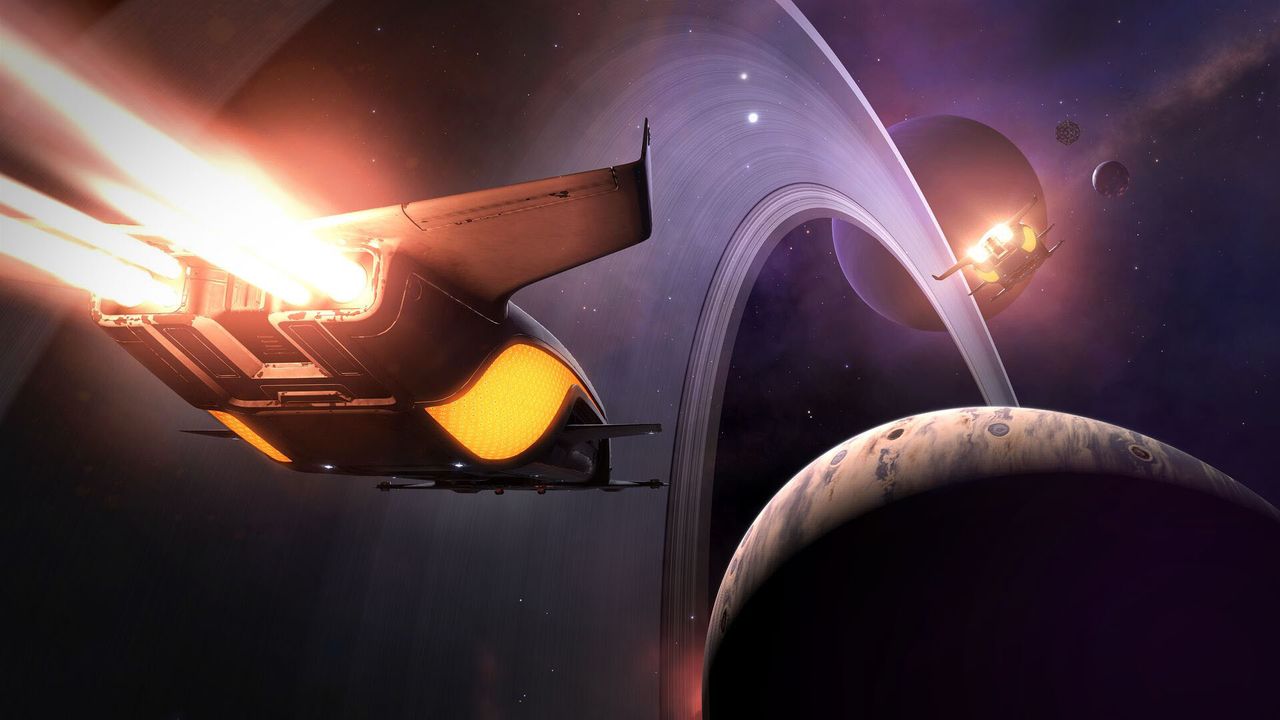
The vastness of space presents a fundamental challenge for video game developers trying to represent the universe authentically. Douglas Adams captured this truth perfectly, and game designers grapple with it constantly.
The core problem is mathematical. The universe operates at scales that break human intuition and computer rendering. The distance from Earth to the Sun is roughly 93 million miles. The nearest star system, Proxima Centauri, sits 25 trillion miles away. Representing these distances accurately in a playable game creates immediate technical problems.
Game engines render objects based on screen position and distance from the player camera. Travel at realistic speeds between planets or stars becomes impossibly tedious. A spacecraft moving at light speed would still require months or years of gameplay to traverse interstellar distances. Most space games compress scale dramatically or abstract travel entirely through faster-than-light jumps and loading screens.
Studios like Frontier Developments, creators of Elite Dangerous, attempted procedural generation to simulate billions of star systems with realistic distances. The result? Players experience empty space between objects, making exploration feel hollow rather than wondrous. The game sacrifices perceptual scale for technical feasibility.
No Man's Sky faced similar criticism. While the game generates 18 quintillion planets procedurally, most are barren or repetitive. Developers prioritize gameplay pacing and visual variety over astronomical accuracy. Players zip between worlds in seconds, reducing the sense of traversing a genuine cosmos.
Some games embrace the problem creatively. Outer Wilds respects player time while maintaining genuine spatial relationships. Its solar system spans a scale small enough to traverse meaningfully but large enough to convey isolation and wonder. This approach succeeds by limiting scope rather than simulating infinity.
The tension persists: accuracy produces tedium, while compression sacrifices authenticity. Game design requires pacing, progression, and interaction. The universe operates under none of