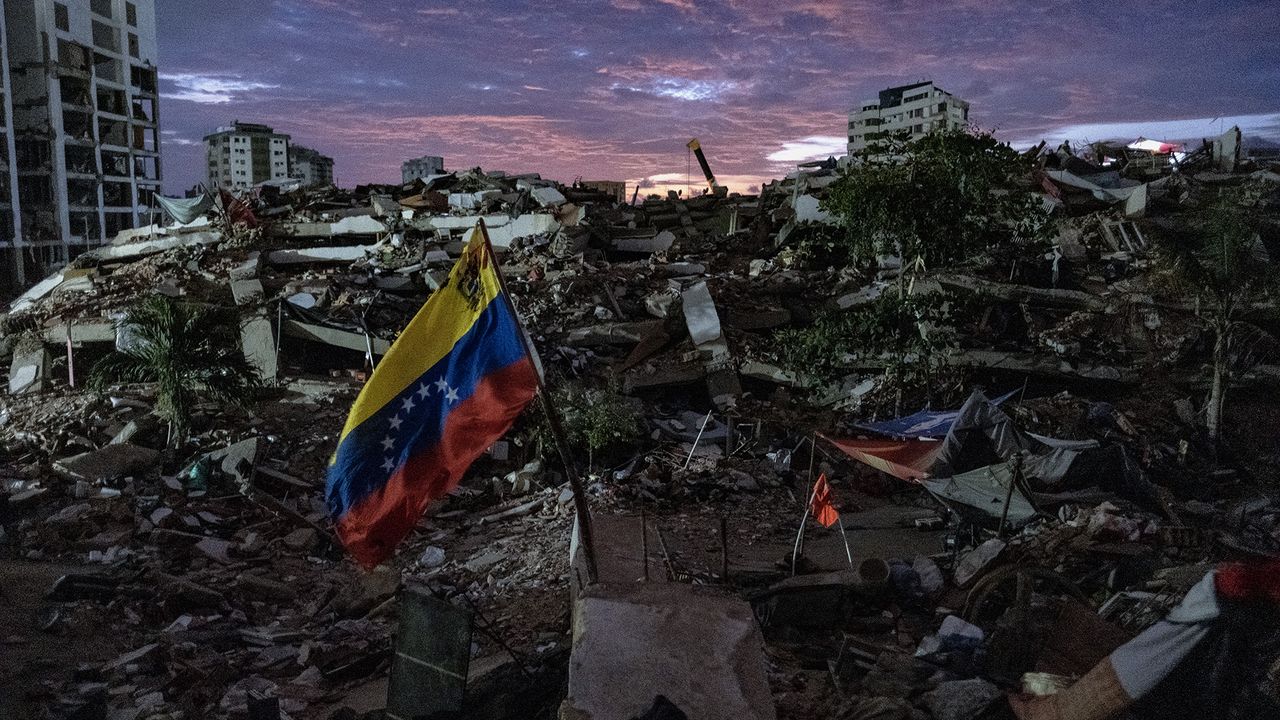
A devastating pair of earthquakes that struck Venezuela in August 2018 offers a sobering lesson for seismic hazard assessment along California's San Andreas Fault system.
The Venezuelan earthquakes, occurring just 40 minutes apart with magnitudes of 6.9 and 6.4, damaged thousands of buildings and killed dozens of people across the country. What made this sequence unusual was how the two quakes appeared to rupture along adjacent fault segments that scientists previously thought operated independently.
Researchers studying the doublet discovered that stress from the first earthquake triggered the second rupture on a neighboring fault. This cascade effect demonstrated that multi-fault systems can amplify damage in ways that traditional seismic models often underestimate. Standard hazard assessments typically calculate earthquake risk for individual faults separately, rather than accounting for how one rupture might trigger another in rapid succession.
The implications for California are direct. The San Andreas Fault system comprises multiple interconnected segments stretching over 800 miles. If a major rupture on one segment can trigger failures on adjacent faults, the total damage and shaking intensity could far exceed predictions based on analyzing each fault independently.
Seismic hazard models used for building codes and disaster planning in California rely on historical data and geological records to estimate rupture sizes and frequencies. The Venezuelan doublet suggests these models may systematically underestimate the worst-case scenarios for regions with complex, multi-fault geometries.
Engineers and disaster planners have begun incorporating stress transfer mechanics into updated seismic models. Understanding how one earthquake loads or unloads stress on neighboring faults helps refine predictions of cascade failures. This knowledge could lead to stricter building standards and improved emergency response planning in high-risk areas.
The Venezuelan event occurred on the Caribbean-South American plate boundary, a different tectonic setting than California, but the physical principles governing stress transfer apply universally.