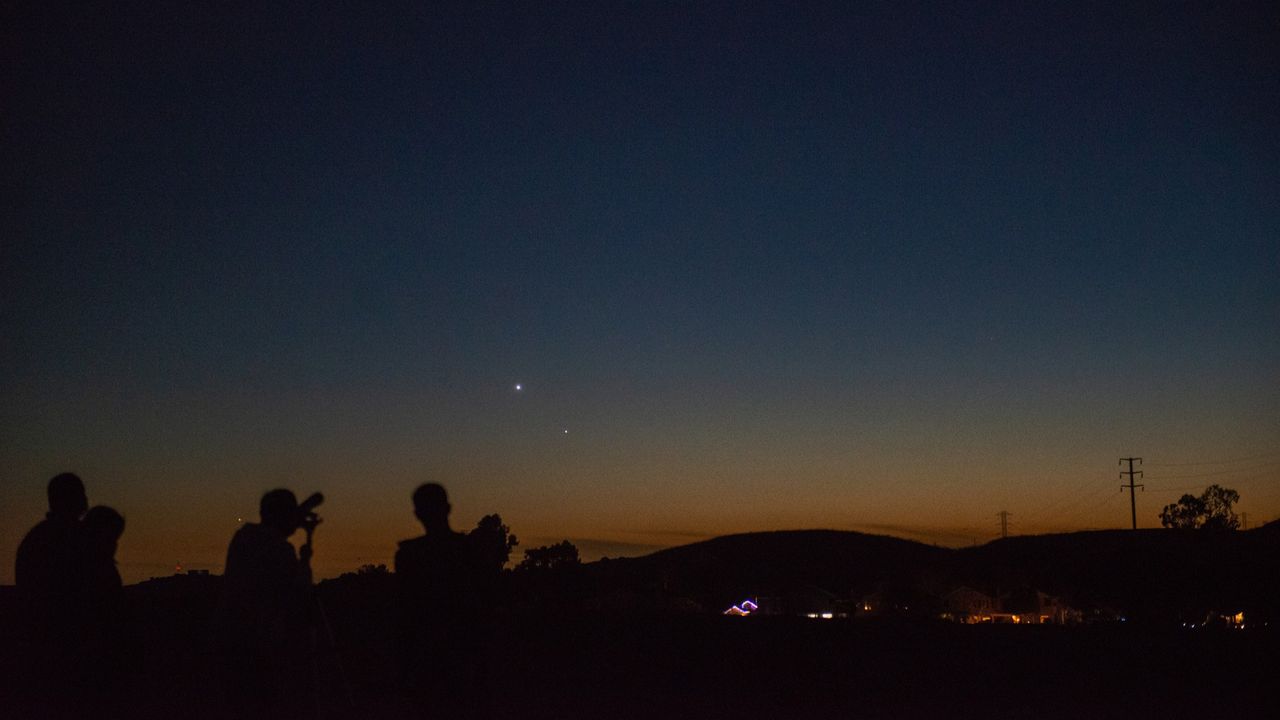
Early risers on July 11 will witness a rare celestial alignment visible just before dawn. A thin crescent moon will line up with Mars, the star Aldebaran, and two star clusters in a configuration that astronomy enthusiasts describe as particularly striking.
The arrangement places these objects in close proximity across the sky, creating a visual grouping that requires no telescope or special equipment to observe. Viewers simply need to wake before sunrise and locate a spot with clear views of the eastern or southeastern horizon, depending on their geographic location.
Aldebaran, the brightest star in the constellation Taurus, will shine prominently near the lunar crescent. Mars will appear as a reddish point of light positioned among the other celestial objects. The two star clusters adding to the display likely include the Pleiades, a naked-eye star cluster also known as the Seven Sisters, along with another nearby grouping.
Planetary and lunar alignments occur regularly as Earth, the moon, and other planets move through their orbits. This particular configuration offers an accessible viewing opportunity for observers at most mid-northern latitudes. The predawn timing means the sky will still hold some twilight, making the brighter objects easier to spot against the darkening background.
The window for observation will be brief, lasting perhaps 30 to 60 minutes before the sky brightens too much with approaching sunrise. Exact timing and visibility depend on latitude and local weather conditions. Clear skies and minimal light pollution will improve the view substantially.
Such alignments have captured human attention for millennia, serving as natural markers of astronomical motion and seasonal change. Modern observers can enhance their viewing using smartphone astronomy apps that identify celestial objects and predict exact positions for their location.