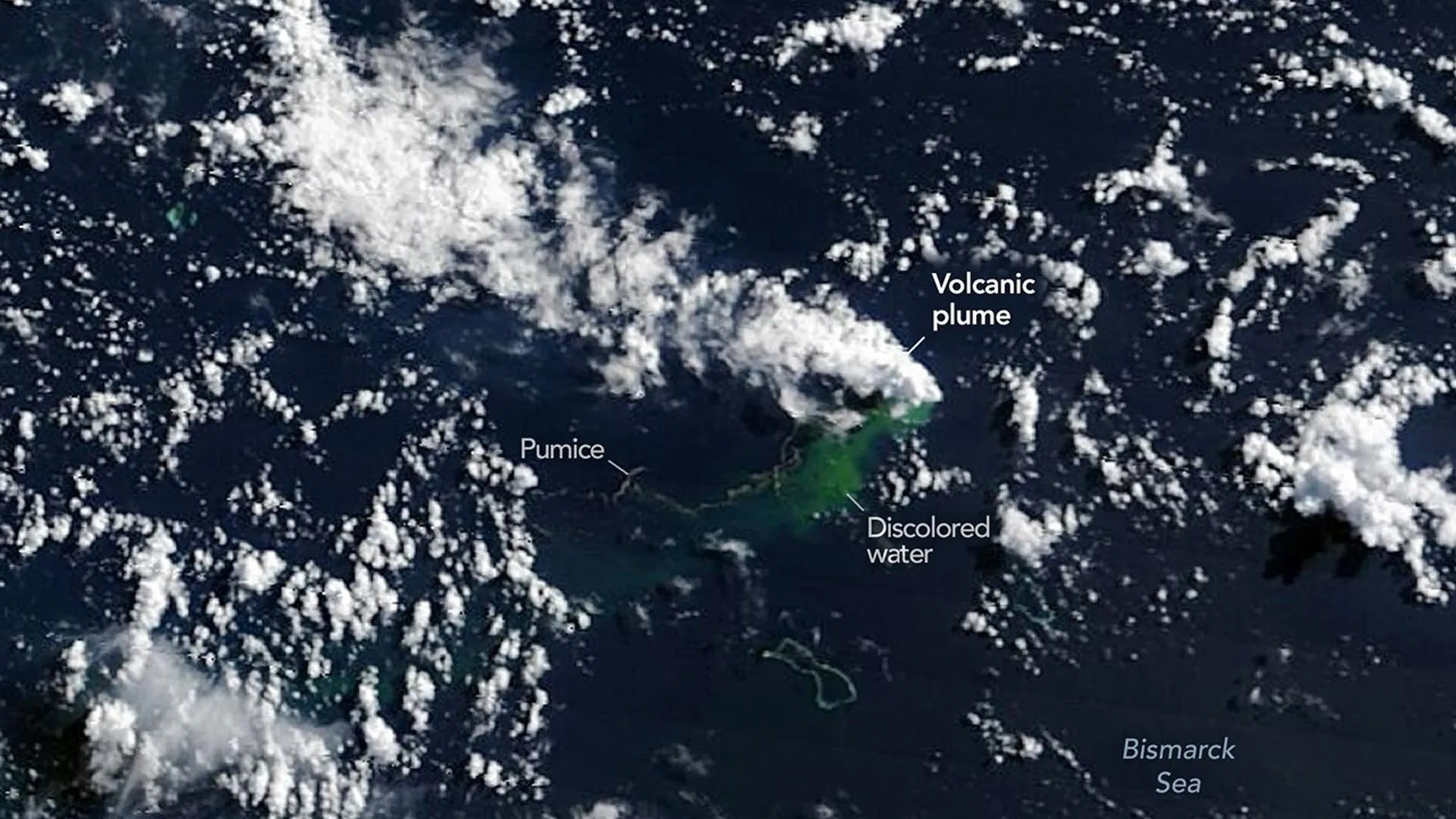
NASA satellites are monitoring an underwater volcanic eruption north of Papua New Guinea that may create a new island. The eruption, discovered in the Bismarck Sea region, shows multiple signs of intense activity. Thermal imaging from space reveals hotspots where magma approaches the ocean surface. Steam plumes and ash clouds rise above the water, visible from orbit. Floating pumice rafts, formed when lava cools rapidly in seawater, drift across the surrounding ocean.
The Bismarck Sea ranks among Earth's least well-mapped ocean basins, making satellite observations especially valuable for tracking this event. The combination of steam, ash, and thermal signatures indicates the volcano sits unusually shallow underwater, increasing the likelihood that magma breaks through to create land above sea level.
Scientists view this eruption as a rare natural experiment. Island formation from submarine volcanism rarely occurs where researchers can document it from inception. If the volcano continues its current trajectory, observers will witness how rock emerges from the ocean, how initial ecosystems colonize bare stone, and how geological processes shape Earth's surface in real time.
The pumice rafts carry particular interest. These lightweight rocks float across vast distances, dispersing volcanic material and potentially transporting marine organisms to new habitats. Researchers can track where currents carry these rafts, gaining insight into ocean circulation patterns while documenting a volcano's expanding presence.
NASA and international partners continue satellite surveillance using thermal infrared sensors and high-resolution optical imaging. This data serves dual purposes: monitoring volcanic hazards for nearby shipping and communities while providing baseline observations of a geological process most humans never witness. The eruption's location in a geologically active but sparsely populated area allows scientists to gather detailed information without endangering populated regions that might otherwise require evacuation protocols.
The outcome remains uncertain. The volcano may subside, leaving only an underwater feature. Alternatively, it could breach the surface within