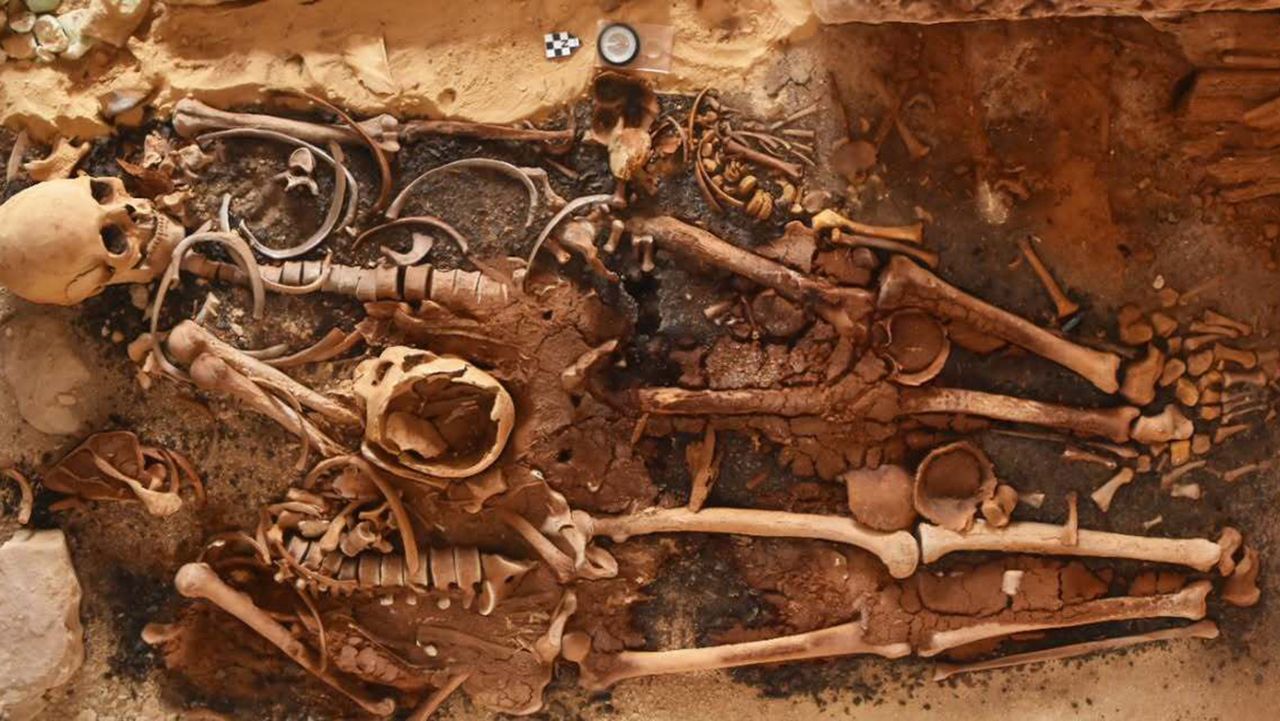
Archaeologists have discovered 18 ancient Egyptian tombs along Egypt's Mediterranean coast, containing dozens of gold "tongues" among other artifacts. The find represents a rare glimpse into funerary practices and beliefs about the afterlife in this coastal region.
Gold tongues were ritual objects placed in the mouths of mummies to enable speech and communication in the afterlife. Their presence in multiple tombs at this site underscores the importance of this funerary practice among this community. The tombs also contained additional grave goods typical of Egyptian burial customs.
The excavation took place at an unspecified Mediterranean coastal location in Egypt, a region less extensively studied than sites in the Nile Valley. Coastal settlements had distinct trading connections and cultural influences compared to inland areas, making discoveries here valuable for understanding regional variations in Egyptian civilization.
The tombs likely date to a specific period of Egyptian history, though the exact chronology requires further analysis of pottery, inscriptions, and other contextual evidence. Determining the age of the site will help archaeologists place these communities within the broader timeline of Egyptian development.
The scale of this discovery, with 18 tombs unearthed in a single location, suggests an organized cemetery serving a substantial community. Analysis of skeletal remains and burial positions may reveal information about family relationships, health status, and social organization. Inscriptions or cartouches could identify individuals or provide names of local rulers.
The gold tongues and other precious goods indicate the inhabitants had access to valuable materials and resources, suggesting economic prosperity or trade connections. The specific design and style of these objects will help researchers understand local craftsmanship and any influences from nearby regions.
Further study of these tombs will contribute to knowledge of how ancient Egyptians in Mediterranean coastal areas conducted their religious practices and organized their societies. Such discoveries fill gaps in understanding Egypt's cultural diversity and regional complexity during antiquity.