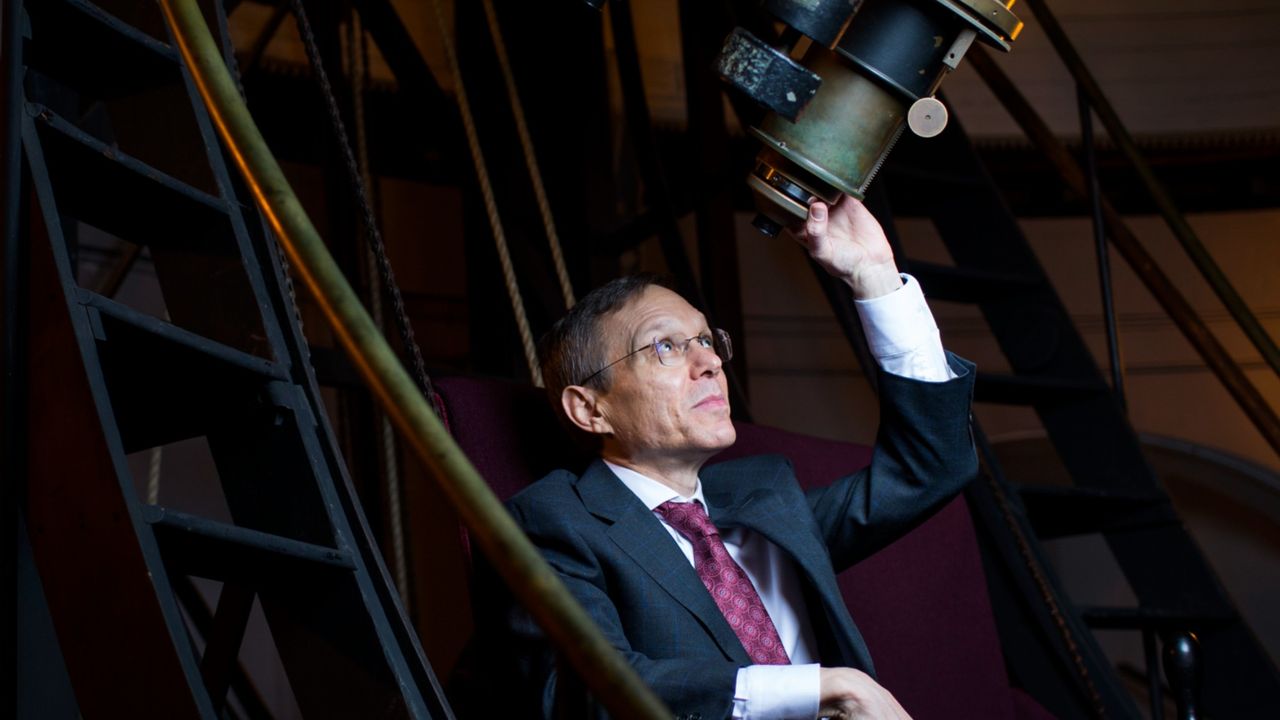
Harvard astrophysicist Avi Loeb heads a newly formed White House taskforce investigating unidentified anomalous phenomena, the official government term for what were previously called UFOs. The appointment signals a shift toward scientific scrutiny of unexplained aerial sightings.
Loeb directs the Galileo Project at Harvard, an initiative that uses telescope networks and artificial intelligence to detect and analyze anomalous objects in Earth's atmosphere and near-space environments. His work focuses on gathering physical evidence rather than speculation. The project began in 2021 following increased congressional and public interest in unidentified phenomena after military pilots reported encounters with objects exhibiting unusual flight characteristics.
The White House move reflects growing official acknowledgment that some aerial phenomena warrant systematic study. Congress has held hearings on the topic, and the Department of Defense established an office to track reports from military personnel. Loeb's appointment brings academic rigor to what has historically been a fringe topic dominated by conspiracy theories and sensationalism.
Loeb's research interests extend beyond atmospheric phenomena. He has published peer-reviewed work on the interstellar object Oumuamua, proposing it could represent an artificial probe, though mainstream astronomers consider natural explanations more likely. He has also written extensively on the search for extraterrestrial intelligence and biosignatures on exoplanets.
The taskforce's mandate remains to be fully detailed, but its existence underscores that legitimate scientists now engage with unexplained aerial phenomena as an empirical question. Loeb's leadership suggests the group will emphasize data collection, analysis protocols, and transparency rather than speculation.
The appointment does not imply the government has confirmed extraordinary explanations for any phenomena. Military incidents remain largely classified or unexplained through conventional means, leaving room for prosaic causes like sensor errors, weather balloons, or foreign surveillance technology. Loeb's role