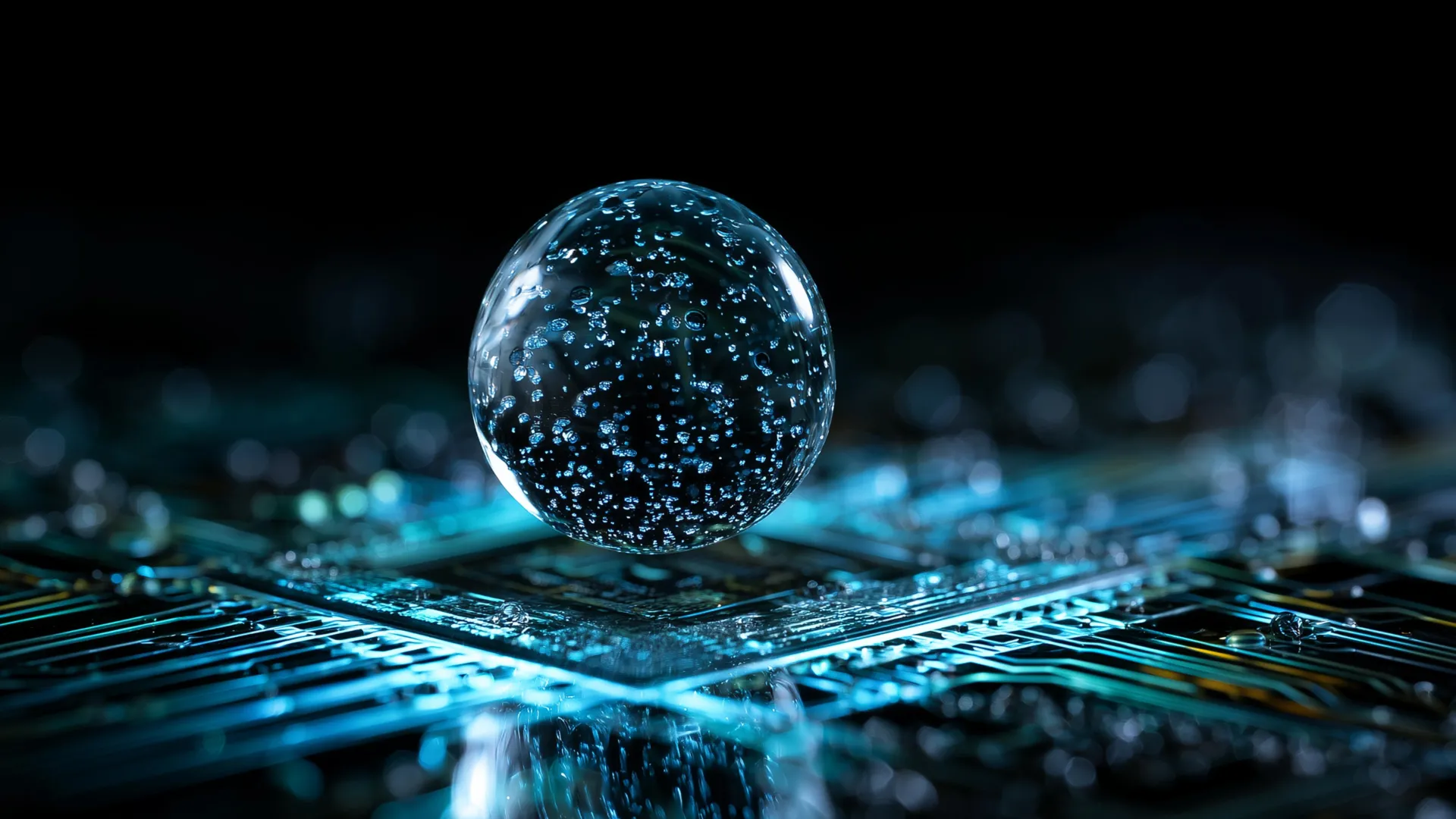
Researchers have discovered that ultra-fine bubbles embedded in ink droplets can fundamentally transform inkjet printing for advanced electronics manufacturing. By adjusting bubble quantities within each droplet, scientists achieved dramatic pattern reshaping without toxic chemical residues.
The breakthrough addresses a persistent challenge in inkjet printing for electronics. Traditional methods require post-processing solvents to remove unwanted chemical byproducts, creating environmental hazards and adding manufacturing costs. This new bubble-based approach eliminates that necessity.
The mechanism works through bubble nucleation within ink droplets. When droplets containing these ultra-fine bubbles impact a substrate, the bubbles alter fluid dynamics and evaporation patterns. This controls where ink spreads and settles, enabling precise pattern formation. Researchers manipulated bubble density to achieve different geometries without chemical post-treatment.
The application scope extends beyond cosmetic printing. Next-generation electronics require patterned materials for displays, sensors, and circuitry. Current inkjet methods produce low-resolution output compared to lithographic techniques. The bubble method promises resolution improvements while maintaining inkjet's speed and scalability advantages.
The research team demonstrated proof-of-concept across multiple ink formulations, suggesting broad applicability. However, challenges remain before commercial deployment. Bubble stability during storage and transport requires investigation. Manufacturing bubble-laden inks at scale demands new equipment protocols. Integration with existing inkjet hardware needs optimization.
Environmental benefits align with industry pressure for sustainable manufacturing. Eliminating solvent-based post-processing reduces chemical waste and worker exposure risks. Pharmaceutical and electronics manufacturers face increasing regulatory scrutiny on process chemistry, making this approach commercially attractive.
The work builds on growing interest in bubble dynamics for materials processing. Previous research explored bubbles in fluid mechanics and microfluidics, but direct application to industrial printing represents a novel direction. The simplicity of the approach, requiring only bubble count modulation, appeals to practical