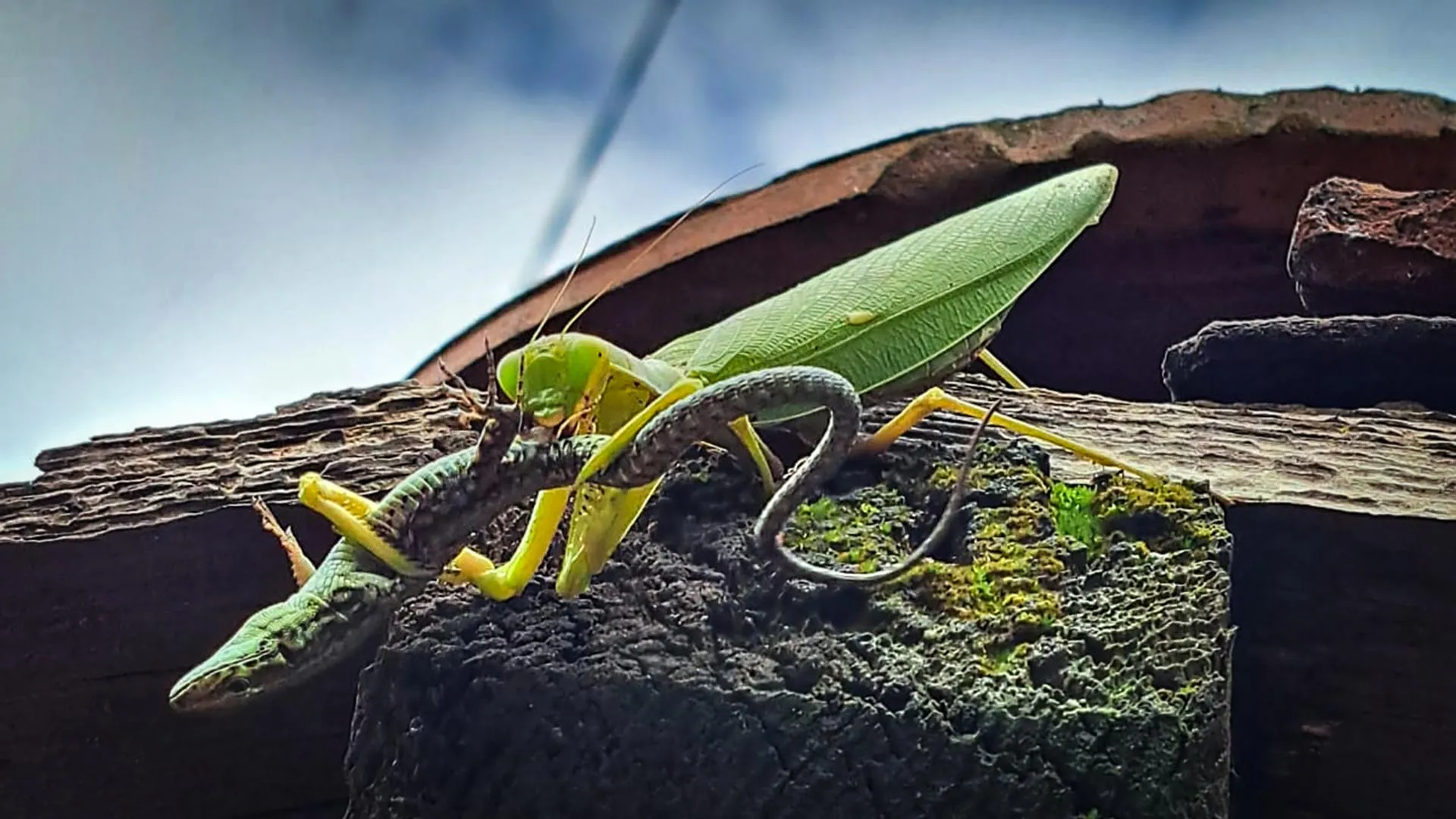
Two invasive Asian praying mantis species spreading rapidly across Europe have earned official invasive status, triggering alarm among scientists about their threat to native wildlife and ecosystems.
The species, which thrive in warming climates and urban settings, hunt native insects, pollinators, and small vertebrates with lethal efficiency. They also outcompete and kill native European mantis species through aggressive mating interactions that prove fatal for local populations.
Climate change has accelerated the northward expansion of these fast-breeding predators, opening new territory as temperatures rise. Urban environments provide ideal conditions for their spread, offering abundant prey and suitable habitats. The combination of rapid reproduction and minimal natural predators in their new range allows populations to explode once established.
The formal invasive classification reflects growing scientific consensus about the threat these mantises pose. Researchers have documented significant impacts on insect communities and native mantis populations in affected regions. The predatory behavior targets species crucial to ecosystem function, particularly pollinators essential for crop production and wild plant reproduction.
The mating interactions between Asian and native mantis species prove especially destructive. Males of the invasive species often kill native females, eliminating reproductive opportunities and accelerating the decline of indigenous mantis populations. This competitive mechanism compounds direct predation pressure on local wildlife.
The establishment of these species in Europe represents a concerning case of biological invasion driven by human activity and environmental change. As temperatures continue rising, suitable habitat for the Asian mantises will expand further northward into previously unsuitable regions. Early detection and rapid response programs offer the best hope for limiting their spread, though complete eradication appears unlikely given their current distribution.
The situation highlights how climate change amplifies invasion risks by enabling species to survive in regions where they previously could not persist. It also underscores the interconnected nature of ecological threats, where warming temperatures work alongside urbanization to facilitate the establishment of non-native predators that