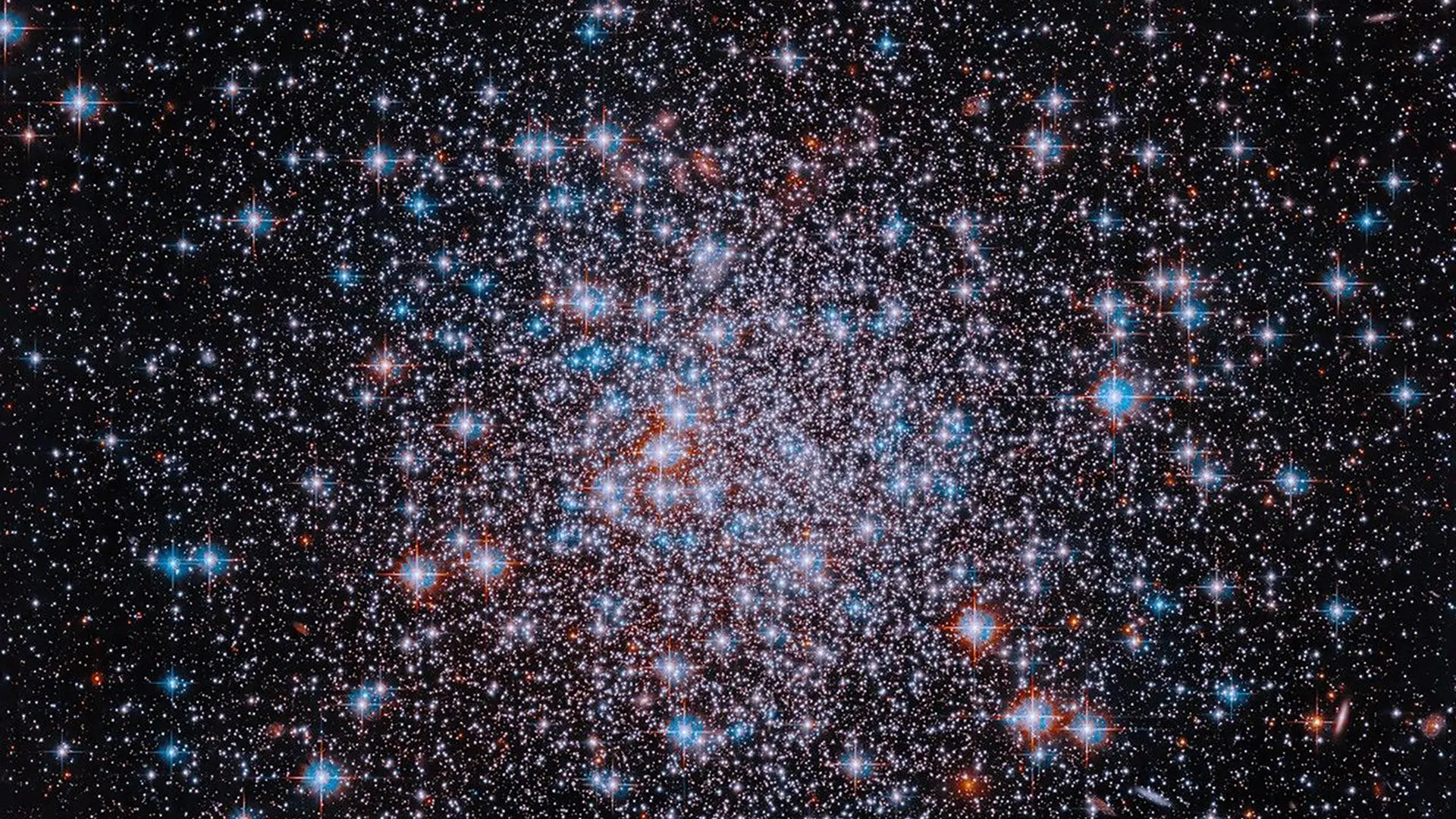
NASA's Hubble Space Telescope has captured a vivid image of an ancient star cluster in the Milky Way, revealing red, white, and blue stellar colors that coincide with America's 250th anniversary celebration.
The observation focuses on one of the galaxy's oldest globular clusters, dense collections of stars bound together by gravity. These ancient structures serve as cosmic laboratories for understanding stellar evolution and galactic history.
The image contains clues about how supernova explosions within these clusters distributed heavy elements throughout the young universe. This process proved essential for planetary formation and the emergence of life. When massive stars exploded as supernovae billions of years ago, they scattered elements like carbon, oxygen, and iron into surrounding space. These materials eventually coalesced into new stars and planets.
Globular clusters represent some of the earliest structures to form in galaxies. By studying them, astronomers gain insight into conditions during the universe's infancy. The Hubble telescope's powerful optics allow scientists to resolve individual stars within these clusters and measure their properties with precision.
The distinct color variations in the newly released image correspond to different stellar types and temperatures. Hotter, younger blue stars appear alongside cooler red giants, the expanded remnants of aging stars. This color diversity reflects the cluster's complex stellar populations and their evolutionary stages.
Hubble's observations of globular clusters have revolutionized understanding of stellar populations and chemical enrichment processes. The telescope's ultraviolet and infrared capabilities penetrate dust that obscures optical observations, revealing details invisible to ground-based instruments.
The timing of this release with America's anniversary reflects NASA's public engagement efforts, connecting space science with national celebration. The image demonstrates how fundamental physics happening billions of years ago in distant star clusters directly relates to human existence on Earth today.