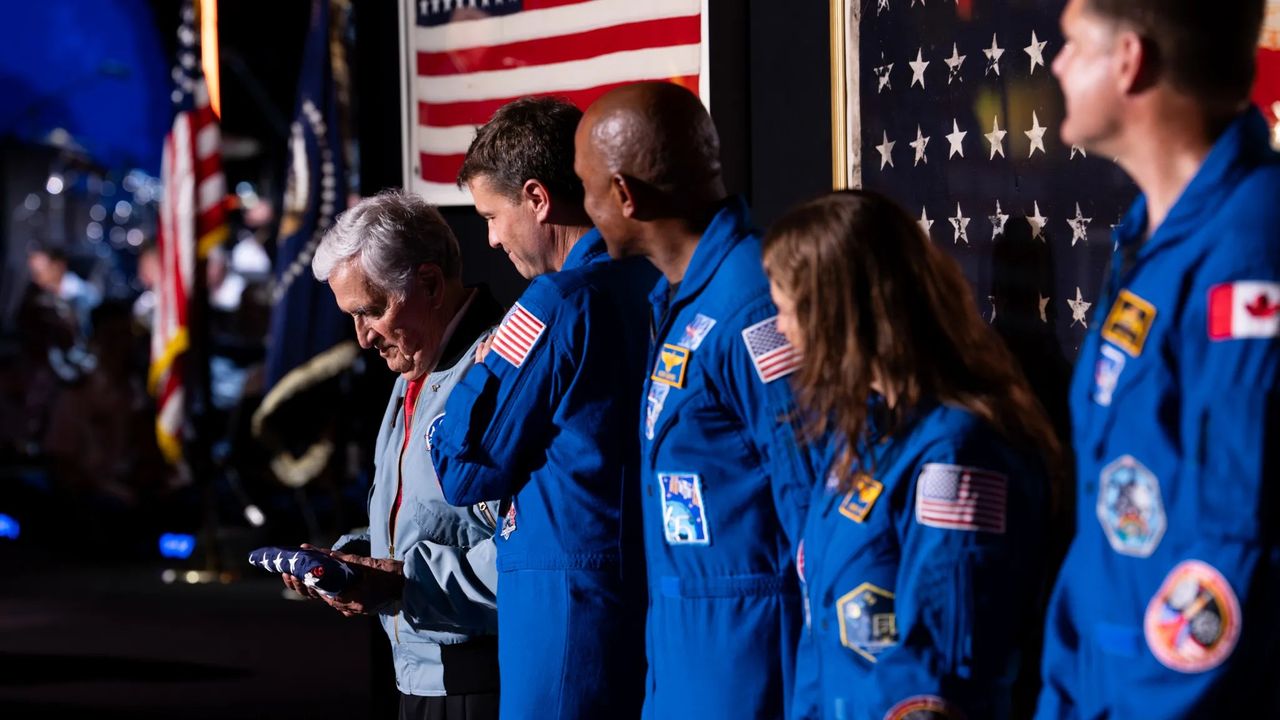
President Trump presented an American flag from the U.S. Capitol to astronauts selected for the Artemis program, intending for them to plant it on the moon during future lunar missions. The flag was handed to one of the final astronauts from the Apollo era, connecting the historical achievement of the 1960s and 1970s moon landings to NASA's renewed lunar exploration efforts.
The Artemis program aims to return humans to the moon and establish a sustainable presence there. NASA's astronauts selected for these missions will carry the Capitol flag as a symbolic gesture representing American achievement and continuity in space exploration. The presentation underscores the political backing for NASA's lunar ambitions and the ceremonial significance attached to returning to the moon.
This gesture mirrors historical precedent. During Apollo 11 in 1969, Buzz Aldrin and Neil Armstrong famously planted an American flag on the lunar surface, though the harsh lunar environment likely degraded it over time. Subsequent Apollo missions also carried flags to the moon.
The Artemis missions represent a significant shift in NASA's approach to lunar exploration. Rather than brief visits, the program emphasizes establishing infrastructure for long-term presence, including lunar bases and research stations. The missions will land astronauts near the lunar south pole, a region rich in water ice and scientifically valuable for understanding the moon's geology and supporting future human habitation.
Trump's involvement reflects the political dimensions of space exploration. His administration has previously emphasized American leadership in space, viewing lunar and Mars exploration as national priorities. The symbolic gesture of the Capitol flag connects legislative approval and national identity to NASA's technical endeavors.
The timing remains uncertain. NASA's current timeline suggests the first crewed Artemis landing will occur in 2026 or later, depending on development progress for the Space Launch System rocket and Orion spacecraft. Technical challenges and budget constraints continue to shape