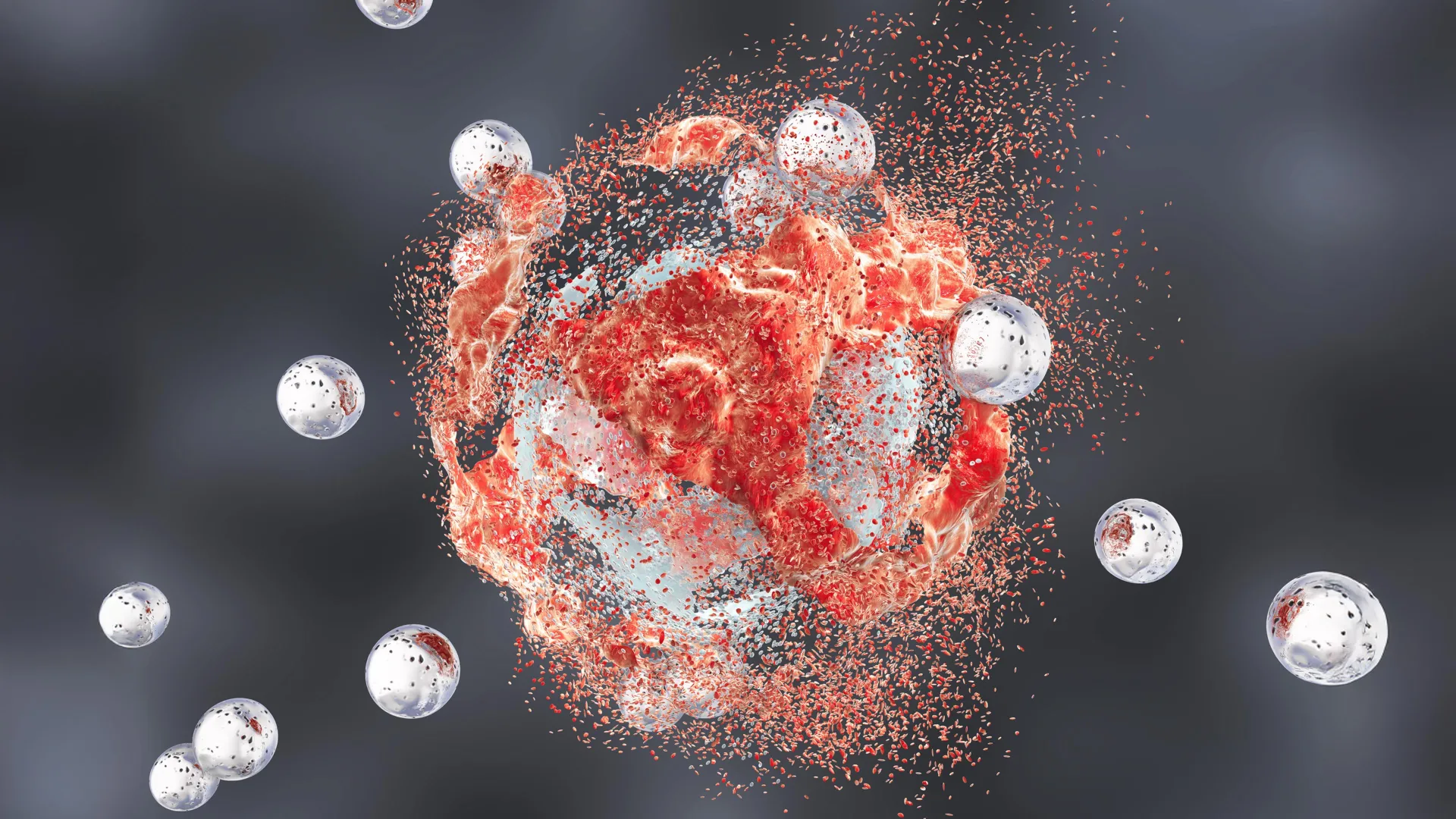
Researchers engineered silica nanoparticles small enough to penetrate tumor tissue and trigger cancer cell death in mice with aggressive prostate cancer. The particles induced apoptosis, a programmed cell death mechanism, while simultaneously activating immune responses against remaining malignant cells.
When combined with existing immunotherapy treatments, the nanoparticles produced complete tumor remission in multiple test subjects. The dual mechanism addresses a critical limitation of current cancer therapies: tumors often develop resistance to single-agent treatments by exploiting immune evasion strategies.
The study represents early-stage preclinical research. Mouse models provide valuable proof-of-concept evidence but do not always translate to human efficacy or safety. Researchers must still establish optimal dosing, confirm the particles clear safely from the body without accumulating in organs, and determine whether immune activation remains durable in human patients.
Silica nanoparticles offer manufacturing advantages over alternatives. Their size, typically in the 10-50 nanometer range, allows them to accumulate preferentially in tumors through the enhanced permeability and retention effect. This passive targeting mechanism reduces off-target damage compared to systemic chemotherapy.
The immunotherapy synergy proves particularly promising. Prostate cancer cells often suppress immune recognition through checkpoint proteins like PD-L1. The nanoparticles appear to enhance tumor antigen presentation, making cancer visible to T cells again and restoring immunotherapy effectiveness even in previously resistant tumors.
Aggressive prostate cancers, particularly those driven by mutations like BRCA2 loss or high-grade histology, account for the majority of prostate cancer deaths. Current options for metastatic disease include hormone therapy, chemotherapy, and immunotherapy combinations. A nanoparticle approach could expand the arsenal for patients who exhaust existing treatments.
Human trials remain years away. Regulatory pathways for