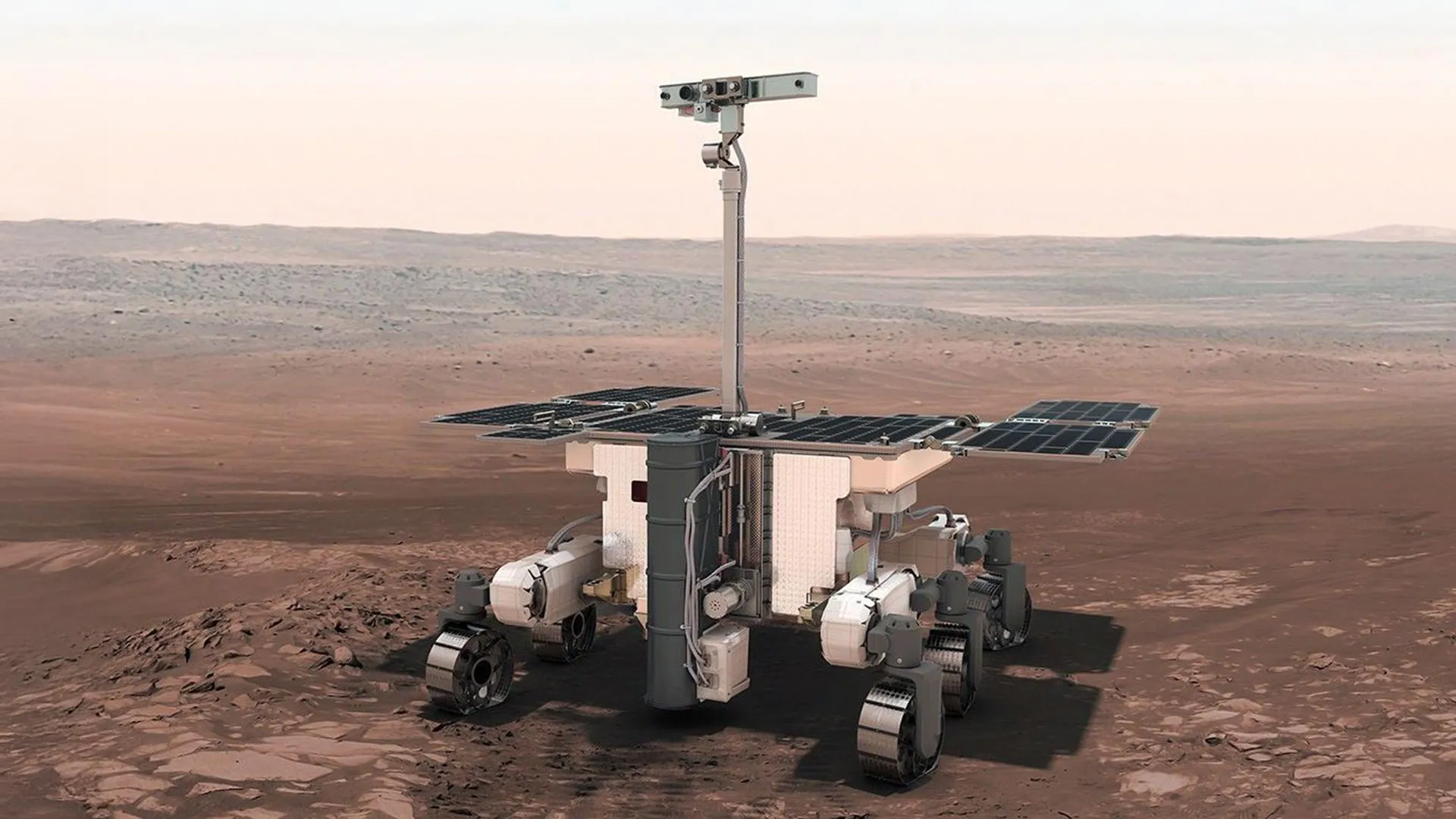
The Rosalind Franklin rover has passed a critical test that could transform the search for ancient Martian life. Scientists working with the European-Russian ExoMars mission confirmed the rover's primary instrument can distinguish subtle chemical differences in stable molecules that might preserve biosignatures for billions of years.
The rover's Raman Spectrometer, developed by an international team, successfully identified variations in organic compounds that could indicate biological origin. This capability matters because Mars lacks the magnetic field and thick atmosphere that shield Earth from radiation, forcing any ancient life to shelter underground where stable organic molecules could survive beneath the surface.
The testing used the Murchison meteorite, a famous space rock that fell in Australia in 1969 and contains pristine organic material. Researchers analyzed the meteorite's samples to verify the instrument's detection limits and chemical sensitivity. The results appeared in the journal Astrobiology.
The team discovered an unexpected problem during testing: terrestrial contamination. Fossil fuel pollution from Earth's atmosphere had mixed with the meteorite's organic molecules during its passage through our air. This finding has practical implications for future Mars analysis. Contaminants from Earth could mask or mimic biological signatures if the rover collects samples exposed to similar conditions.
The Rosalind Franklin rover, named after the crystallographer who helped reveal DNA's structure, operates in extreme conditions. Its drill can penetrate up to two meters below Mars' surface, accessing materials shielded from cosmic radiation where organic preservation becomes plausible.
The mission, managed by the European Space Agency and Russia's space agency, faced significant delays over the years but represents a direct hunt for microbial fossils or chemical remnants of past microbial life. No rover has previously carried instruments specifically designed to detect these subtle molecular markers.
Confirming the Raman Spectrometer's capabilities addresses a fundamental challenge: distinguishing genuine ancient