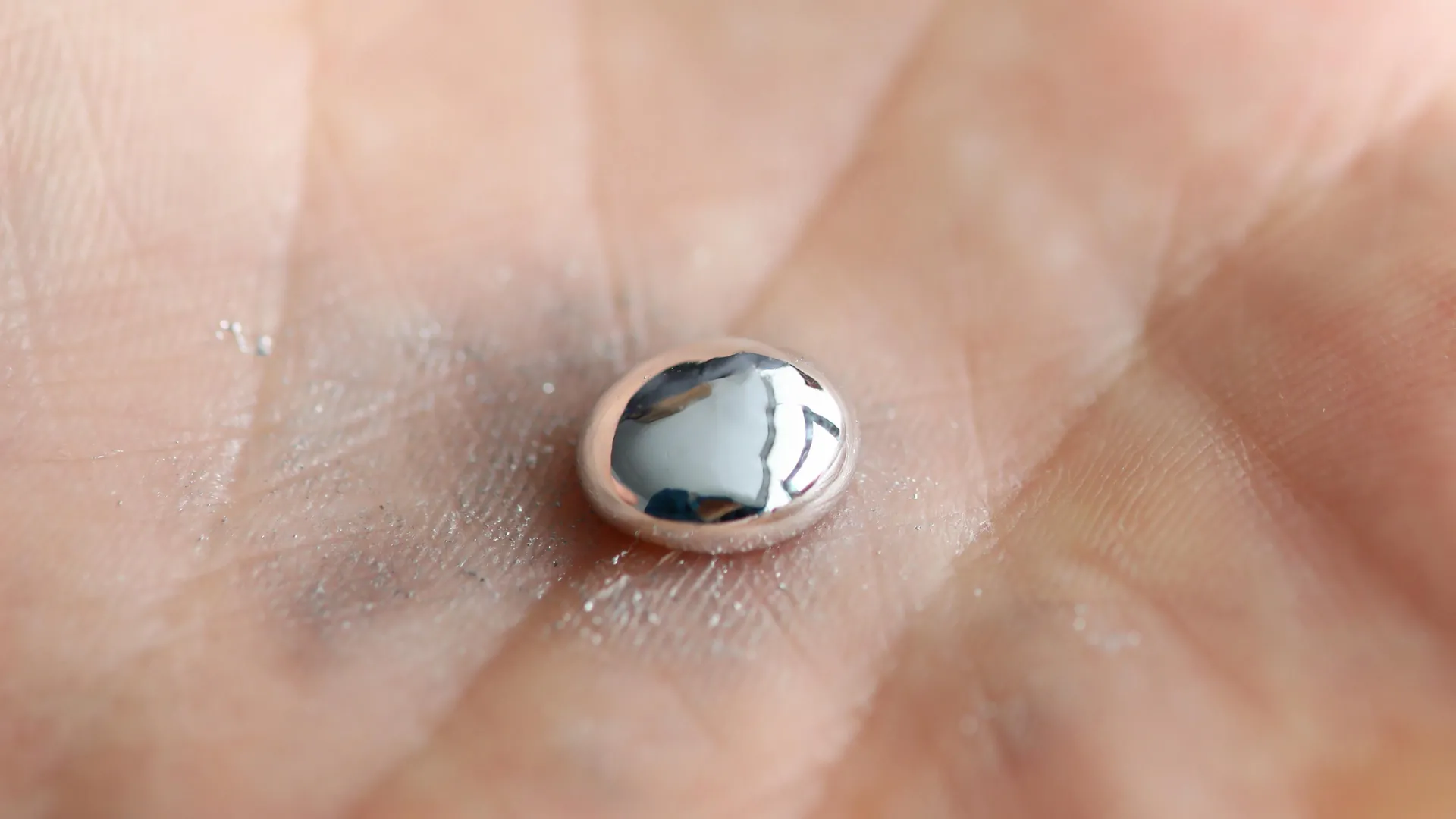
Researchers have resolved a 150-year-old puzzle about gallium's peculiar behavior by identifying how its atomic bonds reorganize at elevated temperatures. The discovery upends conventional explanations for why gallium melts at unusually low temperatures and behaves distinctly from other metals.
Gallium's anomalous properties have puzzled scientists since its discovery in 1875. The metal melts at just 29.8 degrees Celsius, barely above room temperature, making it useful in specialized applications but difficult to explain through standard metallurgical theory. Previous models attributed this low melting point to gallium's existing atomic structure, but the new research reveals a more dynamic picture.
The team found that gallium's atomic bonds actively break and reform as temperature increases, rather than remaining static as earlier theories proposed. This structural reorganization at high temperatures explains the metal's unusual melting behavior and its deviation from typical metal properties. The discovery challenges decades of accepted understanding in materials science.
The findings carry practical implications across multiple fields. Semiconductors rely on gallium compounds for high-speed electronics and optoelectronic devices. The revised understanding of gallium's bonding behavior could optimize these applications and improve device performance. Nanotechnology researchers may also benefit, as gallium nanostructures require precise control of material properties. Liquid metal engineering, an emerging field exploring applications of metals in liquid form, stands to gain direct advantages from clarifying gallium's fundamental characteristics.
The research demonstrates how fundamental science can overturn long-held assumptions. While the work primarily concerns atomic-level physics, its applications span from consumer electronics to advanced manufacturing. Scientists now possess a more accurate framework for predicting how gallium behaves under various conditions, enabling better design of materials and devices that exploit its unique properties. Future work may reveal whether other metals exhibit similar bond reorganization at high temperatures, potentially reshaping broader understanding of metallic behavior.