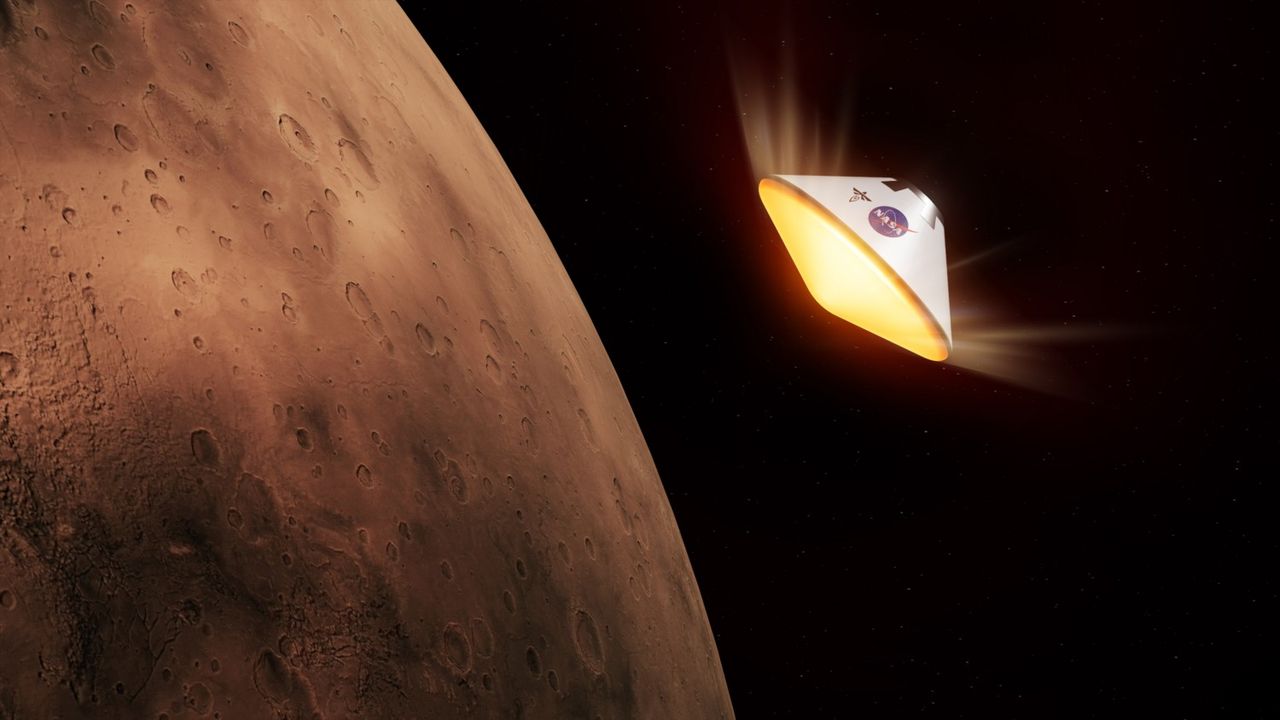
NASA has contracted Firefly Aerospace to build the aeroshell for Skyfall, a nuclear-powered Mars mission entering its hardware development phase. The aeroshell protects the spacecraft's descent stage as it enters and traverses the Martian atmosphere at extreme speeds and temperatures.
Skyfall represents an ambitious pivot in Mars exploration strategy. Rather than relying solely on rovers or stationary landers, the mission centers on deploying a nuclear-powered helicopter to the Red Planet. This aerial platform would extend exploration range far beyond what wheeled vehicles achieve, reaching previously inaccessible terrain and conducting atmospheric studies from vantage points unavailable to ground-based instruments.
The aeroshell contract marks a critical transition from concept to engineering reality. Firefly Aerospace, the Texas-based launch and spacecraft manufacturer, now bears responsibility for designing a structure capable of withstanding the intense heat and pressure of atmospheric entry. Mars presents unique challenges. The Martian atmosphere contains just 1 percent of Earth's atmospheric density, making traditional parachute-based descent insufficient for large payloads. The aeroshell must dissipate tremendous kinetic energy while remaining light enough for launch feasibility.
Nuclear power provides Skyfall's core advantage over solar alternatives. A radioisotope thermoelectric generator or small nuclear reactor would supply consistent power during Martian dust storms and extended night cycles, enabling sustained operations that rovers powered by solar panels cannot match. The helicopter itself gains extended flight endurance and can operate during darker seasons when solar power degrades significantly.
The mission remains in relatively early stages. NASA selected Skyfall for concept development funding in 2023, but moving from design studies to actual hardware procurement signals genuine commitment. Other aerospace contractors will likely receive contracts for additional Skyfall components, including the helicopter frame, nuclear power systems, and entry-descent-landing avionics.
Timeline estimates place a potential