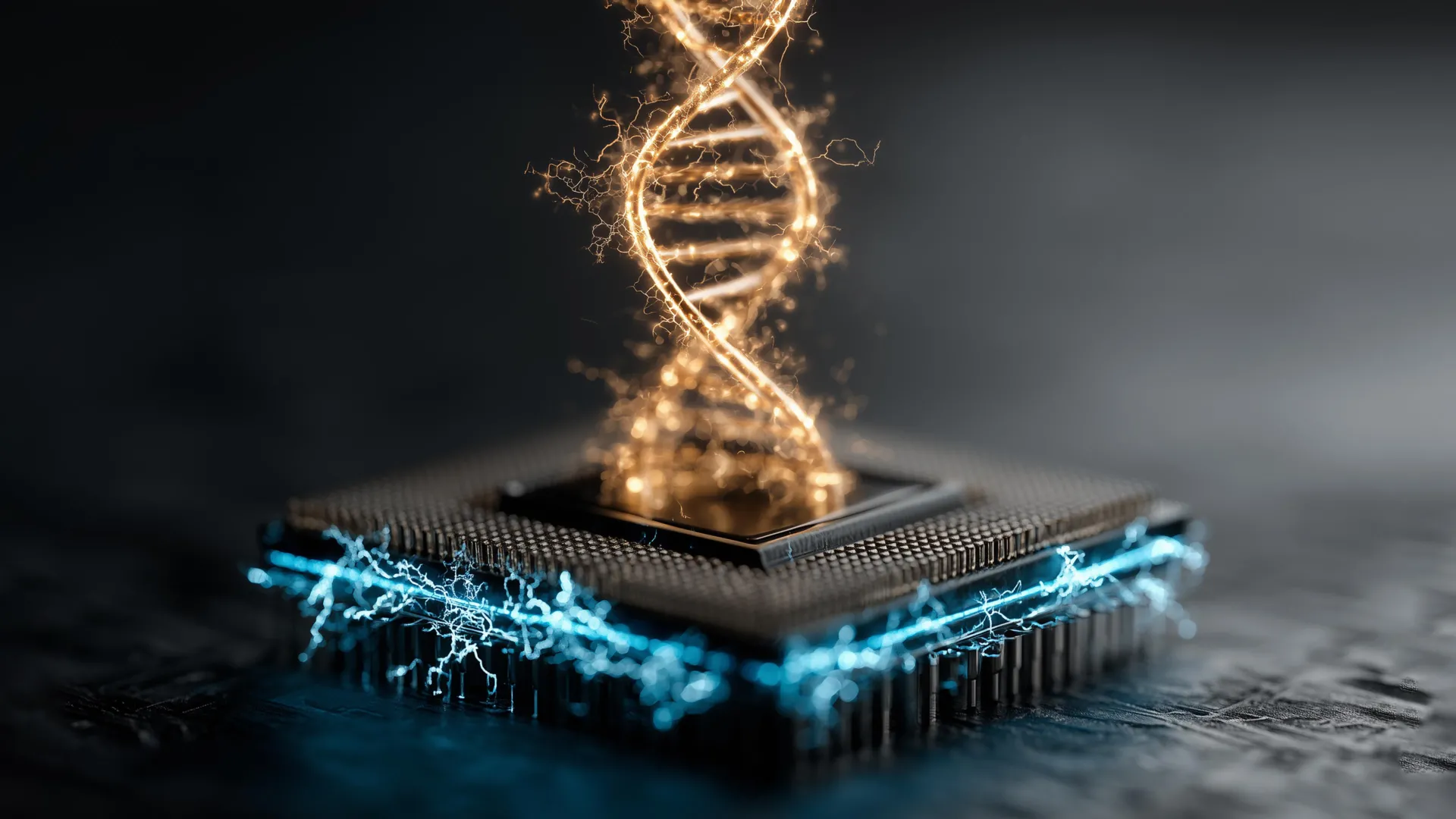
Researchers at Harvard University have engineered a silicon chip that synthesizes multiple DNA sequences at once using electrical signals and water-based enzymes, bypassing traditional chemical manufacturing methods that generate toxic waste. The work appears to represent a significant step toward practical, scalable DNA synthesis.
The chip uses electrochemistry to activate enzymes that build DNA strands directly on its surface. By applying precise electrical pulses, the team controls which nucleotides attach at each step, allowing dozens of distinct DNA sequences to grow simultaneously across different regions of the chip. Water replaces the harsh organic solvents required in conventional synthesis, reducing chemical hazards and disposal costs.
The environmental benefits matter. Traditional DNA synthesis relies on phosphoramidite chemistry, which produces substantial amounts of hazardous waste during manufacturing. The Harvard approach generates far less pollution while potentially lowering production costs.
Researchers envision two major applications. First, portable DNA-writing devices could enable on-site synthesis in research labs and clinics, eliminating shipping delays and infrastructure demands. Second, the technology could support DNA data storage, a promising method for archiving massive datasets using nucleotides as information carriers. DNA stores information at extraordinarily high density, making it attractive for long-term digital archiving.
However, scaling challenges remain. The current chip synthesizes sequences of limited length and speed compared to commercial systems. The team acknowledges that new chemistry will be needed to achieve the throughput and fidelity required for industrial-scale applications.
The work builds on prior electrochemistry research but represents the first demonstration of multi-sequence synthesis on a single chip. The team plans to optimize enzyme efficiency and electrical parameters to boost synthesis speed and accuracy.
This breakthrough offers a cleaner path forward for DNA manufacturing, though widespread adoption depends on solving remaining technical hurdles. The convergence of microelectronics and synthetic biology here hints at future biotech tools that are smaller, greener