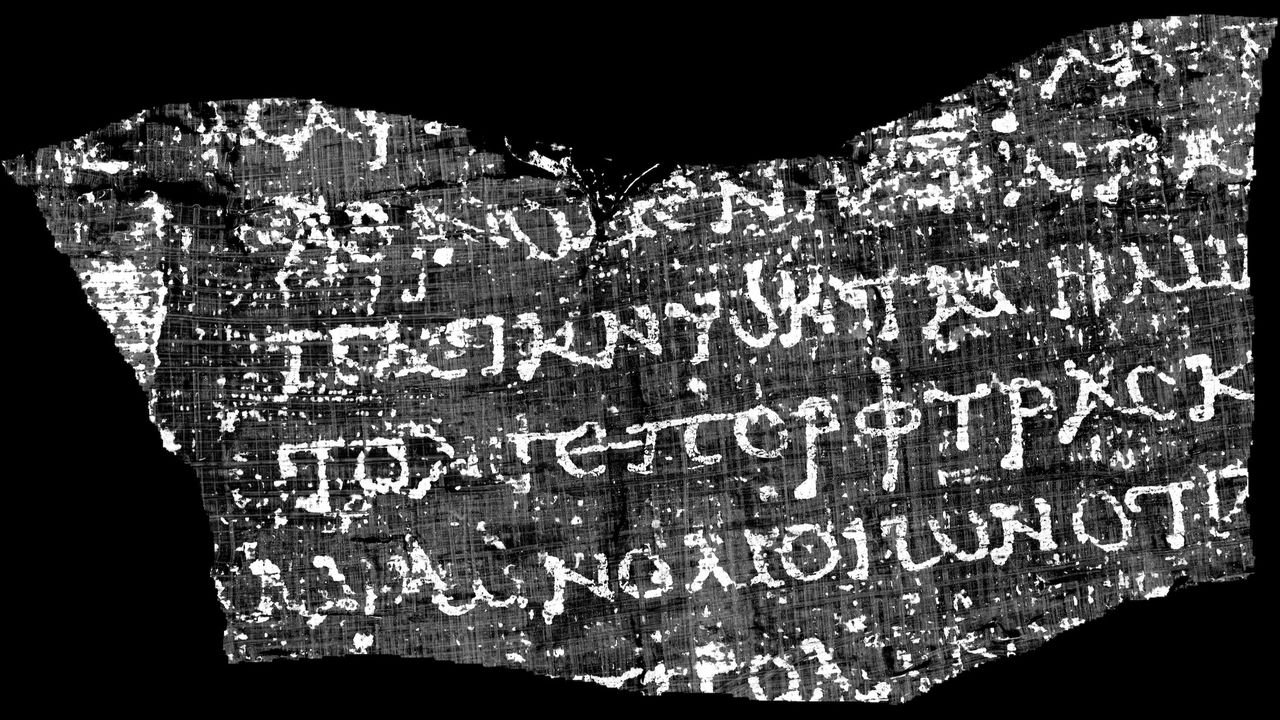
Researchers have deciphered substantial portions of two charred scrolls from Herculaneum, the Roman city buried by Mount Vesuvius in 79 AD, using artificial intelligence and advanced imaging techniques. The breakthrough reveals text that may include a previously unknown work by a Stoic philosopher.
The scrolls, preserved in carbonized form for nearly two millennia, had resisted traditional decryption methods. Teams deployed machine learning algorithms trained on known texts to recognize letter patterns within the damaged papyri. The AI analyzed high-resolution images captured through advanced scanning technology, allowing researchers to distinguish faint ink marks invisible to the naked eye.
One of the major discoveries involves identifying philosophical content consistent with Stoic teachings. This work potentially represents an undocumented composition by one of antiquity's influential thinkers, though experts have not yet confirmed the specific author. The second scroll contains additional literary and philosophical passages that contribute to understanding Roman intellectual life during the early Roman Empire.
The research builds on the Herculaneum Papyri Project, an ongoing international effort to recover texts from the approximately 1,800 scrolls buried when Vesuvius's eruption destroyed the towns of Pompeii and Herculaneum. Previous attempts to open the scrolls physically risked destroying their fragile contents. The AI approach eliminates this risk while recovering previously inaccessible information.
This advancement represents a convergence of classical scholarship and computational analysis. Researchers trained algorithms on texts from known Stoic philosophers and other ancient writers, enabling the system to predict letter formations even where ink has degraded. The technique has already begun revealing passages about philosophy, literature, and daily Roman life.
The findings underscore how digital technology reshapes access to historical sources. Rather than relegating damaged texts to archives, AI enables scholars to extract knowledge that direct examination cannot yield. Further analysis of the Hercul