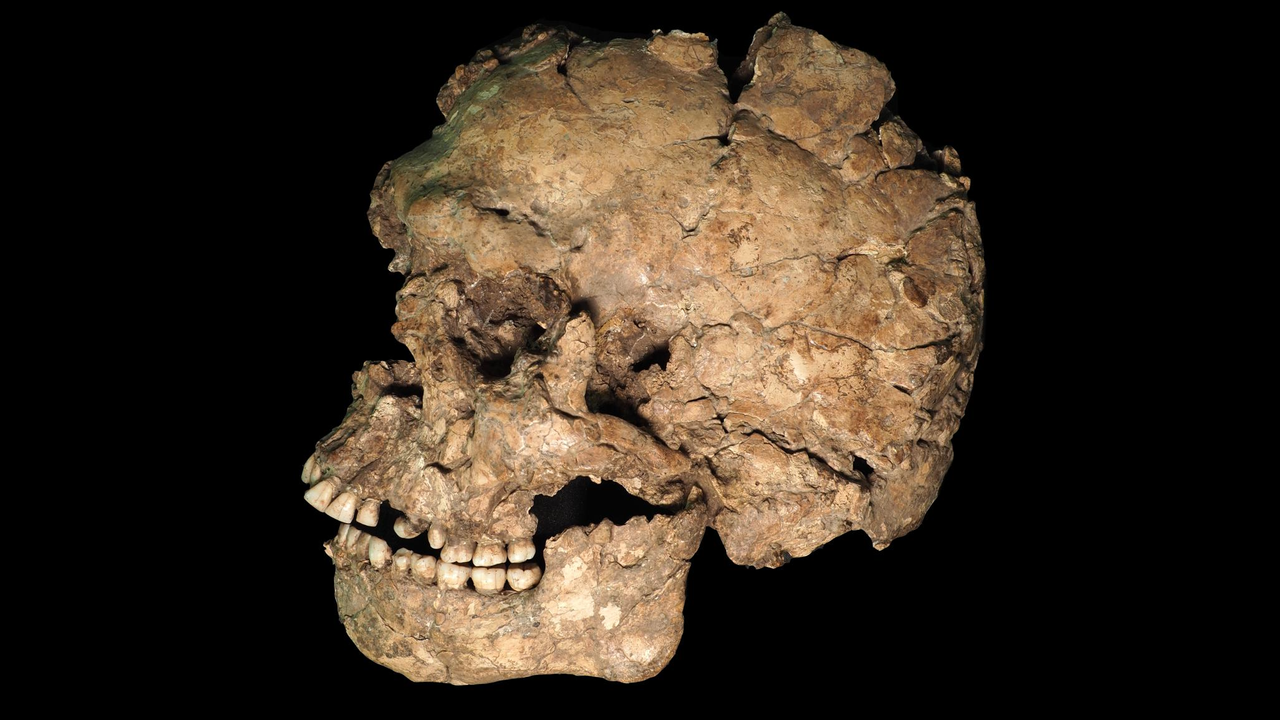
Researchers have discovered evidence of violence among early modern humans by analyzing a 100,000-year-old skull found at Qafzeh Cave in Israel. The specimen, designated Qafzeh 25, bears a cut mark on the face that a microscopic examination reveals was made by a stone tool, suggesting the individual was stabbed.
The analysis involved detailed examination of the wound's characteristics, including its depth, shape, and striations. These features align with injuries produced by deliberately wielded stone blades rather than accidental trauma or postmortem damage. The mark appears on the facial bone, consistent with an interpersonal conflict rather than hunting-related injury.
Qafzeh Cave has yielded some of the earliest anatomically modern human remains found outside Africa, dating to the Middle Paleolithic period. This discovery adds to a growing body of evidence indicating that violence among early human groups was not rare but rather an established part of social interactions tens of thousands of years ago.
The finding contributes to anthropological debates about the origins of human aggression and social conflict. Previous evidence of violence in early modern humans remains sparse, making each documented case valuable for understanding behavioral patterns in our ancestors. The deliberate nature of the wound, combined with the individual's survival of the injury, suggests either interpersonal combat or ritualistic wounding.
Researchers examining Qafzeh 25 used advanced microscopy techniques to distinguish the cut mark from natural bone degradation or post-excavation damage. The precision required to make such a wound with stone tools indicates technical skill and intentional targeting of the face, a vulnerable area.
The discovery does not definitively explain the cause of the conflict. Anthropologists note that violence in prehistoric communities often stemmed from resource competition, territorial disputes, or social hierarchies. The individual's survival suggests the wound was not immediately lethal, though infection or secondary complications may have occurred