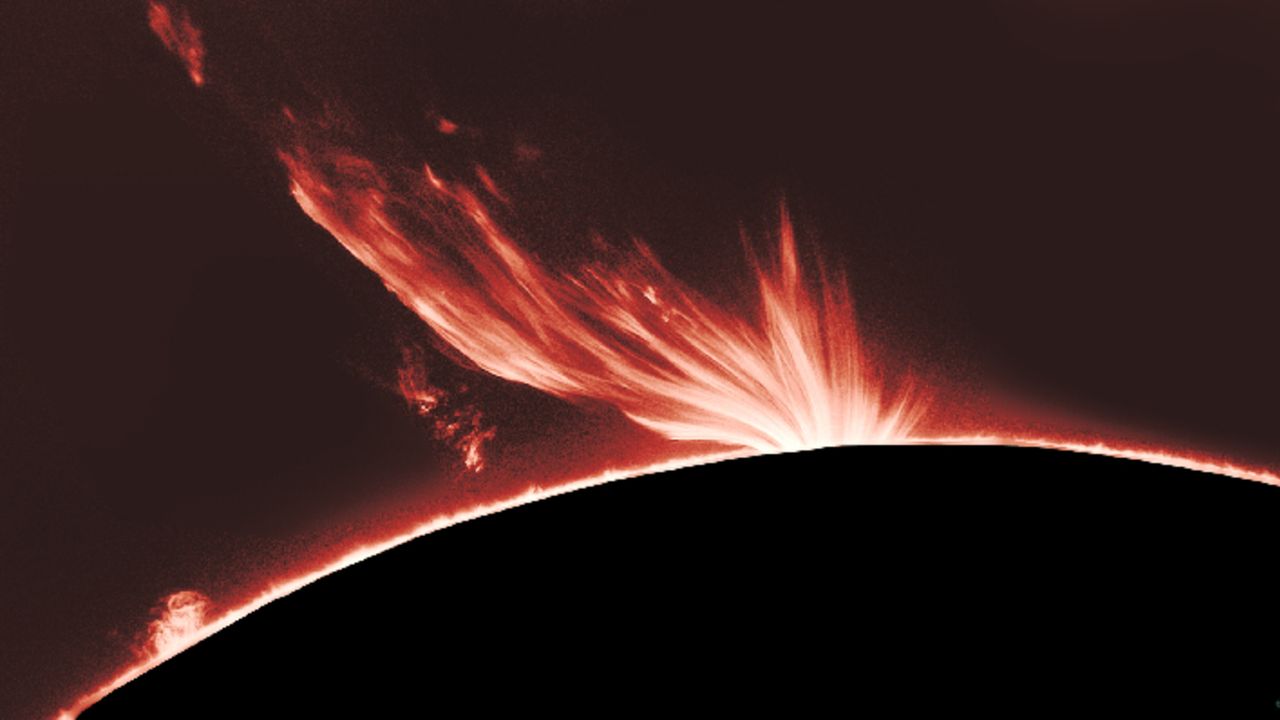
The sun unleashed a barrage of solar activity this week that could paint the night sky with auroras across much of the northern United States during Independence Day weekend.
Between Tuesday and Wednesday, the sun fired 10 M-class solar flares in rapid succession, earning it the nickname "machine-gun sun" among space weather forecasters. M-class flares rank as moderate on the solar flare intensity scale, sitting between smaller C-class and more powerful X-class events. Scientists expect additional flares could occur in the coming days.
The flares originated from an exceptionally active sunspot region on the sun's surface. When these flares erupt, they release streams of charged particles that travel toward Earth at speeds exceeding one million miles per hour. This solar material compresses Earth's magnetic field and energizes atoms in the upper atmosphere, producing the colorful auroras visible to observers on the ground.
The National Oceanic and Atmospheric Administration's Space Weather Prediction Center issued alerts for a geomagnetic storm watch, forecasting conditions favorable for aurora displays across a broad swath of the continental United States. Observers in more than a dozen states could witness green, red, or purple lights dancing across the northern horizon, potentially visible even from populated areas with moderate light pollution.
The timing coincides with the Fourth of July weekend, when many Americans venture outdoors for fireworks and celebrations. Unlike fireworks, auroras require clear skies and minimal artificial light to see well. Observers in northern states like Montana, North Dakota, Minnesota, and Wisconsin have the highest probability of viewing the display. Those in more southern latitudes may catch glimpses during peak activity hours after midnight.
Solar activity follows an 11-year cycle, and the current cycle is ramping toward its maximum phase around 2024 to 2025. This means similar events will become increasingly common in coming months. Space weather forecasters