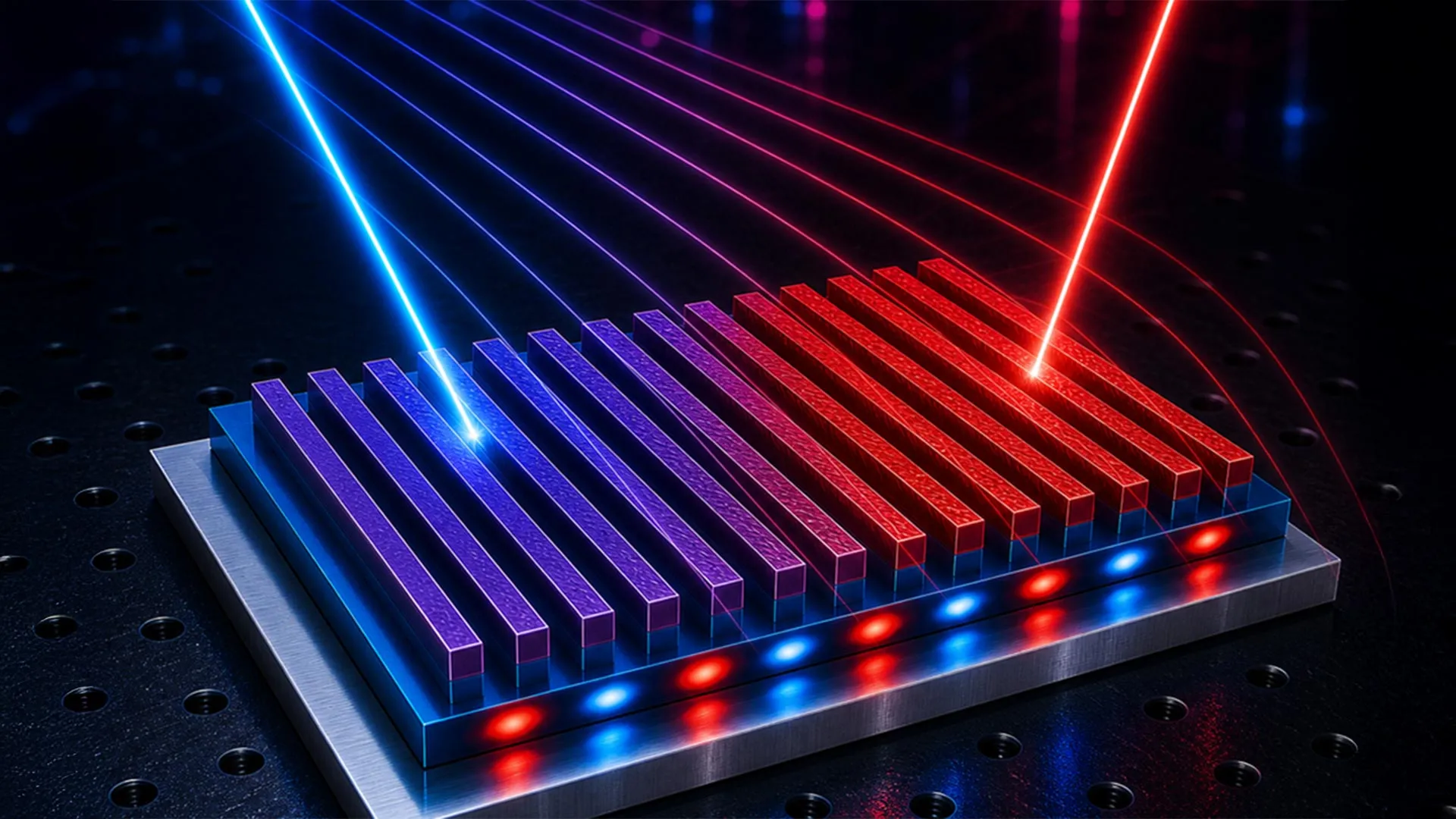
Engineers have created a material that controls thermal radiation like a programmable switch, directing heat in specified directions and retaining its settings without requiring constant power input. The breakthrough enables heat to function as an information carrier rather than waste energy.
The material operates through phase-change properties, shifting between distinct thermal states to alter how it emits and reflects infrared radiation. This allows researchers to encode information directly into heat patterns. Unlike conventional systems that rely on electrical signals, this approach leverages the inherent properties of thermal energy itself.
Applications span multiple fields. Infrared sensors could become more selective and efficient, distinguishing between heat sources with greater precision. Energy harvesting systems might recover waste heat more effectively by directing thermal radiation toward collection points. Memory devices could store data using heat and light instead of electrical charges, potentially creating faster, lower-power computing architectures.
The material's passive memory represents a key advantage. Once programmed to a particular thermal state, it maintains that configuration without active power consumption. This characteristic reduces energy demands compared to systems requiring continuous electrical input to sustain their operational modes.
The research addresses a longstanding challenge in materials science: most materials emit heat uniformly in all directions, making thermal control difficult. By engineering specific molecular structures, researchers created a system where thermal radiation becomes directable and modifiable. The material can switch between states rapidly, enabling dynamic thermal management.
The work opens pathways toward "smart" thermal devices that respond intelligently to environmental conditions. Spacecraft thermal regulation, building climate control, and thermal imaging systems all stand to benefit. Further development may enable programmable materials that integrate thermal management with other functions, creating multifunctional devices.
While the innovation shows promise, scaling production and optimizing performance across broader temperature ranges remain ongoing challenges. Researchers must also refine the switching speed and energy efficiency of the phase-change mechanism for practical implementation in commercial applications.
This represents a fundamental shift in how engineers approach heat