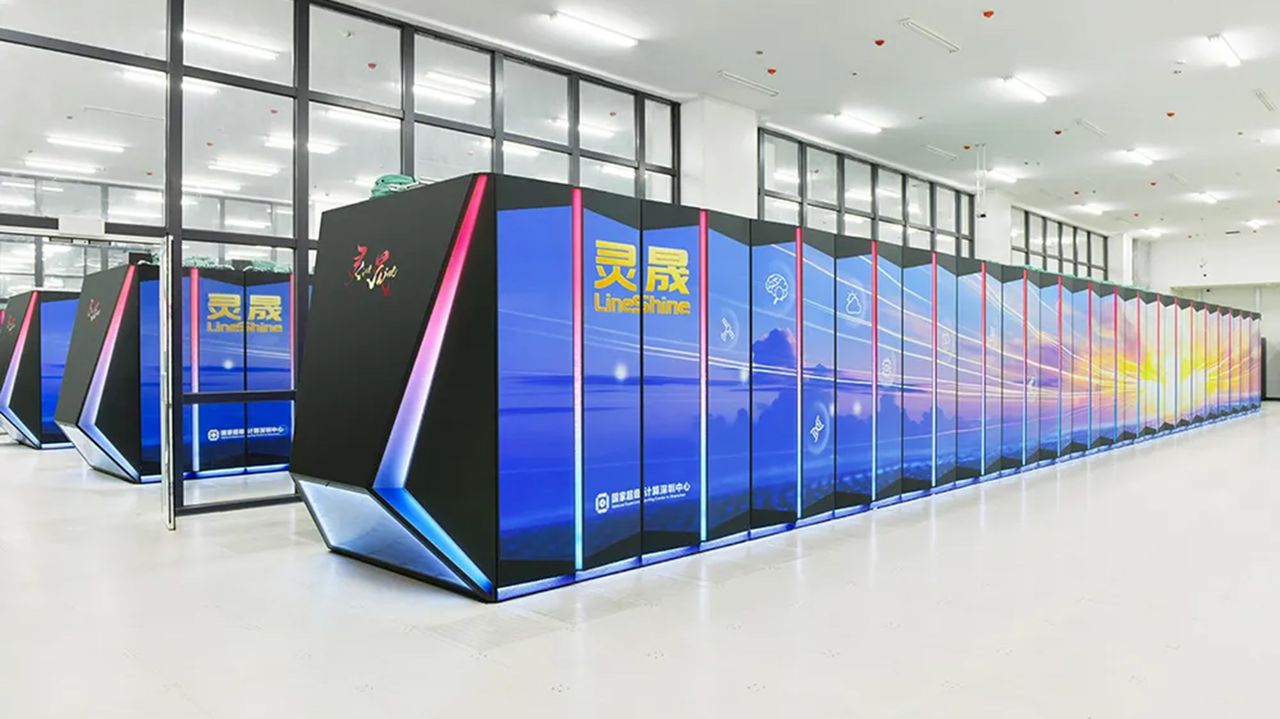
China's Line Shine supercomputer has claimed the top spot in global computing power, reclaiming dominance in the sector after a six-year gap since the country last held the world's fastest machine title in 2017.
The Line Shine system surpasses the current leading US supercomputers in raw processing capability. This ranking comes from the TOP500 list, the international benchmark that tracks the world's most powerful supercomputers twice yearly based on their performance on the Linpack benchmark test.
The achievement marks a significant shift in supercomputing leadership. The United States had held multiple entries in the top positions, but China's investment in high-performance computing infrastructure has positioned the nation to reclaim computational supremacy. The Line Shine system represents advances in processing speed, memory architecture, and energy efficiency that allow it to outperform existing American systems.
Supercomputers of this caliber drive innovation across multiple fields. Research institutions use them for climate modeling, molecular simulation, artificial intelligence training, and nuclear weapons simulations. The machines process quintillions of calculations per second, enabling scientists to tackle problems impossible on conventional computers.
The timing reflects broader geopolitical competition in technology development. Both the United States and China view supercomputing leadership as strategically important for scientific research, defense applications, and economic competitiveness. The US Department of Energy and private tech companies have announced plans to develop exascale supercomputers, the next tier of performance, to maintain American technological leadership.
China's return to the top position demonstrates the country's sustained commitment to advancing computational infrastructure despite international efforts to restrict access to certain advanced semiconductor technologies. The Line Shine system's architecture and component sourcing reflect this strategic focus.
The competition between nations for supercomputing dominance continues to accelerate. Both countries recognize that computational power underpins breakthroughs in materials science, drug discovery, and artificial intelligence. The Line