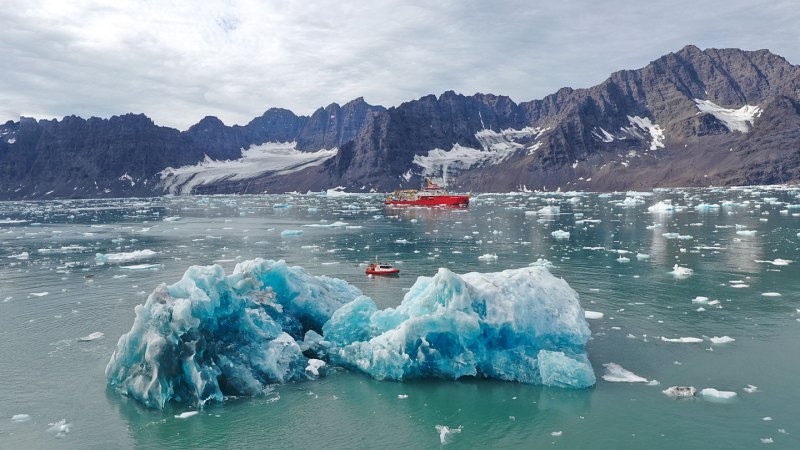
Researchers are deploying robotic swarms across Greenland's ice sheets to gather critical data about how glaciers meet the ocean, work that could help predict when Earth's climate system reaches irreversible tipping points.
The mission addresses a knowledge gap in climate science. Scientists understand that Greenland's melting ice contributes significantly to sea level rise, but they lack detailed information about the glacier-ocean interface where much of the rapid melting occurs. This boundary zone remains poorly mapped and difficult to study through traditional methods.
The robot swarm approach offers a solution. Multiple autonomous vehicles can cover larger areas more efficiently than human-led expeditions, gathering precise measurements of temperature, ocean currents, and ice discharge rates. These data points help researchers understand the mechanics of glacier collapse and predict how quickly Greenland's ice sheet might disappear under different warming scenarios.
The expedition builds on growing concern about climate tipping points. Scientists have identified several potential thresholds in Earth's climate system where warming could trigger abrupt, irreversible changes. Greenland's ice sheet represents one such threshold. Once melting accelerates beyond a certain rate, the process becomes self-reinforcing, darkening the ice surface and accelerating further melt regardless of future emissions reductions.
Understanding the glacier-ocean boundary matters because interactions there drive much of Greenland's ice loss. Warm Atlantic water erodes glaciers from below, while freshwater meltwater creates buoyancy that can destabilize ice cliffs. Mapping these dynamics with robot swarms provides the resolution needed to improve climate models.
The work reflects how climate science increasingly relies on technological innovation to fill data gaps in extreme environments. Robotic systems can operate continuously in dangerous conditions, collecting information that informs more accurate predictions about sea level rise and global climate impacts over coming decades.