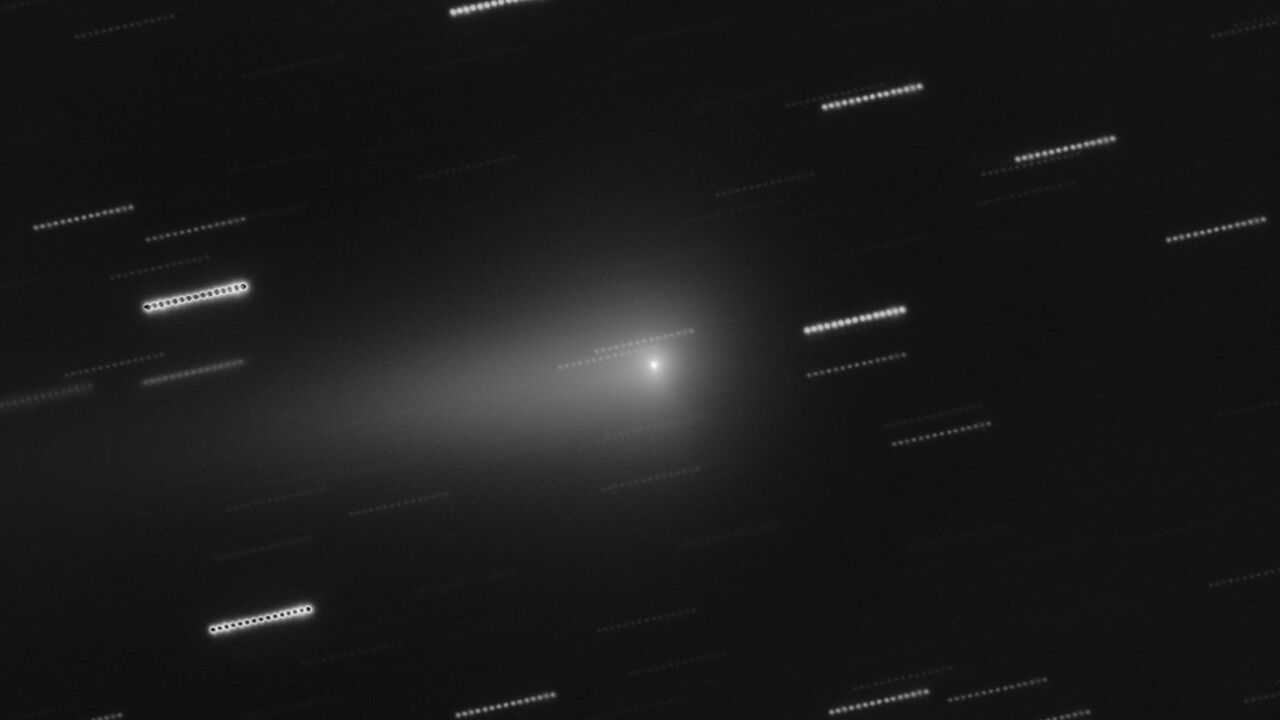
Astronomers have gathered fresh evidence about the origins of interstellar comet 3I/ATLAS using the Very Large Telescope in Chile, findings that align with earlier observations from the James Webb Space Telescope.
The comet, designated 3I/ATLAS, represents only the third confirmed interstellar visitor to pass through our solar system. Its trajectory indicates it originated outside our stellar neighborhood, traveling through space before entering the gravitational influence of the sun.
The Very Large Telescope, located at the European Southern Observatory's Paranal Observatory in the Atacama Desert, captured spectroscopic data revealing the comet's chemical composition and physical properties. These observations provide clues about the conditions in the molecular cloud or protoplanetary disk where the comet likely formed billions of years ago.
The consistency between the Very Large Telescope data and JWST observations strengthens confidence in the findings. Both instruments detected similar signatures in the comet's coma, the cloud of gas and dust surrounding its nucleus. The wavelengths measured help astronomers determine what materials comprise the comet, including frozen volatiles and dust grains.
Understanding interstellar comets offers insights into planetary formation processes in other star systems. These objects travel vast distances through the interstellar medium before occasionally entering planetary systems. Their composition reflects the chemistry of distant regions of the galaxy.
3I/ATLAS follows 1I/Oumuamua and 2I/Borisov as confirmed interstellar objects detected in our solar system. Detecting and studying these rare visitors requires coordinated observations from multiple telescopes across different wavelengths.
The research contributes to a broader catalog of extrasolar material entering our cosmic neighborhood. As detection methods improve and survey capabilities expand, astronomers expect to identify more interstellar comets. Each discovery adds layers of understanding about how planetary systems form and evolve throughout the galaxy.