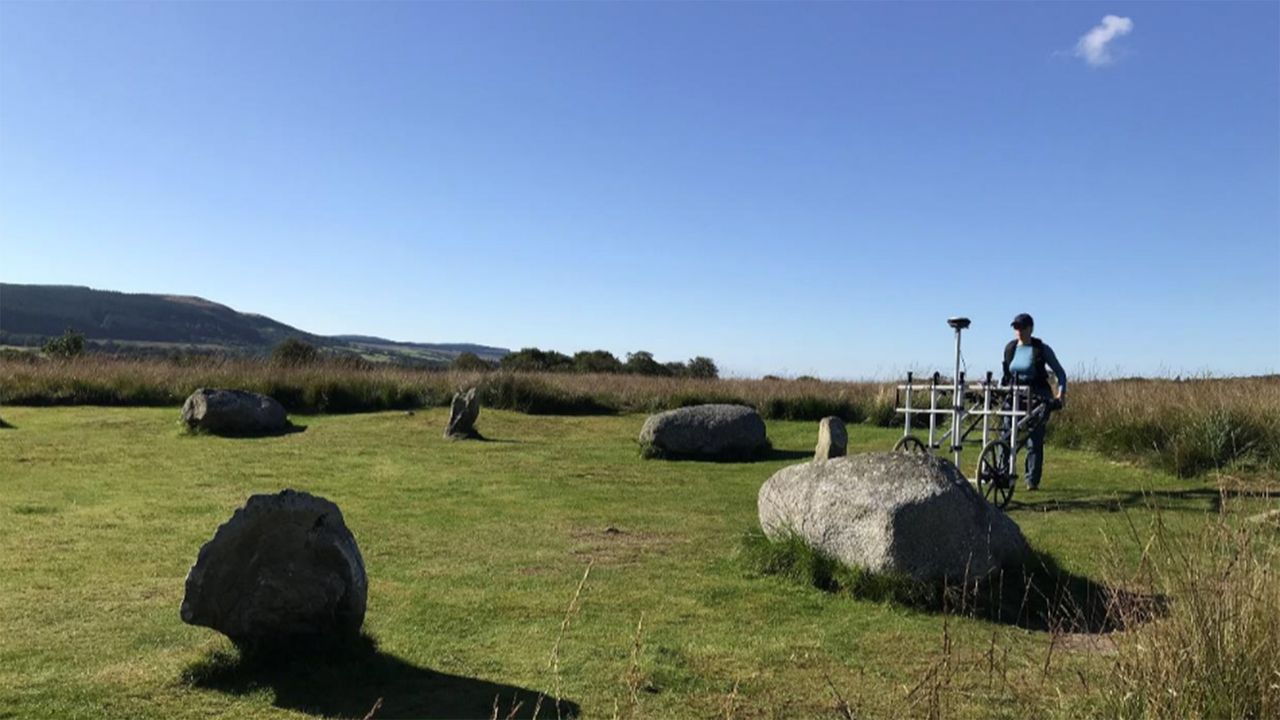
Archaeologists detected a previously unknown ring structure buried under peat at Machrie Moor in Scotland that may rival Stonehenge in age and significance. Using subsurface scanning techniques, researchers identified what appears to be a circular arrangement of stones or wooden posts dating to the Neolithic or Bronze Age periods.
The discovery emerged from geophysical surveys at Machrie Moor, a site already known for several standing stone circles visible above ground. The hidden ring lies beneath deep peat deposits that have preserved it for thousands of years. This type of subsurface detection represents a growing approach in archaeology, where ground-penetrating radar and similar technologies reveal structures invisible to conventional excavation.
The monument's exact nature remains to be determined. The ring could represent a genuine stone circle comparable to Stonehenge, a timber circle, or a hybrid structure combining both materials. If confirmed as Neolithic or Bronze Age, it would add to Scotland's rich collection of prehistoric ceremonial monuments. The site's location on Arran, an island off the southwest Scottish coast, places it within a region dense with archaeological evidence of early settlement and ritual activity.
The preservation conditions under peat are exceptional. Peat acts as an anaerobic environment that slows decomposition dramatically, meaning wooden structures may survive intact despite millennia underground. This makes Machrie Moor particularly valuable for understanding prehistoric construction techniques and material choices.
Full excavation has not occurred. Archaeologists typically proceed cautiously with such discoveries, using non-invasive methods first to map and understand the structure before disturbing the ground. This approach protects both the monument itself and the surrounding peat stratigraphy, which provides dating information through pollen analysis and radiocarbon testing.
The finding underscores how much prehistoric landscape archaeology remains hidden from view. Scotland hosts over 1,000 stone circles, but the subsurface detection