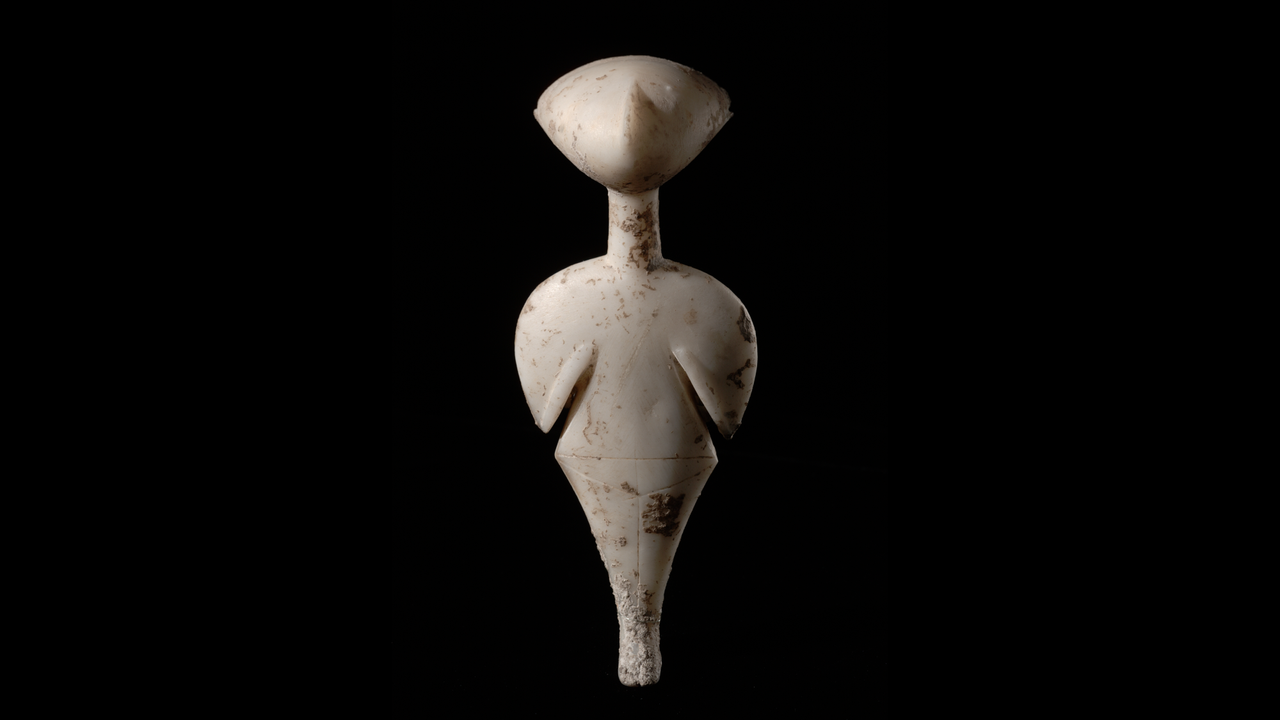
Archaeologists have identified a rare 5,000-year-old marble statuette depicting a woman gazing upward, adding to a small collection of similar Stone Age figurines whose purpose remains mysterious.
The figurine belongs to a group of abstract marble carvings produced by Cycladic cultures in the Aegean Islands during the Early Bronze Age, roughly 3000 to 2700 BCE. These sleek, minimalist sculptures represent some of the earliest known figurative art in Europe. Only a handful have survived to the present day, making each discovery valuable for understanding prehistoric artistic expression and religious practices.
The statuette's distinctive upward gaze sets it apart from typical Cycladic figurines, which most commonly depict reclining or neutral-faced figures. The woman's tilted head and raised chin suggest intentional artistic choice rather than accident or damage. Researchers suggest the pose may indicate astronomical observation, religious devotion, or spiritual transcendence, though definitive interpretation remains elusive.
Cycladic marble figurines have puzzled scholars for generations. Their abstract forms, polished surfaces, and small size (typically 10 to 30 centimeters tall) suggest ritual or symbolic function rather than practical purpose. Some experts theorize they served as fertility idols, ancestral representations, or objects used in religious ceremonies. Others propose they functioned as trade goods or status symbols within Bronze Age societies.
The marble itself comes from local island quarries, indicating these cultures possessed sophisticated stone-working techniques and valued aesthetics centuries before classical Greek civilization. The figurines reveal surprising artistic sophistication among societies traditionally labeled "Stone Age," challenging assumptions about prehistoric creative capacity.
Fewer than 300 authenticated Cycladic figurines exist worldwide, many held in museums or private collections. The archaeological context of individual pieces remains poorly documented, as many were looted or removed before systematic excavation became standard