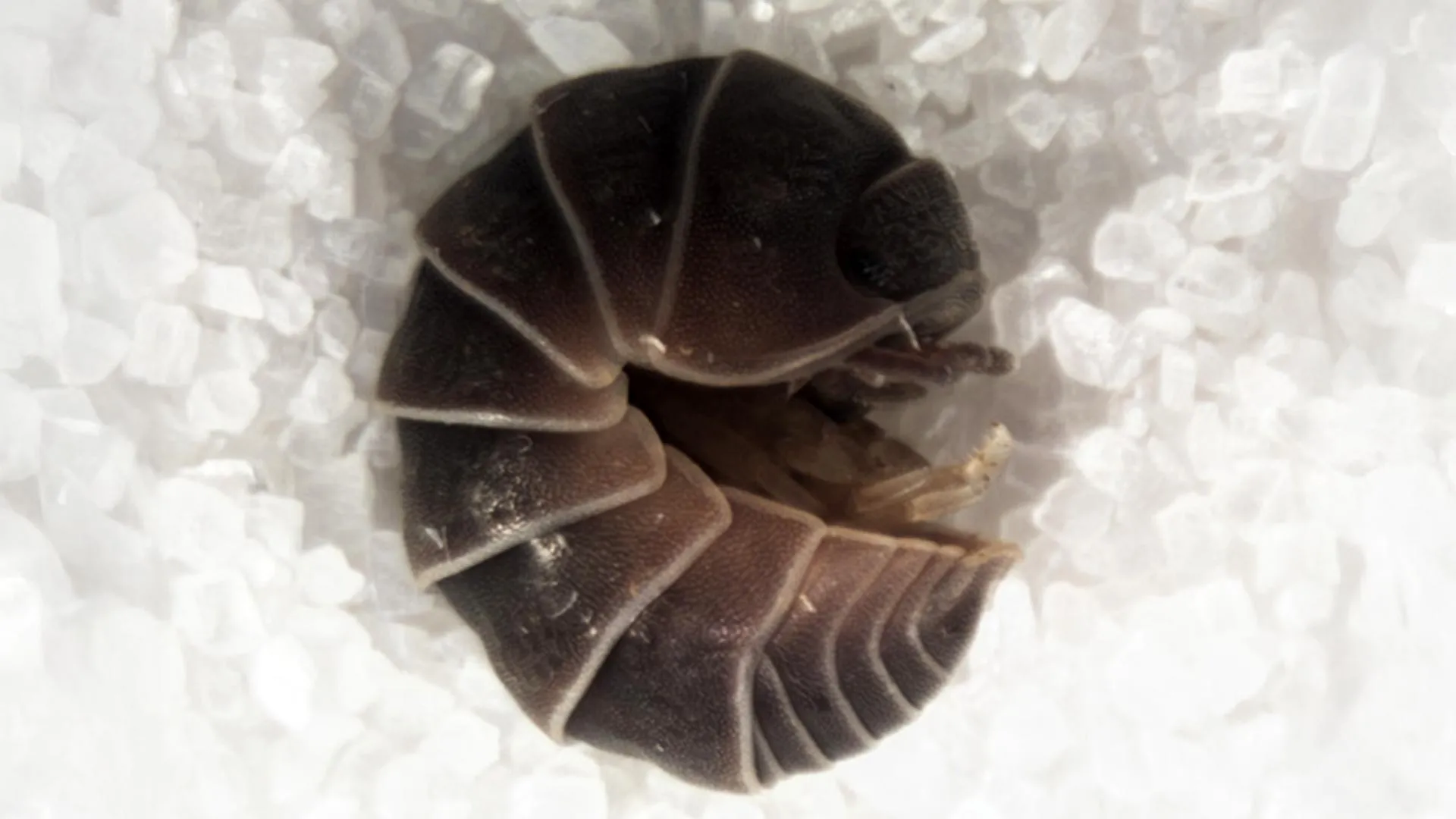
Researchers have documented a strange and deadly phenomenon: streetlights trap thousands of woodlice (pill bugs) in circular "death spirals" from which they cannot escape. This represents the first observation of such behavior in wild populations.
The discovery reveals how artificial light disrupts the navigation systems of small terrestrial invertebrates. Woodlice rely on a behavior called tropotaxis to orient themselves, which involves comparing light levels detected by their two eyes. When creatures encounter a single bright light source, like a streetlamp, their normal navigation mechanisms fail catastrophically. The animals circle the light endlessly, expending energy until they collapse from exhaustion or fall prey to predators. Scientists call this a "death spiral."
The phenomenon occurs because woodlice evolved under natural lighting conditions. The sun and moon provide directional light cues that allow the animals to navigate toward sheltered, humid environments where they survive. Artificial streetlights present a light source for which woodlice have no evolved behavioral response. Once caught in the light's field, their bilateral eye-comparison system produces a feedback loop that drives continuous circular motion.
This finding extends our understanding of light pollution beyond its well-documented effects on insects like moths and on vertebrates like birds. Woodlice occupy crucial ecological niches as detritivores, breaking down dead plant material and recycling nutrients in soil ecosystems. Significant population losses in concentrated areas around streetlights could disrupt these functions locally.
Researchers collected data from multiple streetlights to quantify the scale of the problem. The study demonstrates that light pollution affects animals across every ecological guild and size class, not just larger or more visually complex organisms. The work highlights an invisible cost of urbanization and artificial night lighting.
The findings suggest cities might reduce this mortality by modifying streetlight design, positioning, or timing. Warmer-colored lights and downward-facing fixtures could