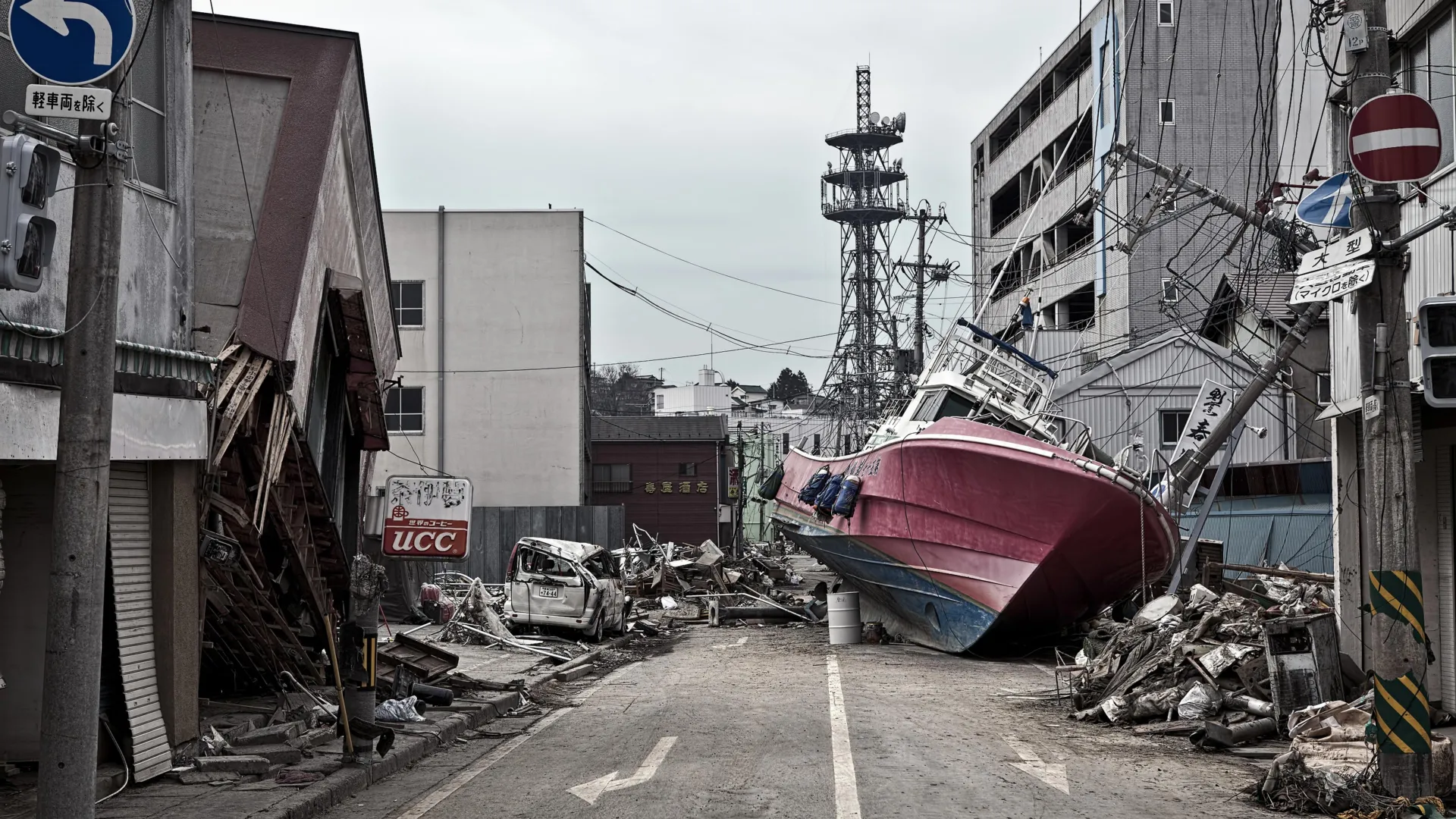
Scientists have identified a crucial structural weakness beneath the Pacific Ocean that explains the exceptional destructiveness of Japan's 2011 earthquake and tsunami. Researchers drilling to record depths into the seafloor discovered a thin layer of ancient clay beneath the rupture zone that functioned as a frictionless pathway for the earthquake rupture.
The clay layer allowed the rupture to propagate all the way to the ocean surface, causing extraordinary vertical seafloor displacement. This motion generated the massive wave that killed nearly 16,000 people and caused the Fukushima nuclear disaster.
The drilling campaign reached unprecedented depths to sample the rupture zone directly. The team analyzed material from the subduction zone where the Pacific Plate slides beneath Japan's landmass, the geological mechanism that triggered the magnitude 9.0 earthquake on March 11, 2011.
The slippery clay layer essentially acts as a lubricant between rock formations. When stress accumulates in the subduction zone over centuries, this weak layer allows rupture to accelerate upward rapidly rather than dissipating energy through friction. The result was extreme uplift of the seafloor, displacing billions of tons of water almost instantaneously.
Prior earthquake models underestimated the potential for such complete rupture propagation to the ocean floor. This discovery fundamentally changes understanding of tsunami generation along subduction zones, Earth's most powerful earthquake locations.
The research team obtained samples that provided direct evidence of how the rupture moved through different rock layers. The clay's composition and structure confirmed its low-friction properties even under the immense pressures found kilometers beneath the ocean.
This finding has global implications for earthquake and tsunami hazard assessment. Subduction zones worldwide may harbor similar weak layers that could amplify rupture propagation. Coastal populations in regions above subduction zones, including portions of the Americas, Indonesia, and New Zealand, may face previously under